How to Choose the Best Geomembrane Welding Machine?
Choosing the best geomembrane welding machine is crucial for project success. A reliable machine enhances the durability and waterproof integrity of geomembranes. Various factors influence this choice, including machine type, material compatibility, and user-friendliness.
When considering a geomembrane welding machine, it’s essential to review its specifications and features. Machines come in different sizes and capabilities. A more powerful machine may offer faster welding speeds but could lead to potential errors if not used correctly. Understanding your specific needs can help in avoiding mismatched equipment.
Additionally, user feedback can provide insight into real-world applications. Some machines may boast high efficiency but struggle with thin or complex materials. It’s wise to gather experiences from other users. This process can be imperfect and may require adjustments. Evaluating your options carefully ensures you select a machine that meets both quality and safety standards.
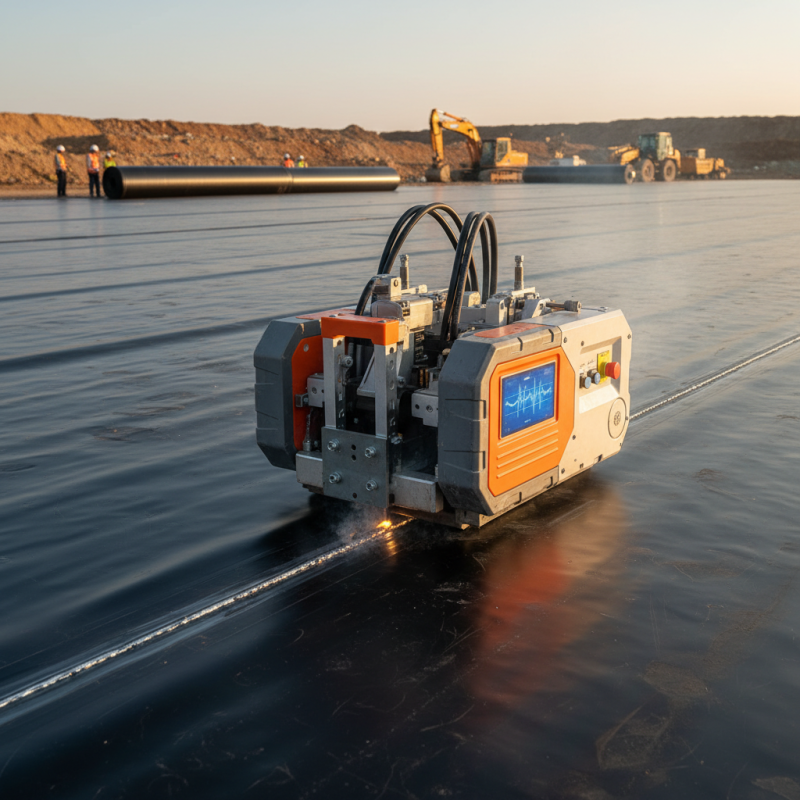
Factors to Consider When Selecting a Geomembrane Welding Machine
Choosing the right geomembrane welding machine requires careful consideration of several factors. One critical aspect is the machine's operating temperature range. Data indicates that optimum welding quality significantly relies on maintaining specific temperatures. If temperatures fluctuate excessively, it can lead to weak seams. The ideal operating range minimizes the risk of defects in the geomembrane lining.
Another factor is the type of welding technology employed. For instance, hot wedge welding is a popular choice. Industry reports show that this method achieves strong seams suited for various applications. However, it may not always be the best option for complex applications. Understanding the project requirements is vital. Projects with tight joints may benefit more from automated systems.
The machine's weight and portability also matter. Heavy machines can hinder efficiency on uneven terrain. A lightweight design can simplify transport and setup. Consider the job site's unique challenges when selecting equipment. Reading reviews and user feedback can provide insights, but actual results sometimes deviate from expectations. Engaging with seasoned professionals can help narrow down suitable options while avoiding common pitfalls in equipment selection.
Types of Geomembrane Welding Techniques and Their Applications
When selecting a geomembrane welding machine, understanding the various welding techniques is crucial. Heat welding is one popular method. It uses high temperatures to bond geomembranes. This technique works well for plastic materials and offers strong seams. However, it requires skilled operators to maintain consistent temperature.
Another technique is extrusion welding. Here, a filler material is continuously fed into the weld area. This method is versatile and can handle different material types. It creates robust seams that withstand environmental stress. However, it can be challenging to achieve a uniform finish, which might lead to weaker joints if not monitored closely.
Friction welding is also notable, especially for thick geomembranes. This method employs mechanical pressure and friction to generate heat. It ensures a strong bond under heavy loads. Unfortunately, this technique may not work well for all geomembrane types, limiting its application. Each technique has its advantages and drawbacks, which must be carefully considered.
Key Features to Look for in a Geomembrane Welding Machine
Choosing the right geomembrane welding machine is crucial for effective installation and longevity. When evaluating options, pay attention to the machine's heat output. A device with adjustable temperature settings allows for precise control, ensuring a strong seam. Additionally, consider its welding speed. A faster machine can enhance productivity on larger projects, which is often a necessity.
Size and weight are also important. A lightweight machine is easier to maneuver, especially in confined spaces. However, it should not compromise on stability. Be mindful of the machine's durability and construction quality. Machines made from robust materials tend to last longer, even under challenging conditions. Look for user-friendly controls. Complicated settings can lead to mistakes during operation. Reflect on whether the machine offers features like automatic shutdown for safety.
Lastly, consider the machine's compatibility with various geomembrane materials. Some devices may only work with specific types, limiting versatility. Always read user reviews for insights. They can highlight potential issues that may not be apparent at first glance. Such details can help refine choices and improve your project outcomes.
How to Choose the Best Geomembrane Welding Machine?
This chart illustrates key features and their respective values for evaluating geomembrane welding machines. Pay attention to power output, temperature control, weld speed, weight, and price when selecting the best machine for your needs.
Understanding Geomembrane Material Compatibility with Welding Machines
When selecting a geomembrane welding machine, material compatibility is crucial. Geomembranes made from HDPE, LLDPE, PVC, and other polymers each exhibit unique properties that impact welding techniques. According to the Geosynthetic Research Institute, HDPE is the most widely used for landfill liners. It has a high tensile strength and excellent chemical resistance. However, compatibility with welding machines must be ensured to avoid poor joint strength.
Welding machines should match the specific materials used. For instance, LLDPE requires different settings compared to HDPE. Studies indicate that improper welding can decrease seam strength by up to 50%. The implications on durability can be severe, especially in environmental applications. The choice of welding machine affects the overall quality of the geomembrane installation. It’s essential to consider the available machine features like temperature control and speed.
Often, contractors face challenges due to a lack of understanding of material behavior. Some might assume one machine fits all. This oversight can lead to costly mistakes. Evaluating prior project outcomes can guide better decisions. Compatibility testing is advisable before large-scale applications. The right approach leads to reliable and effective installations.
Budget Considerations and Cost-Effectiveness in Geomembrane Welding Machines
When choosing a geomembrane welding machine, budget considerations are crucial. The cost of these machines can vary significantly. Basic models may start at $5,000, while advanced options can reach $30,000 or more. Companies need to evaluate their project requirements carefully. A higher initial investment may lead to lower operational costs. This could enhance overall efficiency over time.
Cost-effectiveness involves more than just the purchase price. According to industry reports, maintenance costs can account for approximately 15% of the total operating cost. Investing in durable machines might save money long-term. Repairing a cheap model can be more expensive than expected. Additionally, operator training is essential. Untrained personnel can lead to costly mistakes. Optimizing training programs can mitigate these risks.
Another point to reflect on is the extent of durability required for projects. Some environments are harsher than others. For high-stress sites, a robust machine is worth the expense. However, for lighter tasks, a simpler model might suffice. Companies must acknowledge their unique situations. Balancing upfront costs with long-term needs is crucial.