7 Tips for Choosing Chemical Valves for Global Buyers
Choosing chemical valves for international projects is not a routine purchasing task. A small sealing failure can contaminate a batch, stop production, or expose workers to hazardous media. The valve may look simple. The service conditions are not.
The scale of the chemical sector makes selection even more important. Cefic’s Chemdata International 2024 reports global chemical sales of approximately €5.7 trillion in 2023. This enormous supply chain includes corrosive acids, toxic gases, solvents, slurries, and high-temperature fluids. Each medium demands a different combination of body material, lining, trim, pressure rating, and actuation method. The International Energy Agency also identifies petrochemicals as a major driver of global oil demand growth in The Future of Petrochemicals. That trend increases the need for dependable flow-control equipment across new and aging facilities.
A practical selection process must connect operating data with recognized engineering standards. Buyers should review ISO, IEC, API, and ASME requirements where applicable. They should also verify factory testing, traceability, certificates, spare-part support, and local service capability. A valve rated for pressure may still fail under cyclic temperature changes or abrasive solids. That detail is easy to miss.
This guide presents seven useful tips for global buyers. It considers safety, compatibility, compliance, lifecycle cost, and supplier reliability. No checklist is perfect. Real installations often reveal incomplete process data, changing media, or unclear ownership between teams. Careful questions, documented assumptions, and independent technical review can reduce those risks before purchase orders are issued.
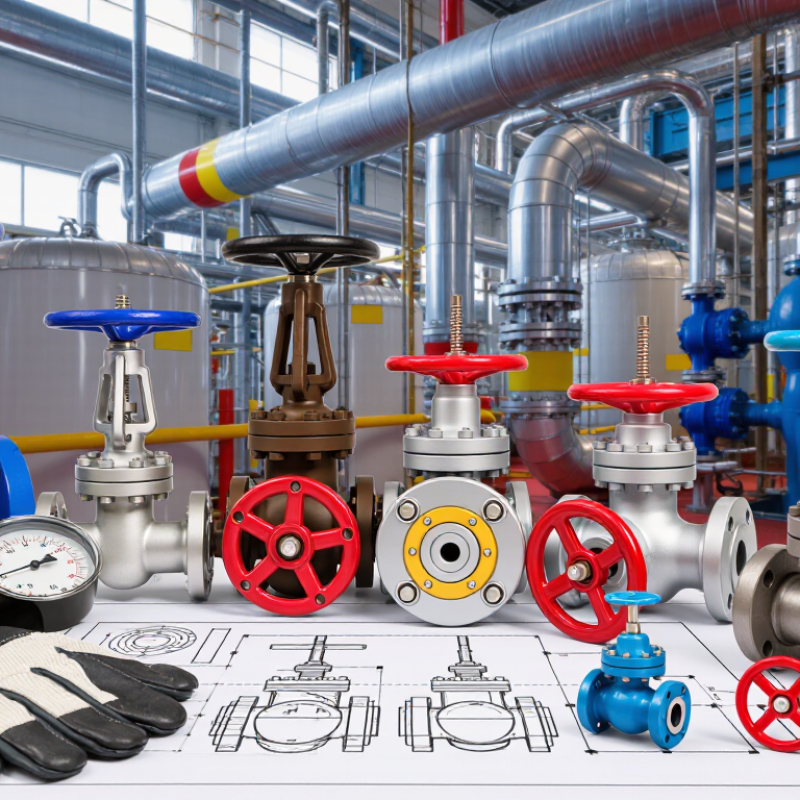
Define Chemical Valve Requirements and Process Conditions
Choosing chemical valves starts with defining the process, not selecting a material from a catalog.
Record the fluid name, concentration, viscosity, density, temperature, pressure, flow range, and phase. Include startup, shutdown, cleaning, and upset conditions.
A valve exposed to 20% acid at 25°C may face a very different risk during a 70°C flushing cycle.
Check solids, crystallization, gas release, and erosion. Small details matter.
A useful valve specification should state required Cv, shutoff pressure, leakage class, connection type, actuator torque, and fail position.
Confirm compatibility for the body, trim, seat, stem, and seals.
The AMPP IMPACT study estimated global corrosion costs at about US$2.5 trillion annually, equal to roughly 3.4% of global GDP.
Material selection deserves more than a quick alloy comparison. Review the SDS, piping drawings, pressure design code, and site maintenance history together.
Do not trust averages alone. Use minimum and maximum values.
In plant reviews, a recurring mistake is defining normal operation while ignoring abnormal conditions.
A valve may work perfectly during steady flow but fail during vacuum, thermal shock, or blocked discharge.
If concentration or temperature is uncertain, mark the assumption clearly and request better data. That small act improves purchasing decisions. It also helps engineers challenge an attractive but incomplete specification.
NIST’s Engineering Statistics Handbook emphasizes measurement uncertainty and data quality; valve decisions should follow the same discipline.
Match Valve Materials with Chemical Compatibility
Match Valve Materials with Chemical Compatibility
Choosing a chemical valve begins with the fluid, not the price or connection size. Identify the chemical name, concentration, temperature, pressure, and flow condition. A stainless body may handle one solution well but corrode quickly in another. Acids, solvents, oxidizers, and chlorides each create different risks. Consider the seat, stem, diaphragm, and seals too. The smallest seal can become the weakest point.
Tip 1: Request compatibility data for every wetted part. Do not rely on the valve body material alone.
Tip 2: Check performance at the highest operating temperature. Heat can accelerate swelling, embrittlement, and chemical permeation.
Tip 3: Confirm whether the fluid changes during cleaning, dilution, or storage. These overlooked stages often expose materials to harsher conditions.
In field evaluations, I compare supplier data with the actual process recipe and maintenance schedule. A compatibility chart is useful, but it is not a final answer. Test samples when the chemical is concentrated, mixed, or unusually warm. Small-scale testing may reveal discoloration, stiffness, or leakage before installation. Material names can also hide important differences in grade and manufacturing quality. Ask for technical documents, test conditions, and traceable material information. If the data is incomplete, pause the purchase. That delay is usually cheaper than an emergency replacement.
Evaluate Pressure, Temperature, and Safety Ratings
When choosing chemical valves, start with the complete pressure envelope, not the normal operating point. Record operating, design, test, and transient pressures separately. Water hammer, blocked outlets, and thermal expansion can exceed routine readings. ASME B16.34 pressure-temperature tables show why pressure ratings decline as temperature rises. A valve rated for 1,000 psi at ambient conditions may accept far less at 400°C. Check the exact material, flange class, trim, and gasket combination.
Temperature compatibility requires more than checking the process fluid. Review start-up, shutdown, cleaning, and emergency conditions. Elastomers may harden, soften, or swell during chemical exposure. Metal seats can lose sealing performance after repeated thermal cycles. The Energy Institute’s 2023 Process Safety Performance Indicators report tracks loss-of-containment events by severity tiers. That framework supports a practical question: could one failed seal escalate into a larger release? Sometimes, the datasheet hides this risk.
Safety ratings should match the actual hazard scenario. API 607 and API 6FA address fire testing, while ISO 15848-1 evaluates fugitive-emission performance. IEC 61508 concerns functional safety systems, not automatic valve certification. Do not treat a SIL claim as a complete protection strategy. I would also challenge my first valve selection after reviewing maintenance access, inspection history, and failure position. It is easy to overvalue a high pressure class. The better choice may depend on corrosion allowance, actuator response, and verified test evidence. Loose assumptions remain dangerous.
7 Tips for Choosing Chemical Valves for Global Buyers
Evaluate pressure, temperature, material compatibility, leakage control, safety ratings, actuation requirements, and international standards before selecting a chemical valve.
- Confirm the maximum operating pressure and temperature.
- Compare the valve rating with the complete pressure-temperature condition.
- Select body and trim materials that resist the process chemicals.
- Check shutoff performance and the required leakage class.
- Review fire-safe, fugitive-emission, and hazardous-area requirements.
- Choose manual or automated actuation according to control needs.
- Verify compliance with applicable standards such as ASME B16.34, ISO 15848, and IEC 61508 where relevant.
Data note: The chart shows nominal pressure ratings at approximately 38°C (100°F) for carbon-steel valve classes, based on pressure-temperature ratings commonly specified in ASME B16.34. Actual allowable pressure decreases as temperature rises and must be verified against the valve material and applicable standard.
Compare Standards, Maintenance, and Global Supply Factors
Choosing chemical valves for global service requires more than matching pipe size and pressure. Compare ISO, ASME, and regional standards before requesting quotations. Check material compatibility with the actual chemical, concentration, temperature, and cleaning process. A valve suitable for water may fail quickly in an aggressive process. Ask for pressure-test records, material certificates, and clear dimensional drawings.
Maintenance planning matters just as much. Select designs with accessible seals, replaceable liners, and practical inspection points. Confirm whether technicians can service the valve without removing nearby piping. Keep critical gaskets and actuator parts locally, when possible. Small delays can stop an entire production line. Do not overlook corrosion under insulation or residue trapped around the stem.
Global supply factors deserve equal attention. Compare lead times, export documentation, packaging quality, and technical support across regions. A low purchase price may hide expensive freight, special tooling, or difficult customs clearance. Request consistent part numbering and multilingual maintenance instructions. This reduces mistakes between engineering, purchasing, and site teams. I have seen projects specify excellent valves but fail to secure spare parts. That weakness was preventable.
No choice is perfect. Recheck assumptions with the plant operator. Surface finish, emergency access, and future chemical changes can alter the decision. Use a documented comparison sheet, and record why each compromise was accepted.