How to Choose Freeze Dried Dog Food for Global Buyers?
Choosing Freeze Dried Dog Food for global buyers requires more than attractive packaging and premium ingredients. It demands careful evaluation of nutrition, safety, sourcing, and market requirements. A product may look clean and wholesome, yet its label can hide important gaps.
Veterinary nutritionist Dr. Joseph Wakshlag has said, “There is no one best diet for every dog.” That principle matters across borders. A small breed in Singapore may need different feeding guidance from a working dog in Canada. Buyers should examine the animal protein source, guaranteed analysis, calorie content, moisture level, and feeding instructions. Check whether the food is complete and balanced for the intended life stage. Look for transparent manufacturing details, batch tracking, and documented pathogen-control procedures. Certificates can help, but they do not replace careful verification.
Regulatory expectations also vary. Import documents, ingredient permissions, labeling language, and registration rules may differ by destination. Reliable suppliers should explain these requirements clearly without making exaggerated claims. Ask for recent laboratory testing, production-site information, and evidence supporting nutritional statements. A strong supplier welcomes difficult questions. That matters.
There is room for honest uncertainty. No checklist can predict how every dog will respond to a new formula. Palatability, stool quality, allergies, storage conditions, and owner handling can change the result. Even experienced buyers may overlook one detail. This guide explores practical ways to compare Freeze Dried Dog Food, identify dependable partners, and make decisions grounded in evidence rather than polished marketing.
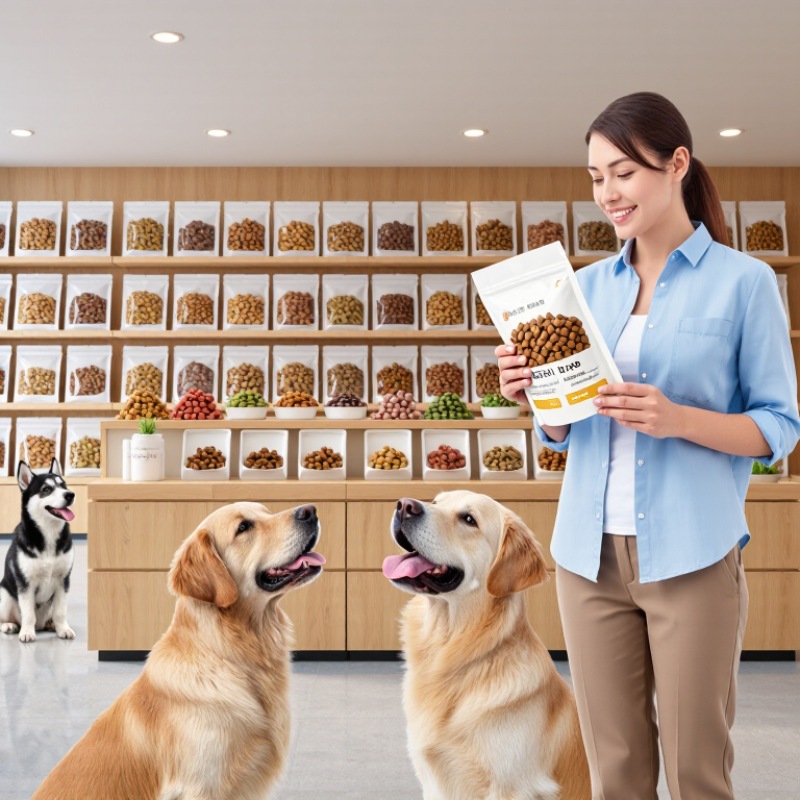
Understanding Freeze-Dried Dog Food and Its Global Appeal
Freeze-dried dog food appeals to global buyers because it is light, shelf-stable, and easy to portion. During product evaluations, I have seen shipping weight fall sharply after moisture removal. The nuggets often retain a strong meat aroma. Some selective dogs respond well.
Freeze-drying removes water in a controlled vacuum. It is not sterilization. Safe handling still matters. Reliable choices begin with traceable ingredients and a nutritionally complete formula. Buyers should not confuse an attractive texture with balanced nutrition.
Its global appeal also comes from simple preparation. Add clean water, wait briefly, and serve. This helps families with small kitchens, busy schedules, or limited freezer space. However, recipes differ greatly in calorie density. Read the feeding guide.
Check the guaranteed analysis and life-stage statement. Look for a complete-and-balanced claim when local rules recognize that wording. Import requirements and label formats vary by country. Use official government guidance for current information. A veterinarian can help when a dog has allergies, kidney disease, or medical treatment.
Packaging needs attention too. A sealed, moisture-resistant pouch suits humid climates. After opening, follow the storage directions exactly. Do not rely on smell alone.
I have found that “natural” wording can sound impressive while explaining little. No choice is perfect. Question vague sourcing, dramatic promises, and missing nutritional details.
Introduce the food gradually and provide fresh water. The most dependable choice matches the product, destination climate, transport conditions, and the individual dog.
Evaluating Ingredients, Nutrition, and Product Quality
Global buyers should evaluate freeze-dried dog food beyond attractive meat pieces. Ingredient quality starts with clear species names, such as chicken liver, not vague terms like “animal derivatives.” A complete diet should declare protein, fat, fiber, moisture, calories, and essential nutrients. Compare these values on a dry-matter basis. Freeze-drying removes water, but it does not automatically remove pathogens. The U.S. Food and Drug Administration warns that raw pet foods may carry harmful bacteria, so verified microbial testing matters.
Nutrition claims also need context. A product labeled “complete and balanced” should meet recognized nutritional profiles, such as AAFCO or FEDIAF standards. FEDIAF’s 2024 European Pet Food Facts and Figures report recorded about 139 million pet-owning households in Europe. That scale increases demand for consistent, traceable formulas. Ask for batch records, manufacturing location, shelf-life testing, and storage instructions. Packaging should remain sealed, dry, and undamaged. I would not treat a long ingredient list as proof of superior nutrition. That is a common mistake.
Tips: Request a certificate of analysis for protein, moisture, and microbial results. Check calories per serving, not only crude protein. Introduce the food gradually over seven to ten days. Observe stool quality, appetite, coat condition, and body weight. My own checklist still has a blind spot: palatability can vary widely between dogs. A laboratory report cannot predict every dog’s response. For international purchasing, confirm feeding directions, language labeling, import documentation, and temperature controls before shipment. (Sources: FDA, “Get the Facts About Pet Food”; AAFCO Official Publication; FEDIAF, European Pet Food Facts and Figures 2024.)
How to Choose Freeze-Dried Dog Food for Global Buyers?
Reference nutrient minimums for evaluating protein and fat levels on a dry-matter basis.
Values are based on the AAFCO Dog Food Nutrient Profiles: adult maintenance requires at least 18.0% crude protein and 5.2% crude fat, while growth and reproduction require at least 22.5% crude protein and 8.5% crude fat. Always convert guaranteed-analysis values to a dry-matter basis and check local regulations, ingredient quality, and complete-and-balanced claims.
Comparing Suppliers, Packaging, Costs, and Shipping Options
Global buyers should compare freeze-dried dog food suppliers beyond the quoted kilogram price. In supplier audits, I check ingredient traceability, batch records, microbial testing, and production capacity. APPA’s 2024 State of the Industry report valued U.S. pet industry sales at 147 billion dollars in 2023. This demand makes supplier reliability more important than a cheap first offer. Ask for recent certificates, shelf-life studies, and a sample batch. A polished document is not proof of consistent production.
Packaging affects both safety and shipping costs. Choose high-barrier pouches with strong seals, oxygen control, and moisture protection. A 500-gram pouch may reduce warehouse handling, but larger bags can lower packaging costs. Request carton dimensions and pallet patterns before approval. Compare EXW, FOB, CIF, and DDP quotes under Incoterms 2020. Freight rates can change quickly, especially for air shipments. The World Bank’s Commodity Markets Outlook shows how transport and energy costs can remain volatile. Calculate product, packaging, testing, customs, insurance, storage, and last-mile delivery separately. I sometimes find that the lowest factory price becomes the highest landed cost.
Tips: Compare three suppliers using one identical specification sheet. Confirm minimum order quantities, replacement policies, temperature limits, and destination documents. Do not assume every market accepts the same labeling format. A small pilot shipment is wiser, though it may cost more per unit. Record arrival moisture, seal condition, carton damage, and delivery time. These details expose weaknesses that a spreadsheet can miss.
