How to Choose the Right Actuator Valve for Your System?

Choosing the right actuator valve for your system is crucial. In recent years, the actuator valve market has seen significant growth. According to a report by Markets and Markets, the actuator valve market is expected to reach $10.6 billion by 2025. This growth emphasizes the importance of selecting the right product for efficiency and reliability.

Understanding your system's requirements is essential. There are various actuator valve types, each designed for specific applications. For example, electric actuator valves are ideal for precision control, while pneumatic valves excel in rapid response. The choice affects not only performance but also maintenance and operational costs. Choosing poorly can lead to inefficiency and unexpected downtime.

Additionally, some manufacturers may not provide clear specifications. This lack of transparency complicates the selection process. Misunderstandings about actuator valve features can result in compatibility issues. As the industry grows, users must navigate these complexities carefully. Ignoring key factors like pressure ratings and automation standards can be detrimental to overall system performance.

How to Choose the Right Actuator Valve for Your System?

Understanding Actuator Valves: Key Components and Principles

How to Choose the Right Actuator Valve for Your System?

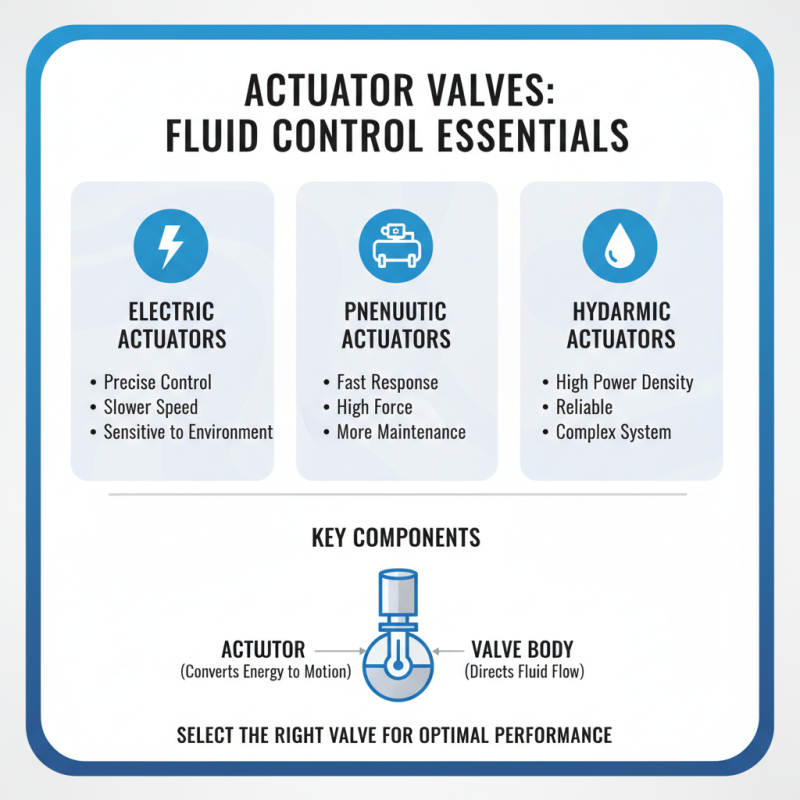
Actuator valves play a crucial role in fluid control systems. Understanding their key components helps in selecting the right valve for any application. The actuator, for instance, is the heart of the system. It converts energy into mechanical motion. This can be electric, pneumatic, or hydraulic. Each type has its strengths and weaknesses. Electric actuators offer precise control, but may struggle in extreme environments. Pneumatic options are faster but often require more maintenance.

The valve itself is critical. It regulates flow and pressure within the system. Various designs exist, such as ball, gate, and globe valves. Each has unique features. Ball valves provide quick shut-off, while gate valves allow for smooth flow. But choosing one can be tricky. Consider the fluid type and pressure. The wrong choice can lead to leaks or failures.

Also, installation and maintenance should not be overlooked. Installation requires space and proper alignment. Poor installation can cause issues later. Regular maintenance is necessary to ensure longevity. Many overlook this step, thinking everything will work perfectly. In real life, issues arise. So, investing time in choosing the right actuator valve is essential for a reliable system.

Types of Actuator Valves: Identifying the Right Fit for Your System

How to Choose the Right Actuator Valve for Your System?

Choosing the right actuator valve for your system can be challenging. Various types exist, each designed for specific applications. Understanding these types can lead to better decisions.

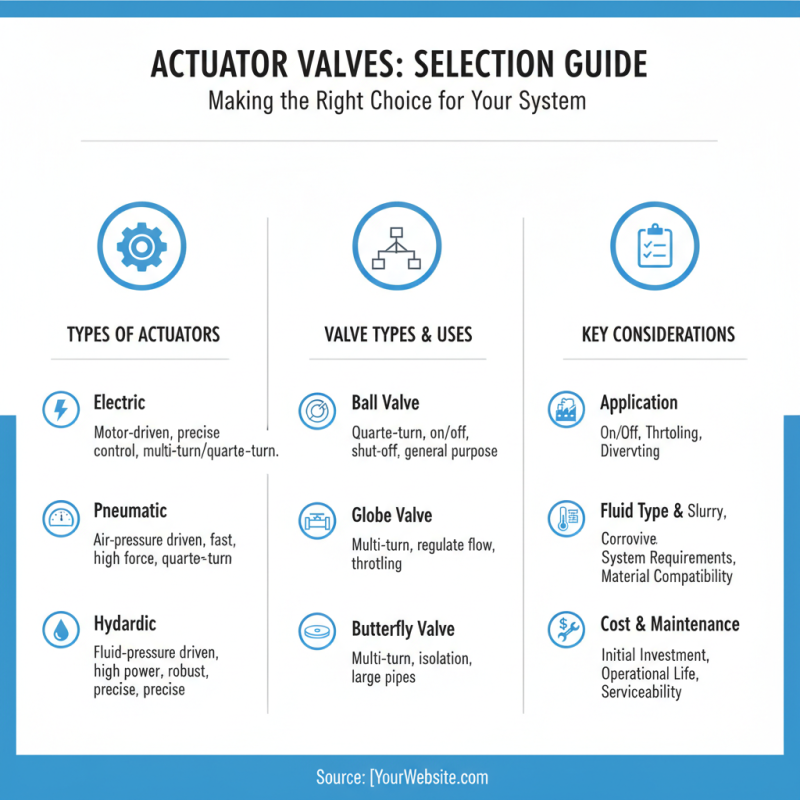
Electric actuators are popular for their precision. They convert electrical energy into mechanical motion. These valves suit applications requiring tight control. Pneumatic actuators use compressed air. They work well in environments needing quick responses. However, they may not be ideal in very cold temperatures.

Hydraulic actuators are powerful. They can handle heavy loads effectively. Yet, they require proper maintenance to avoid leaks. Moreover, solenoid valves operate with an electromagnetic coil. They are a compact solution for automated systems. Choosing one isn't simple. Consider your system's requirements and environment carefully. Each type might fit differently based on your specific needs.

Evaluating System Requirements: Flow Rate, Pressure, and Control Needs

Choosing the right actuator valve involves understanding your system's needs. Evaluating flow rate is crucial. It determines how much fluid moves through your system. A valve that cannot handle the required flow will lead to inefficiencies. Drop in performance is a concern here.

Pressure ratings are another key factor. Valves must withstand the pressures in your system. Too low a rating can lead to failures. If pressure exceeds valve specifications, you could face leaks or damage. Monitor pressure carefully.

Tips: Always refer to detailed specifications. Understand the environment where the valve will operate. Look for variations in temperature and fluid type. These can impact performance.

Control needs also guide your selection. Do you require precise adjustments? Actuator types vary in responsiveness. Some valves offer finer control than others. Basic control may suffice for simple applications, but complexity might warrant advanced options.

Stay aware of these elements. A poor choice in valves can cause costly issues. Re-evaluate your system regularly to ensure everything meets your ongoing requirements. Adapt responsiveness as your system evolves.

Flow Rate and Pressure Requirements for Different Actuator Valves

This chart displays the flow rate (in gallons per minute) and pressure capability (in pounds per square inch) for different actuator valves commonly used in various systems. Understanding these parameters can help in selecting the right actuator valve for your specific needs.

Selection Criteria: Material, Size, and Actuation Method Considerations

When selecting an actuator valve, three critical criteria must be considered: material, size, and actuation method. The right material can significantly impact the valve's longevity and efficiency. According to industry reports, about 30% of valve failures are linked to material incompatibility with the process fluid. For corrosive environments, using stainless steel or specialized alloys is often essential. Understanding the chemical properties of the fluid can guide the material choice to avoid costly replacements.

Size is another crucial factor. An improperly sized valve can lead to flow issues. Data from the Valve Manufacturers Association indicates that nearly 20% of system inefficiencies stem from incorrect valve sizing. Accurate measurements of pipe diameter and flow rates are vital. Assessing these parameters ensures that the actuator valve can manage the desired flow without causing unnecessary pressure drops.

Actuation method also plays a role in efficiency. Electric, pneumatic, and hydraulic actuators each have unique advantages. For instance, pneumatic actuators are often preferred in high-speed applications but can be less precise. A report by the International Society of Automation highlights that about 15% of actuator selections are not suited for specific operational demands. This mismatch can lead to performance issues. Balancing these criteria effectively is key to optimizing system performance.

Installation and Maintenance: Ensuring Optimal Performance of Valves

Proper installation of actuator valves is crucial for their performance. Each valve should be positioned according to the manufacturer's guidelines. Incorrect alignment can lead to leaks or inefficiencies. For example, ensure that the valve is securely mounted and does not wobble. A loose valve may cause vibration. This could lead to premature wear.

Regular maintenance is equally important. Check the seals and gaskets periodically. Replacing worn parts can prevent larger issues. Clean the valve regularly to remove dirt and debris. Neglecting this can lead to clogging. You might overlook this detail, thinking it’s minor. However, small changes can significantly impact system performance.

Don’t ignore the actuator settings. These should be checked frequently to ensure they are functioning as intended. Sometimes, even when everything looks fine, issues can occur. A miscalibrated actuator can cause unexpected behavior, leading to inefficiency. It’s crucial to monitor these settings consistently to avoid surprises during operation.

How to Choose the Right Actuator Valve for Your System? - Installation and Maintenance: Ensuring Optimal Performance of Valves

Dimension Specification Material Usage Maintenance Frequency
Diameter (inches) 1/2, 3/4, 1, 2 Brass, Stainless Steel, PVC Water Supply, HVAC Annually
Operating Pressure (psi) 150, 300, 600 Cast Iron, Alloy Chemical Processing, Oil & Gas Biannually
Temperature Range (°F) -20 to 250 PVC, PTFE, Carbon Steel Food Processing, Pharmaceuticals Quarterly
Response Time (seconds) 0.5, 1, 2 Aluminum, Stainless Steel Automotive, Mining Monthly
Top