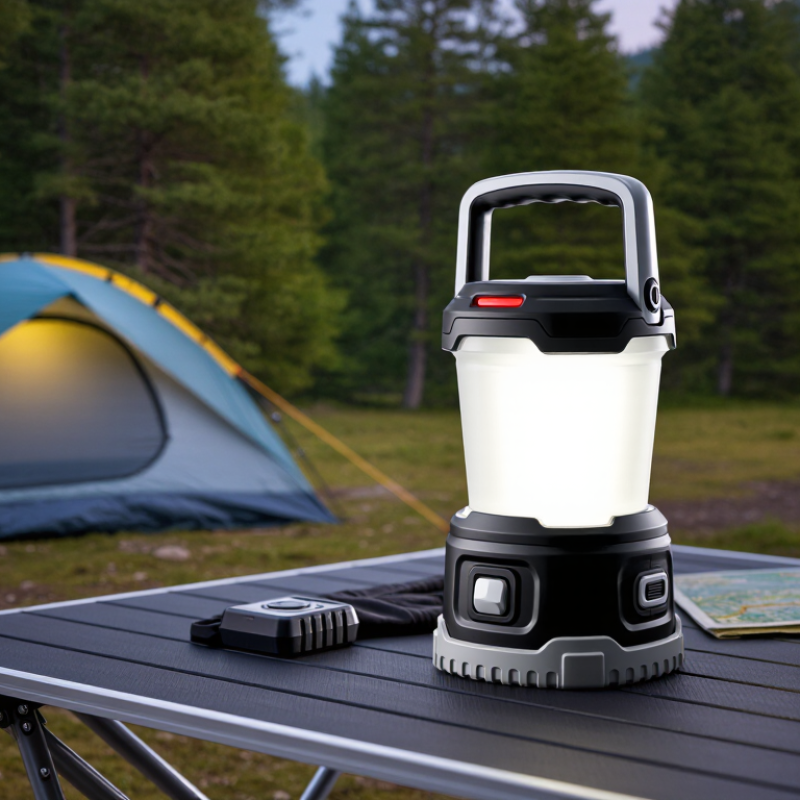
| 1. Assess the ABS housing | Housing material, seams, lens protection, and build quality | Look for a well-finished ABS (acrylonitrile butadiene styrene) body with secure joints and a protected LED lens. Treat “ABS” as a material description, not proof that a light is waterproof or unbreakable. | ABS is a commonly used thermoplastic, but resistance to impact, heat, and weather depends on the design and construction of the complete light. |
| 2. Match brightness to the task | Light output in lumens and dimming options | Compare stated lumen ratings and choose a light with more than one brightness setting. Lower output can suit close-up tasks; higher output can illuminate a larger area, but may use more power. | Lumens measure the total visible light emitted. Actual usefulness also depends on beam spread, diffuser design, and how the light is positioned. |
| 3. Check the light color | Color temperature and available lighting modes | If comfort around a campsite matters, consider a warm-white option. For general visibility, compare neutral or cool-white options. Check whether the product lists color temperature in kelvins and whether it offers a red-light mode. | Color appearance varies between lights. A red mode can help preserve night vision, but its availability and brightness differ by model. |
| 4. Compare runtime and power source | Battery type, capacity, charging method, and runtime specifications | Check whether the light uses rechargeable or replaceable batteries, how it charges, and the stated runtime at each brightness level. Treat runtime as setting-dependent and review the manufacturer's test conditions. | Higher brightness generally drains a battery faster. Charging access and battery replacement options can be important on longer trips. |
| 5. Verify weather protection | Ingress Protection (IP) rating | Look for a clearly stated IP rating and check what it means. For example, IPX4 indicates protection against water splashes from any direction under specified test conditions; it does not mean the light can be submerged. | “Water-resistant” alone does not describe a standardized level of protection. Follow the rated limits and keep charging ports properly closed. |
| 6. Choose useful controls and mounting | Switch layout, handle, hook, magnet, or tripod compatibility | Consider whether the switch is easy to find in the dark and whether the light can hang, stand, or attach where you need it. Check the intended use and load limits for any hook or mounting feature. | Good placement can spread light more evenly and keep the lantern off the ground, while simple controls make brightness changes easier at night. |
| 7. Balance size, weight, and durability | Dimensions, weight, portability, and care instructions | Compare the listed weight and packed dimensions with your available storage space. Check for a stable base and inspect the manufacturer's guidance for cleaning, storage, and operating temperatures. | A compact light is easier to pack, while a larger design may offer a broader diffuser or more substantial base. The best balance depends on the trip and intended use. |
| Note: Specifications and performance vary by model. Confirm ratings, runtime conditions, battery details, and care instructions in the product documentation before purchase. |