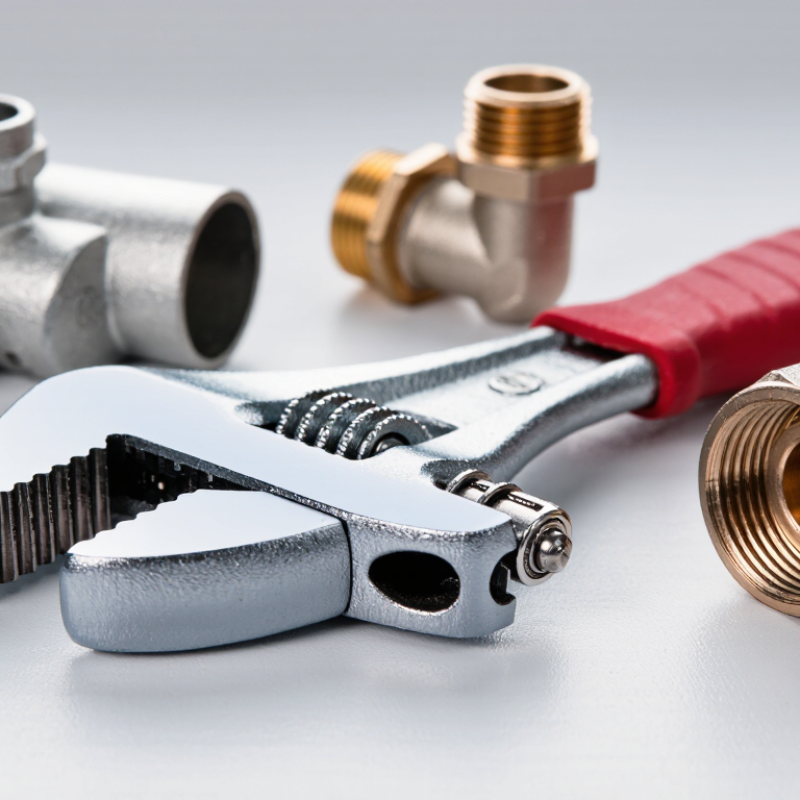
| Operating Principle | Adjustable upper jaw with a threaded adjustment nut | The nut changes the distance between the upper and lower jaws. When force is applied, the serrated jaws grip the pipe more tightly. | Choose a wrench with smooth adjustment and minimal jaw movement. |
| Jaw Design | Offset, serrated jaws; commonly positioned at approximately 15° from the handle | The offset jaw improves access around fittings, while the teeth bite into the pipe surface to resist slipping. | Use offset jaws for general plumbing and maintenance work. |
| Nominal Wrench Length | 6, 8, 10, 14, 18, 24, 36, or 48 inches | Longer handles provide greater leverage but add weight and require more working space. | Select the shortest wrench that can deliver the required torque. |
| Approximate Maximum Pipe Capacity | 6 in: up to 3/4 in
8 in: up to 1 in
10 in: up to 1 1/2 in
14 in: up to 2 in
18 in: up to 2 1/2 in
24 in: up to 3 in
36 in: up to 5 in
48 in: up to 6 in | Capacity refers to the approximate outside diameter of round pipe that the jaws can grip. Actual capacity varies by jaw profile and manufacturer design. | Match the wrench capacity to the pipe outside diameter, not only the nominal pipe size. |
| Common Construction | Forged steel body with hardened, replaceable or integral toothed jaws | Forged steel provides strength under high loads, while hardened teeth improve grip and wear resistance. | Choose a forged body and clearly defined, evenly formed teeth. |
| Handle Shape | I-beam, tapered, or straight handle; typically with a broad heel | A shaped handle improves stiffness and helps distribute force during tightening or loosening. | Select a handle that feels rigid and comfortable without sharp edges. |
| Adjustment Nut | Threaded nut with a knurled or textured surface | The nut controls jaw opening. A loose or damaged nut can cause excessive jaw movement and slipping. | Check that the nut turns freely and holds the jaw securely under hand pressure. |
| Jaw Opening | Varies according to wrench length and jaw geometry | A larger opening increases versatility, but the jaws must still contact the pipe with sufficient tooth engagement. | Avoid using a wrench near the extreme end of its opening range. |
| Leverage | Torque increases as handle length increases | A longer handle produces more turning force for the same hand effort, but excessive force can damage fittings or pipe. | Use a 10–14 inch wrench for many household tasks and larger sizes for heavy-duty work. |
| Portability | Short models are easier to carry; long models are heavier and bulkier | Compact tools fit tight spaces, while large tools are better suited to structural pipework and high-torque applications. | Keep a compact wrench for confined areas and a longer wrench for accessible, high-load work. |
| Pipe Surface Compatibility | Best suited to steel, galvanized steel, and other strong round metal pipe | Serrated teeth can mark or deform softer materials, thin-wall tubing, finished surfaces, and plastic pipe. | Use a strap wrench or an appropriate smooth-jaw tool for delicate surfaces. |
| Working Clearance | Requires room for the handle to swing and for the jaws to align with the pipe | Restricted access can prevent full jaw engagement and may increase the risk of slipping. | Choose a shorter wrench or a different jaw orientation for confined spaces. |
| Grip and Safety | Firm hand grip; no extension pipe should be added to the handle | Handle extensions can generate excessive torque, overload the tool, and damage the pipe or fitting. | Use the correct wrench size and keep both jaws fully engaged before applying force. |
| Maintenance | Clean teeth and threads; light lubrication on the adjustment mechanism | Removing debris maintains tooth engagement, while lubrication helps the adjustment nut operate smoothly. | Inspect the teeth, jaw alignment, handle, and adjustment nut before each demanding task. |
| Best Overall Selection | Forged steel body, hardened teeth, secure adjustment nut, suitable capacity, and comfortable handle | A good adjustable pipe wrench balances grip, leverage, durability, access, and safe handling. | Prioritize correct capacity and secure jaw engagement over maximum size. |