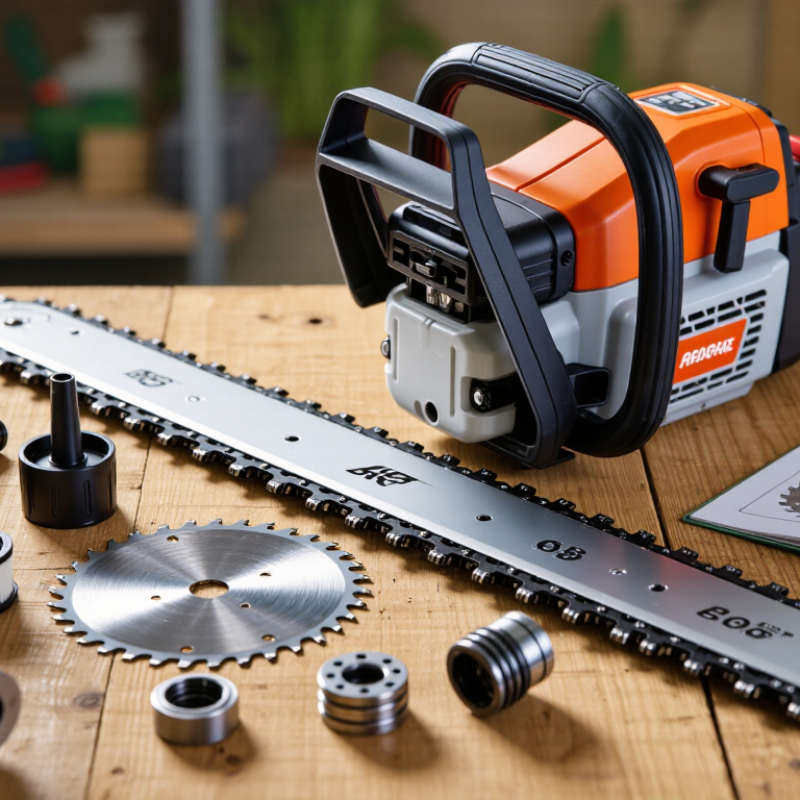
A replacement part can look right on a workbench and still change how a brushcutter behaves. Use ISO 11806-1:2022 as a safety screen, not a substitute for the machine’s instructions. The standard sets safety requirements and test methods for engine-driven brushcutters and grass trimmers, including guards, handles, controls, and cutting attachments. Check the exact model and attachment configuration before fitting a safety-critical part.
Compare the part with the OEM limits for dimensions, material, and operating speed. For a blade, inspect its bore, thickness, balance, and permitted diameter; for a guard, check its coverage and mounting points. Small gaps matter. Do not assume a part is suitable because its bolt holes line up. ISO 11806-1 evaluates the machine as a system, so a component’s apparent fit does not prove that the assembled tool meets the standard. The ISO standard is the primary technical reference; the machine’s service documentation supplies model-specific limits.
Keep traceable records: supplier, part number, batch, and inspection results. Reject cracked plastic, distorted metal, loose fasteners, or unclear material specifications. A caliper helps, but it cannot verify heat treatment or fatigue strength. That’s an easy limit to forget. If a supplier gives no tolerance or test evidence, pause and ask for it rather than guessing. A careful visual check is useful, but it is not a certification test.