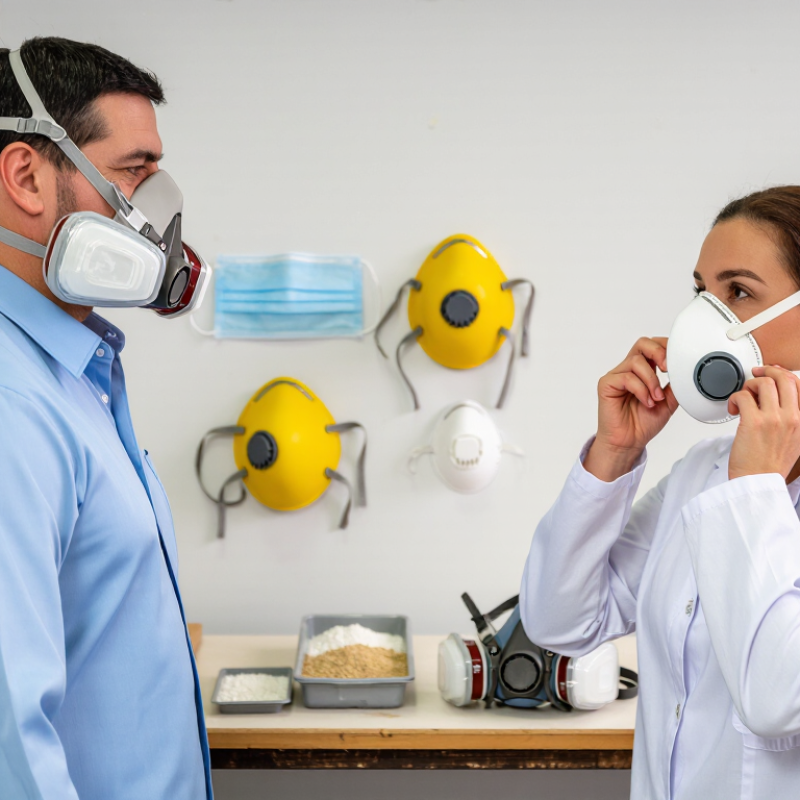
| Disposable filtering facepiece (for example, an N95-type respirator) | Particulate hazards such as dust, when the respirator is selected and used according to the hazard and applicable requirements. | Do not wash or clean with soap, solvents, or disinfectants. Moisture and cleaning agents can affect the filter or fit. | Use only as permitted by workplace rules and the respirator manufacturer. Do not share. Storage between uses should keep it clean, dry, and undamaged. | Replace if wet, visibly dirty, damaged, difficult to breathe through, or unable to seal properly. Follow any applicable use limits and workplace procedures. | Check the straps, nose area, and face seal. Perform a user seal check each time it is put on; a seal check is not a substitute for required fit testing. |
| Reusable elastomeric half-mask respirator with particulate filters | Repeated tasks involving particles, when the respirator and filters are suitable for the hazard and the wearer is properly fitted. | Remove filters as directed, then clean and disinfect the facepiece using the manufacturer’s instructions. Let it dry fully before reassembly. | The facepiece can be reused if it remains in good condition and is cleaned, inspected, and stored correctly. Do not share unless it has been properly cleaned and disinfected. | Replace filters according to the manufacturer’s instructions and workplace schedule, or sooner if damaged, contaminated, wet, or noticeably harder to breathe through. Replace the facepiece if it is cracked, distorted, or has worn straps or valves. | Inspect the facepiece, valves, straps, seals, and filter connections. Confirm that the correct filters are installed and that the respirator passes a user seal check. |
| Reusable elastomeric full-face respirator with particulate filters | Particle hazards where a compatible full-face respirator is selected; it may also provide eye protection when properly fitted and approved for the task. | Clean and disinfect the facepiece after use as directed by the manufacturer. Remove filters first if instructed, and dry all parts before storage. | Reusable only when maintained, inspected, and stored according to the manufacturer’s instructions and the respiratory protection program. | Replace filters as specified or when damaged, contaminated, wet, or breathing resistance increases. Replace the facepiece if the lens, seal, valves, or other components are damaged or no longer function correctly. | Check the lens for cracks or poor visibility, inspect the seal and valves, and verify fit. A full-face design still requires correct selection and fit testing where applicable. |
| Cloth face covering or non-certified dust mask | May help limit some nuisance dust in low-risk situations, but it is not a substitute for a certified respirator when hazardous airborne particles are present. | Wash reusable fabric coverings according to their care instructions and allow them to dry completely. Do not assume washing makes them suitable for occupational dust hazards. | Reuse only if the covering is intended to be washable and remains intact. Do not share it. | Replace if torn, stretched, heavily soiled, or unable to cover the nose and mouth securely. | Confirm that the task does not require a properly selected and fitted respirator. Fabric coverings do not provide the same verified filtration and seal as certified respirators. |