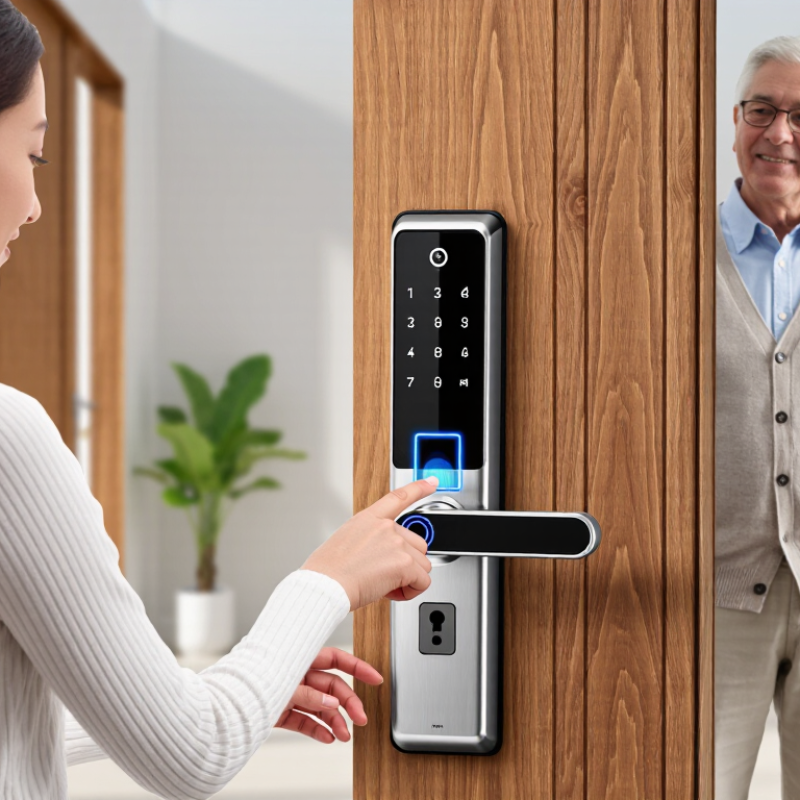
| Lock and door security | Check the deadbolt, strike plate, mounting hardware, door fit, and any applicable independent security certification. Confirm what the certification covers. | Solid installation instructions, a reinforced strike area, and clearly documented test results or certification for the relevant lock hardware. | A fingerprint reader does not make a weak door, frame, or strike plate resistant to forced entry. A certification may cover only specific components or tests. | 25% |
| Fingerprint accuracy | Look for published false acceptance and false rejection information, together with the test method, sample conditions, and sensor type. | Performance data is clearly explained, and the manufacturer describes how the reader handles repeated scans and difficult reads. | Accuracy depends on the device, setup, and finger condition. Be cautious of accuracy claims that lack test conditions or use undefined terms such as “100% accurate.” | 20% |
| Spoof resistance | Check whether the lock describes liveness or presentation-attack detection and whether independent testing is available. | Specific, verifiable information about the detection method and the scope of any relevant testing. | A sensor label alone does not prove resistance to every imitation or attack. No single feature guarantees that a biometric system cannot be spoofed. | 15% |
| Biometric privacy and storage | Find out whether fingerprint data stays on the lock or is sent elsewhere, how it is protected, and how it can be removed. | Clear documentation of storage location, access controls, encryption where applicable, retention, deletion, and any data sharing. | Do not assume that “encrypted” means data is stored locally or that it is never transmitted. Review the privacy policy and app permissions. | 15% |
| Fallback entry and power failure | Check for alternative access methods, low-battery warnings, and the documented procedure for a depleted battery or lock malfunction. | A practical backup method is available and can be tested before installation; battery status and emergency procedures are clearly explained. | Confirm that the backup method suits your household and that it does not create an easier route for unauthorized entry. | 10% |
| Enrollment and user management | Review the process for adding, naming, and deleting fingerprints, and check whether access can be revoked without resetting the entire lock. | Authorized users can be managed easily, and lost or removed users can be deleted promptly. | Check any limits on stored fingerprints and whether administrator access is protected from casual changes. | 5% |
| Software updates and connected features | If the lock connects to an app or network, check update availability, account security, connectivity requirements, and support commitments. | Updates and security practices are documented, and core entry requirements are clear when internet or app access is unavailable. | Connected features add accounts and software to the security picture. Confirm which features require a network connection or subscription. | 5% |
| Weather and installation suitability | Check the lock’s stated operating conditions and suitability for the door location, exposure, door thickness, and handing. | Specifications match the intended installation, and the instructions address the door type and environmental conditions. | Do not infer outdoor durability from appearance alone. A lock suitable for a sheltered entrance may not suit direct exposure to weather. | 5% |