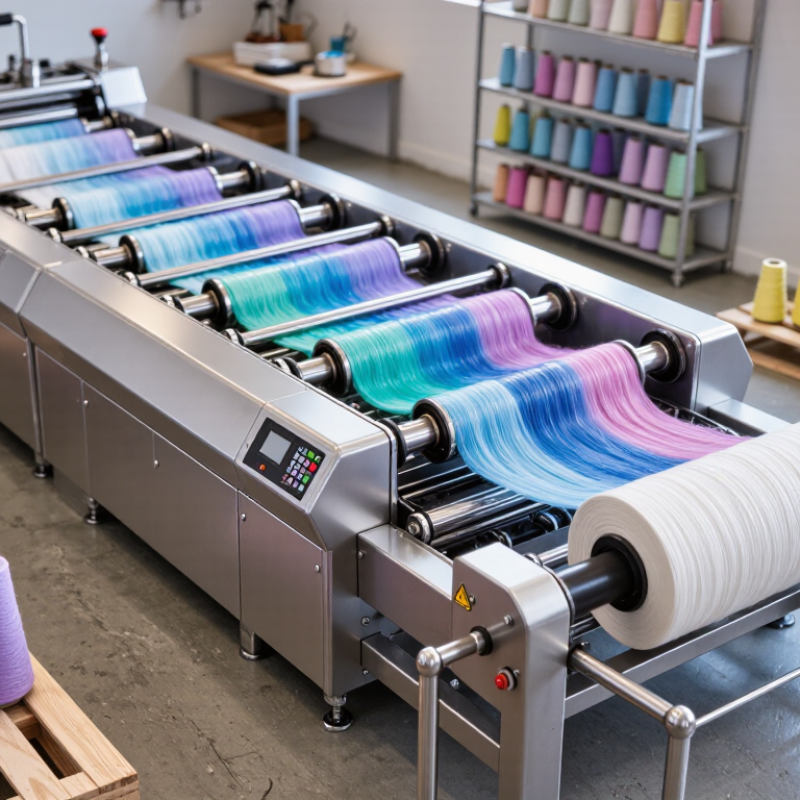
When comparing gradual yarn machines, measure kWh/kg and L/kg on the same yarn count, batch size, shade depth, and production schedule. Ellen MacArthur Foundation’s 2017 report, A New Textiles Economy, estimates that textile production uses about 93 billion cubic metres of water annually. That sector-wide figure is not a machine benchmark. It does show why rinse-water use deserves a place beside electricity in your cost sheet. Record meter readings per accepted kilogram, not per batch started. Include heating, rinsing, standby, and rejected yarn.
Changeover time can quietly erase savings. Time the full interval from the last good kilogram of one shade to the first good kilogram of the next. Log cleaning, recipe adjustment, and quality checks separately. Then compare hours lost per change, not just the machine’s advertised cycle. Uptime matters too. Calculate it from scheduled production hours, and note whether stoppages came from the machine, utilities, or yarn faults. Small distinctions matter.
Use at least several weeks of production data before deciding. Textile Exchange’s 2023 Materials Market Report estimates global fibre production reached 116 million tonnes in 2022; that is industry context, not evidence that one machine is more efficient. Ask suppliers for test conditions behind every quoted figure, then verify them with your own meters. I would distrust a perfect-looking spreadsheet. One awkward shift can expose what the averages hide.