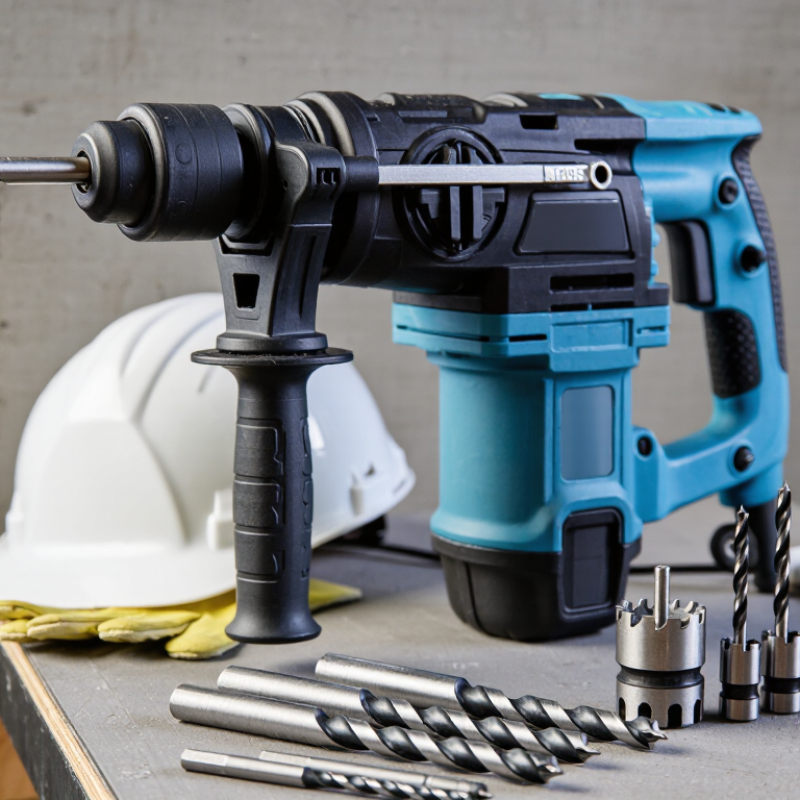
When comparing SDS Plus hammer drills, read impact energy, blows per minute, and RPM together. Impact energy, measured in joules, describes the force delivered by each strike. It matters when drilling dense concrete or making wider holes. More joules can help, but ratings may use different test methods, so figures are not always directly comparable. Check the manual’s recommended bit sizes, too.
Blows per minute (BPM) shows how often the mechanism strikes. A high BPM can support steady progress in masonry, but it does not guarantee faster drilling. Bit condition, concrete hardness, and the operator’s pressure all affect results. Don’t lean on the tool too hard. On a renovation job, a drill may slow noticeably when a worn bit meets a hard aggregate patch.
RPM measures rotational speed. It influences how quickly the bit turns, especially in rotation-only tasks with a suitable bit and setup. High RPM is not automatically better for hammer drilling; the right speed depends on the bit diameter and material. Numbers need context. Compare tools using similar operating modes and realistic hole sizes, then consider vibration, weight, and control. I’ve found that spec sheets make this part look cleaner than it feels on site.