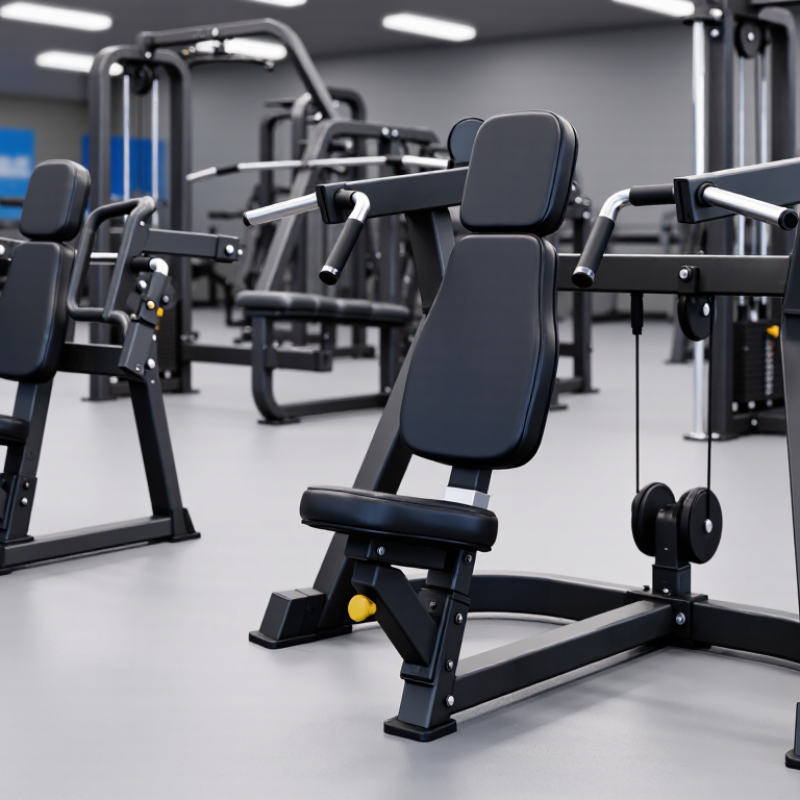
| Selectorized Shoulder Press | Weight stack connected to a cable and pulley system | Quick, incremental loading with relatively consistent resistance throughout the movement | High | Adjustable seat height, back support, and starting position on many commercial models | Adjustable range-of-motion limiter, enclosed weight stack, non-slip handles, and a stable back pad | General fitness users, supervised facilities, and high-volume gyms | Choose a machine with smooth pulley travel and enough seat adjustment to keep the handles near shoulder level |
| Plate-Loaded Shoulder Press | Olympic or standard weight plates loaded onto machine arms | Direct loading allows substantial resistance; resistance may feel heavier or lighter at different joint angles | High | Usually includes seat-height and starting-position adjustments; loading is less convenient than a weight stack | Independent safety catches, mechanical start handles, positive stops, and secure plate-storage posts | Strength-focused users and experienced lifters | Verify that the safety stops can be set without limiting a comfortable overhead range of motion |
| Converging or Independent-Arm Press | Separate lever arms driven by weight stacks or weight plates | Arms move independently and may converge slightly, allowing separate loading for each side | High | Seat height, handle position, and starting range are commonly adjustable | Independent arm stops, controlled return movement, comfortable neutral-grip handles, and a secure back pad | Users seeking balanced development and a more natural pressing path | Check that both arms move evenly and that the starting position does not force excessive shoulder extension |
| Cable-Based Shoulder Press Station | Adjustable cable columns with handles or a press attachment | Variable resistance and movement path; loading depends on pulley ratio and cable angle | Medium | Highly adjustable pulley height, handle position, seat setup, and exercise angle | Locking pulley mechanism, secure cable attachments, visible weight-pin engagement, and adequate clearance around the user | Functional training areas and users who want multiple pressing variations | Prioritize frame rigidity and cable alignment because poor setup can reduce stability during heavier presses |
| Pneumatic Shoulder Press | Compressed-air resistance controlled by a pressure regulator | Low-inertia resistance with smooth loading; resistance is typically changed by adjusting air pressure | High | Seat, handles, start position, and resistance level are generally easy to adjust | Pressure-release control, adjustable range limiter, emergency stop where available, and protected moving parts | Rehabilitation, circuit training, and facilities requiring low-impact resistance | Confirm that the facility has a reliable air supply and that resistance changes are clearly visible to the user |
| Smith-Style Guided Shoulder Press Setup | Barbell moving along fixed vertical or slightly angled guide rails | Free-weight loading with a guided bar path; the fixed path may not suit every shoulder structure | Medium | Bench angle, seat position, and bar height can be adjusted, but the bar path is fixed | Adjustable safety catches, secure locking hooks, stable bench, and sufficient overhead clearance | Experienced users who prefer guided barbell pressing | Test the bar path before loading and ensure the safety catches are positioned below the lowest safe point |
| Seated Lever-Arm Press | Pivoting lever arms with weight plates or integrated resistance modules | Mechanical leverage changes through the range of motion and can create a strong peak at certain angles | Medium | Seat height, handle position, and starting angle vary by design | Controlled return mechanism, start-position lock, end stops, and padded back and seat support | Users who prefer a simple mechanical design and direct pressing feel | Choose a model that keeps the handles aligned with the forearms without forcing the elbows excessively outward |