| Stainless Steel Grade | Look for a clearly stated grade, such as 304 or 316 stainless steel. | Grade 304 is commonly used for food-processing equipment. Grade 316 offers improved resistance to chlorides and some more aggressive environments. Choose based on exposure and cleaning conditions. | Different stainless grades vary in corrosion resistance; “stainless steel” alone does not identify the alloy. |
| Construction and Joints | Inspect bends, welds, joints, and the hook-to-handle connection for cracks, gaps, rough edges, or visible defects. | Prefer a sturdy, well-finished design with smooth, accessible joints. Confirm that the hook is intended for the handling task rather than relying on appearance alone. | Damaged or poorly finished areas can weaken a hook and make cleaning more difficult. |
| Load Capacity | Check the stated working-load limit and any instructions about load direction or use. | Use the manufacturer’s specified rating; do not infer capacity from wire thickness or hook size. Avoid overloading, shock loading, or using a hook that is bent or damaged. | Safe capacity depends on the design, material, manufacturing, and intended application. |
| Surface Finish | Check for a smooth, cleanable finish without burrs, flaking, deep scratches, or corrosion. | Select a finish that can be inspected and cleaned effectively. Follow the supplier’s care instructions, especially after contact with salts or cleaning chemicals. | Rough or damaged surfaces can retain soil and may be more vulnerable to corrosion. |
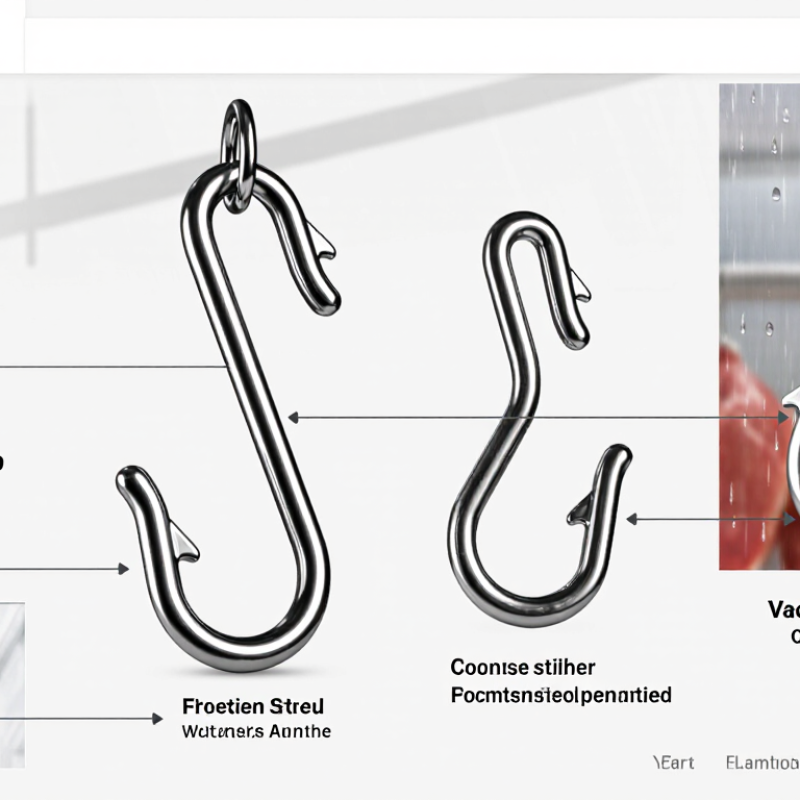
| Hook Shape and Size | Consider the point, throat opening, curve, and overall size in relation to the product being handled. | Choose a shape that securely supports the intended cut or product without creating unnecessary puncture damage. Use a purpose-designed hook for the task. | A suitable shape helps keep the load stable and reduces avoidable damage during handling. |
| Food-Contact Suitability | Review product documentation for the intended food-contact use and applicable local requirements. | Ask for material and compliance information when needed. Requirements vary by jurisdiction and application; a stainless-steel grade by itself is not a complete compliance statement. | Food-contact suitability depends on the material, finish, use conditions, and applicable regulations. |
| Cleaning and Sanitizing | Check whether all surfaces and joints are accessible for the facility’s cleaning procedure. | Follow the equipment supplier’s cleaning instructions and the facility’s validated sanitation procedures. Rinse and dry as directed, and avoid chemicals that are incompatible with the alloy. | Effective cleaning depends on both the hook’s design and the cleaning process used. |
| Inspection and Storage | Look for deformation, cracks, loose parts, corrosion, or damaged surfaces before use. | Remove defective hooks from service. Store cleaned hooks in a designated area where they can dry and are protected from contamination. | Routine inspection helps identify damage, while suitable storage helps maintain hygiene and condition. |