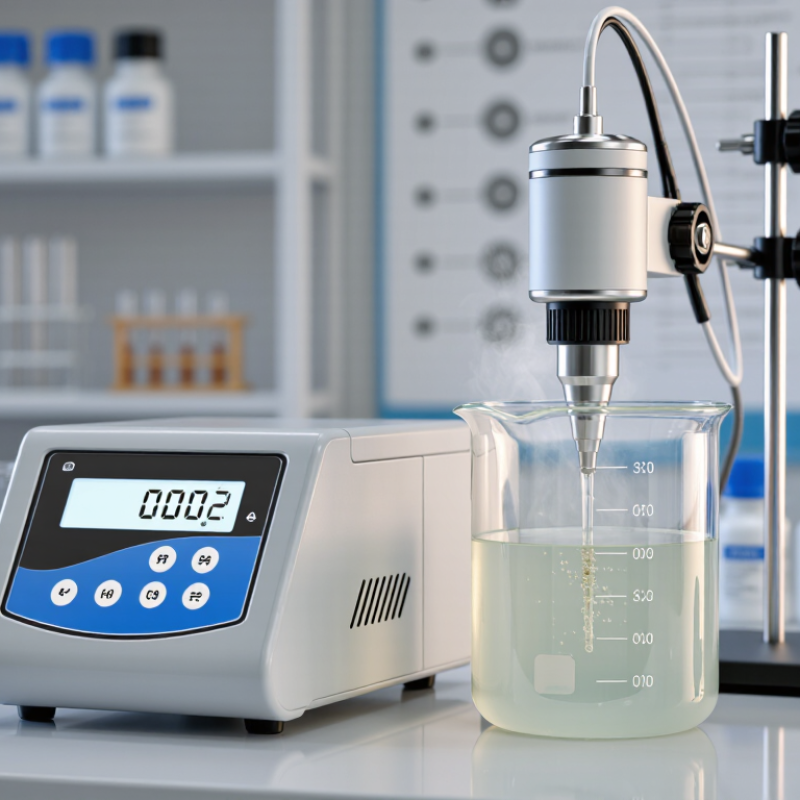
| How it works | A vibrating probe, or sonotrode, transfers acoustic energy directly into the liquid. Cavitation—formation and collapse of bubbles—creates strong local shear that can disperse particles and droplets. | Transducers vibrate the bath liquid, which transfers ultrasound indirectly through the sample vessel. Energy reaching the sample is generally less concentrated than with a probe. | Choose direct probe treatment for intensive, targeted processing; consider a bath for gentler, indirect treatment of multiple closed vessels. |
| Typical use | Deagglomeration, emulsification, particle-size reduction, cell disruption, and other applications needing substantial energy input. | Cleaning, degassing, and lower-intensity sonication of several samples or vessels at once. | Match the equipment to the required result; a bath may not provide sufficient intensity for demanding dispersion work. |
| Sample volume and scale | Commonly used for samples from a few millilitres to several litres, depending on probe size, power, vessel geometry, and process requirements. | Capacity is determined by tank dimensions. The volume of the sample itself depends on the vessels placed in the bath and the bath’s usable space. | Check the manufacturer’s stated operating range and validate performance at the intended batch size; scaling up can change energy distribution and cooling needs. |
| Frequency | Many high-power probe systems operate near 20 kHz; other frequencies are available for particular applications. | Cleaning and laboratory baths commonly operate in the tens-of-kilohertz range, often around 35–45 kHz; specifications vary by unit. | Frequency alone does not determine performance. Compare the complete system and test it with the actual material. |
| Power and intensity | Power ratings vary widely across laboratory and production systems. A probe delivers energy into a relatively small area, so local intensity can be high. | Power is distributed through the bath and affected by tank loading, liquid level, vessel position, and sample-vessel material. | Do not compare wattage alone. Ask for delivered-power information or application data, and confirm results using a representative sample. |
| Temperature management | Probe sonication can heat samples quickly. Pulsed operation, an ice bath, or active cooling may be needed for temperature-sensitive materials. | The bath and samples can warm during operation; some baths provide temperature control, but cooling capacity varies. | Set a temperature limit and monitor the sample itself, rather than relying only on the bath or instrument display. |
| Sample contact and contamination | The probe contacts the sample directly and can introduce wear particles over time. Probe material, condition, and cleaning procedures matter. | Samples can remain in closed containers, reducing direct equipment contact, provided the vessels are suitable and positioned correctly. | For sensitive or contamination-critical work, assess wetted materials, cleaning validation, and whether indirect treatment meets process requirements. |
| Process control | Look for adjustable amplitude, pulse mode, timer, and temperature monitoring. These controls help make processing more repeatable. | Check for adjustable power, timer, temperature control, and degassing functions where relevant. | Record the settings and sample conditions used in successful trials; nominal settings alone may not transfer between instruments. |
| Practical limitations | Requires suitable probe immersion and positioning; high local intensity can cause heating, foaming, or splashing if process conditions are not controlled. | Treatment can be less uniform or less intense, and performance may vary with vessel placement, bath loading, and maintenance. | Assess noise, ventilation, sample containment, operator safety, cleaning, and maintenance before purchase. |
| Best fit | Choose when direct, relatively high-intensity energy input and control over a single sample are priorities. | Choose when indirect treatment, simpler handling, or simultaneous treatment of several suitable vessels is more important than maximum dispersion intensity. | Before selecting a system, run a trial using the real formulation, target batch size, required processing time, and acceptable temperature range. |