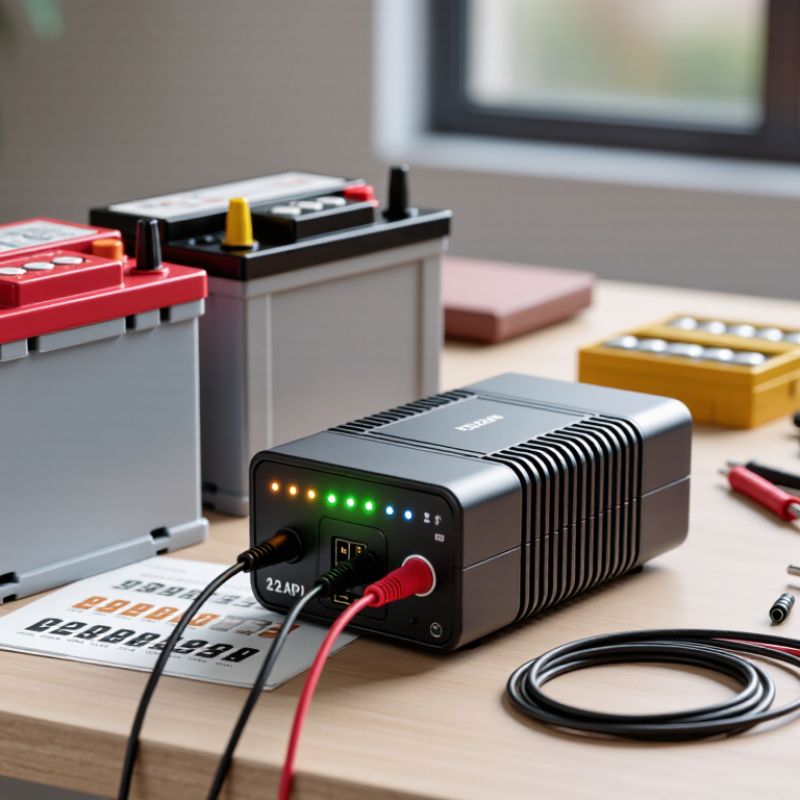
| Standard charging | Supplies charging current up to 2 A, subject to the charger's control system and the battery's condition. | Small 12 V batteries whose manufacturer permits a charging current of 2 A. | Confirm the battery chemistry and recommended charging current. A 2 A rating is a maximum output, not a guaranteed constant current. |
| Multi-stage charging | A typical smart charger may use bulk, absorption, and float stages; voltage and current behavior varies by model and battery type. | Lead-acid batteries, including compatible flooded, AGM, or gel types. | Choose a profile specifically approved for the battery. Not every charger supports every lead-acid type. |
| Lithium charging profile | Uses a charging profile designed for the specified lithium battery chemistry; settings are not interchangeable with lead-acid profiles. | Only lithium batteries explicitly supported by the charger, such as certain 12.8 V LiFePO4 batteries. | Verify the exact chemistry, voltage limits, and battery-maker requirements. Do not charge a lithium battery with an incompatible mode. |
| Float or maintenance mode | After charging, a compatible charger may reduce output or maintain a suitable voltage. Behavior depends on the charger and battery profile. | Long-term maintenance of supported batteries when the charger is designed for that use. | Check whether unattended or continuous connection is permitted in the manual; maintenance mode is not suitable for every battery. |
| Reverse-polarity protection | Detects incorrectly connected positive and negative clamps and may prevent charging or indicate an error. | All users, especially when connecting clamps directly to battery terminals. | Look for explicit reverse-polarity protection in the product specifications; still verify clamp placement before powering on. |
| Short-circuit and overcurrent protection | Helps limit or interrupt output if the leads short or current exceeds the charger's designed operating range. | General protection during connection, charging, and handling. | Check the manual for protection details and fault indications. Protection does not make damaged cables or careless handling safe. |
| Overtemperature protection | May reduce output or stop charging if the charger's internal temperature exceeds its operating limits. | Charging in warm environments or during extended use. | Check the specified operating-temperature range and keep ventilation openings clear. |
| Automatic shutoff or fault alert | Some chargers stop or signal an error when charging is complete or when they detect a fault; behavior varies by model. | Users who want clear status information and reduced risk of charging under a fault condition. | Check how completion and fault states are indicated, and follow the manufacturer's instructions for disconnecting the charger. |