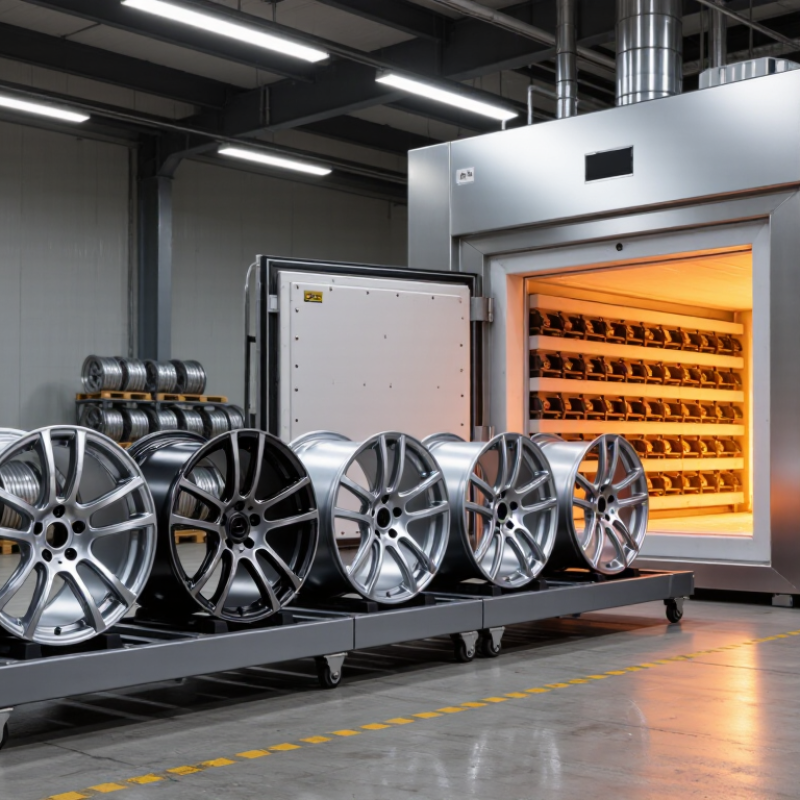
An alloy wheel curing oven should hold temperature evenly across the load, not merely display a convincing setpoint. Ask for calibrated sensors, multi-zone control, and recorded temperature profiles using a loaded rack.
The U.S. Department of Energy’s process-heating guidance estimates that process heating accounts for roughly 36% of energy used in manufacturing. That makes control quality an operating-cost issue, not just a dashboard feature. Still, dashboards can mislead. Verify each wheel.
For safety, check for independent over-temperature protection, airflow monitoring, door interlocks, and alarms visible to operators wearing gloves. Ask how the oven responds if a fan fails or a thermocouple drifts; a safe shutdown matters more than a warning light. Request test records showing temperature uniformity under representative loading, plus a clear calibration schedule.
Scrutinize energy claims by comparing measured fuel or electricity per batch, warm-up time, insulation condition, and exhaust losses under similar production conditions. Responsive controls and sound insulation may reduce idle heating, but frequent door openings can erase those gains. That detail is easy to overlook.