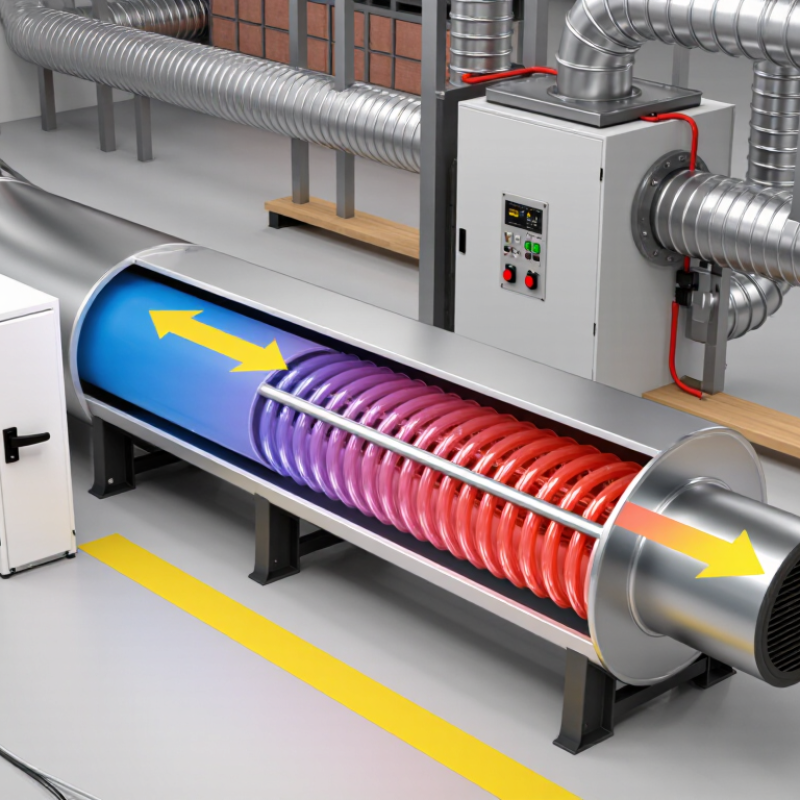
| Electric resistance duct heater | Electric current heats resistance elements installed in the airstream. Units may use staged or modulating control. | Fast response; precise control; no on-site combustion; generally straightforward to integrate with ventilation controls. | Can require substantial electrical capacity. Operating cost depends on electricity rates and heating demand. | Small to medium air-handling systems, supplemental heat, and locations without a suitable hydronic or fuel supply. | Confirm available voltage and electrical capacity, airflow, element watt density, control stages, and required high-temperature protection. |
| Hot-water coil | Hot water from a boiler, heat pump, or other hydronic source circulates through tubes and fins; duct air passes over the coil. | Can use an existing central heating plant; supports zoned control; avoids electric resistance heating at the duct. | Requires piping, a circulating system, and freeze protection where exposed to cold outdoor air. Heat output depends on water temperature and flow. | Buildings with an available hydronic system, including air-handling units and ventilation systems. | Match coil capacity to entering-water and entering-air conditions. Check water flow, pressure drop, valve control, condensate management, and freeze protection. |
| Steam coil | Steam condenses inside the coil, transferring heat to the airstream. A trap and correctly arranged piping return condensate. | Can deliver high heat output in facilities with a reliable steam supply; suitable for some large industrial and institutional systems. | Needs steam infrastructure and careful condensate handling. Poor piping or drainage can cause water hammer, uneven heating, or coil damage. | Facilities that already operate a steam distribution system, such as some industrial plants and large campuses. | Check steam pressure, coil rating, trap and piping layout, condensate drainage, control-valve selection, and protection against freezing. |
| Indirect-fired gas heater | A gas burner heats a heat exchanger; a separate airstream carries combustion gases to a flue, while clean air is heated across the exchanger. | Uses gas as the primary fuel while keeping combustion products separate from supply air. | Requires a gas connection, combustion-air provisions, venting, and burner maintenance. The heat exchanger adds design and service considerations. | Ventilation and make-up-air systems where gas heating is preferred and combustion products must remain outside the supply airstream. | Verify fuel supply, venting route, combustion-air requirements, temperature limits, clearances, and applicable codes. |
| Direct-fired gas heater | A gas burner heats the airstream directly, so combustion products mix with the heated air. | High heating effectiveness and a relatively direct heat-transfer path; commonly used in purpose-designed make-up-air applications. | Combustion products enter the supply air. Application, ventilation, fuel controls, and code requirements must be carefully assessed. | Suitable industrial or commercial make-up-air systems designed for direct-fired heating and the resulting air-quality requirements. | Confirm the application is permitted, ensure adequate airflow and ventilation, and check burner safeguards, gas controls, and applicable codes. |