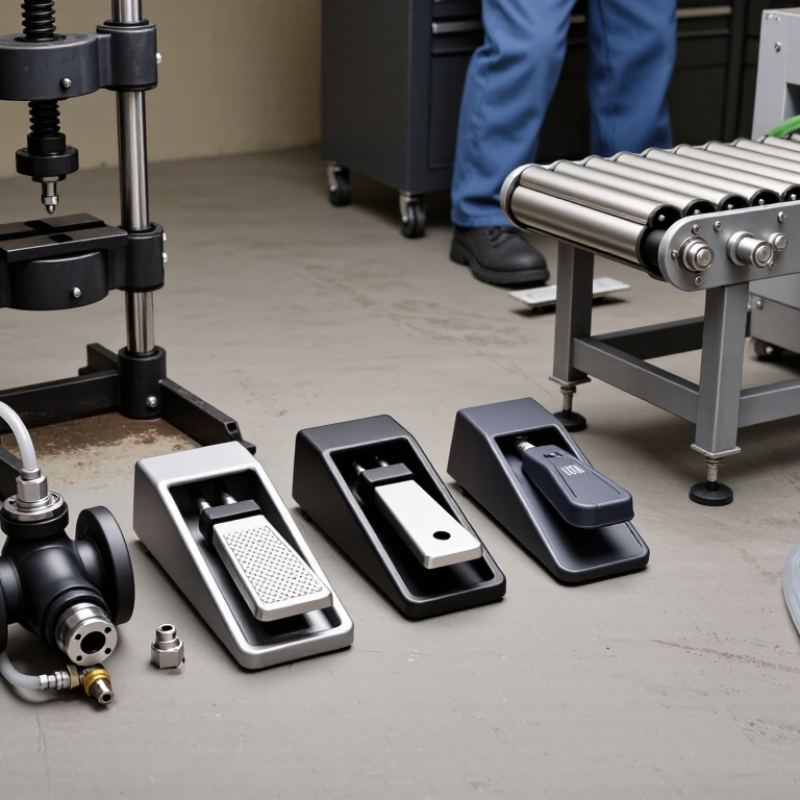
Choosing the right foot pedal valve begins with the operator, not the catalog. Observe the real workstation first. Is the operator seated, standing, or moving between stations? A seated operator may need a low-force pedal, while a standing operator needs a stable, slip-resistant platform. Check the required pneumatic pressure, flow rate, cycle frequency, and response time. Dust, oil, water, and metal chips also affect housing, sealing, and tread design.
Control conditions deserve equal attention. A guarded pedal can reduce unintended activation, especially where hands remain near tools or workpieces. The U.S. Bureau of Labor Statistics reported 2.6 million nonfatal workplace injuries and illnesses in private industry during 2023. This figure does not isolate foot controls, but it reinforces the need for task-specific risk assessment. OSHA machine-guarding guidance and ISO 12100 both support evaluating hazards during normal operation, cleaning, adjustment, and foreseeable misuse.
Test it under real conditions. Measure pedal force with a simple gauge, then repeat the test after several hours of operation. Watch for fatigue, accidental contact, delayed valve return, and awkward ankle angles. A return spring that feels acceptable on a workbench may feel harsh after 500 cycles. That is easy to miss. Select the valve only after checking the full circuit, including exhaust behavior and emergency isolation. My practical concern is often overlooked: operators adapt quickly, sometimes defeating a guard because it slows production. That human response must influence the final control design.