How to Choose a Liquid Nitrogen Dosing System?
Choosing a Liquid Nitrogen Dosing System is a process decision, not merely an equipment purchase. The right system controls pressure, droplet volume, timing, and nitrogen consumption. It must also match container speed, product temperature, and packaging geometry.
Grand View Research valued the global industrial gases market at approximately USD 102.8 billion in 2023. Its forecast indicates continued expansion through 2030. MarketsandMarkets estimated the cryogenic equipment market at about USD 17.5 billion in 2023. These figures reflect growing investment in controlled cooling, inerting, and pressure management. They do not guarantee a suitable dosing solution for every factory.
Dr. John G. Weisend II, a recognized cryogenic engineering specialist, offers a useful principle: “Cryogenic systems must be designed as complete systems, not isolated components.” This idea matters on a filling line. A precise nozzle cannot compensate for unstable tank pressure. A fast filler cannot hide poor sensor response. Hygiene, insulation, ventilation, and emergency controls deserve equal attention. Small details matter.
A practical evaluation should compare dosing accuracy, liquid nitrogen loss, maintenance access, PLC compatibility, and operator training. Request measured data under your actual line conditions. Ask for tests with your containers and production speed. Laboratory performance can look impressive.
It can still disappoint in production.
The best choice balances safety, consistency, footprint, and total operating cost. Some buyers focus too heavily on purchase price. That may be the weak point. A slightly higher-quality Liquid Nitrogen Dosing System can reduce waste, rejects, and unplanned stoppages. Yet every claim should be verified through documented trials, references, and transparent performance limits.
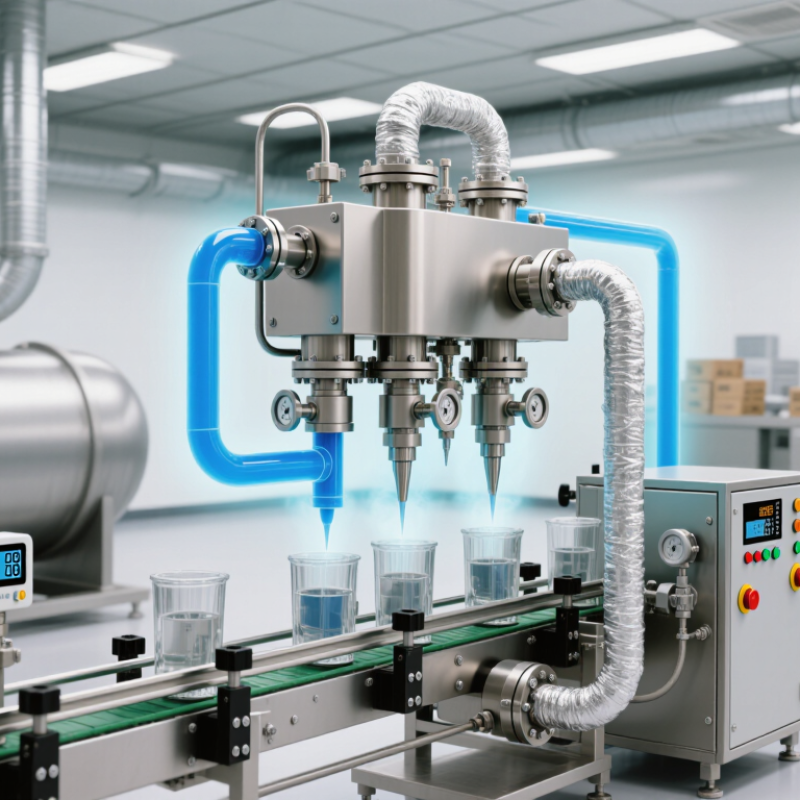
Understand Liquid Nitrogen at −196°C and Its 694:1 Gas Expansion
Liquid nitrogen boils at approximately −196°C, or 77.36 K, under atmospheric pressure. This figure is reported by the NIST Chemistry WebBook. At this temperature, nitrogen remains a cryogenic liquid. Small heat gains can create rapid vaporization.
The key design fact is its expansion ratio. One liter of liquid nitrogen can produce about 694 liters of nitrogen gas. This value assumes atmospheric pressure and near-ambient gas conditions. The Compressed Gas Association highlights this behavior in its cryogenic safety guidance, including CGA P-12. It explains why enclosed spaces, piping, and storage vessels need reliable pressure relief and ventilation.
That volume changes the dosing-system decision. A system serving 10 liters per hour could generate roughly 6,940 liters of gas hourly. Flow control must handle liquid temperature, pressure variation, and flashing inside the delivery line. Insulation reduces unwanted boiling, but it does not stop it completely. Field commissioning often finds that warm transfer lines cause unstable dosing during startup. I would not choose equipment from flow rate alone.
Check the pump or pressure-building method, valve response, vent capacity, oxygen-monitoring needs, and control accuracy. A practical test should measure delivered liquid, not only calculated gas volume. The 694:1 figure is useful, but it is not universal. Actual expansion changes with temperature, pressure, and measurement conditions. That detail is easy to overlook.
Compare Pressure, Servo, and Weigh-Based Dosing Accuracy Within ±1%
How to Choose a Liquid Nitrogen Dosing System?
A ±1% accuracy target demands more than a precise-looking specification. For a 250 ml dose, the acceptable variation is about 2.5 ml. Pressure-based systems are simple and economical, but tank pressure, nozzle restriction, and liquid temperature can shift the result. They work best when supply conditions remain stable. Small pressure changes can become visible in filled containers.
Servo-based systems adjust the valve during each dose. Their feedback can correct changing flow rates and reduce overfilling. However, response time matters. A slow valve may continue flowing after the target is reached. Proper tuning, repeatable nozzle geometry, and routine calibration are essential. Weigh-based systems measure the delivered mass directly, offering strong traceability. Yet vibration, frost buildup, and an unstable platform can distort readings. The “most accurate” system is not always the best system. That assumption deserves testing.
Tips: Test every system under real production conditions, not only in a clean workshop. Record at least 30 consecutive doses at low, normal, and high line speeds. Compare the average, range, and standard deviation. Check calibration before and after the trial. For weigh-based equipment, isolate the scale from conveyor vibration. For pressure systems, log vessel pressure beside each dose. Servo controls need inspection when product temperature or container size changes. A practical acceptance test should include start-up, steady running, and short interruptions. Even careful designs can miss one detail. Review the data before choosing.