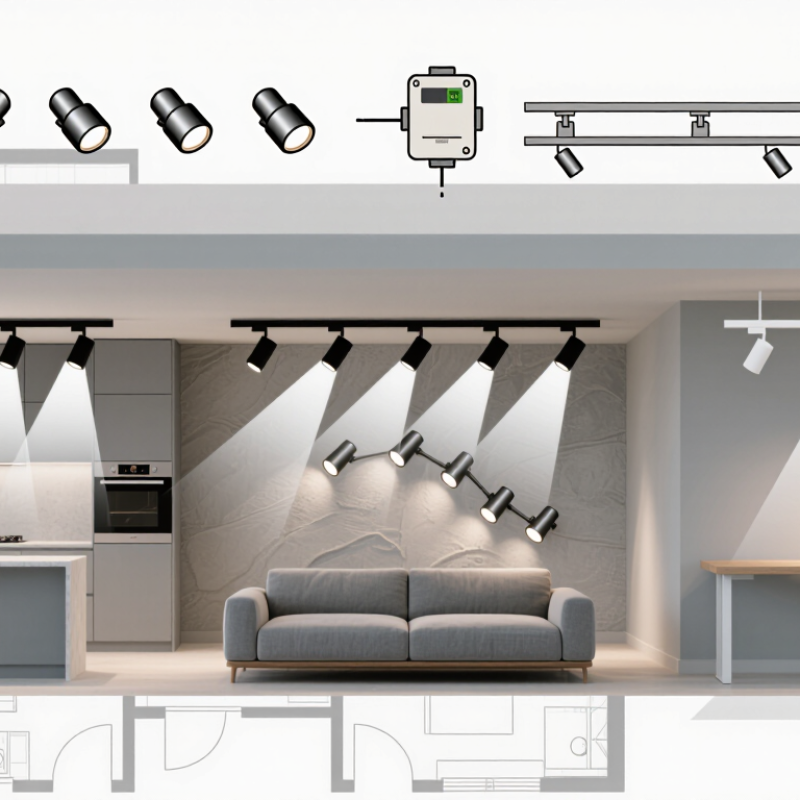
| General room illumination | Linear LED module or wide-beam spotlight | Confirm the fixture is designed for the exact track system, including its voltage, connector, polarity, and physical profile. | 60°–120° for a broad spread; linear modules may use a diffused lens rather than a defined beam. | 3000K for a warm, relaxed feel; 3500K–4000K for a more neutral appearance. | Use several evenly spaced fixtures where needed. Check lumen output and room layout rather than relying on beam angle alone. |
| Accent lighting for artwork or display objects | Adjustable spotlight | Check that the adapter fits the rail and that the fixture is compatible with the track’s electrical system. Verify aiming range and any dimming requirements. | 15°–30° for a concentrated accent; 30°–40° for a wider highlight. | 3000K is often used for warm interiors; 3500K–4000K can suit cooler palettes. Choose a high color-rendering rating when color accuracy matters. | Position and aim the light to limit glare and reflections. For artwork, avoid prolonged exposure to intense light, especially for light-sensitive materials. |
| Kitchen counters and work surfaces | Linear module or multiple adjustable spotlights | Match the fixture to the track system and confirm that the track power supply can support the combined load of all connected fixtures. | 30°–60° for focused work lighting; wider distributions can help cover longer surfaces. | 3000K–4000K, selected to complement the room and task. | Arrange fixtures to reduce shadows from the user’s body. Consider a high CRI (color rendering index), such as 90 or above, when accurate food colors are desired. |
| Hallways and circulation areas | Linear module or wide-beam spotlight | Verify track and fixture compatibility, and check the manufacturer’s spacing and load guidance for the selected system. | 40°–60° for general coverage; wider light distributions can reduce gaps between pools of light. | 2700K–3000K for a warmer residential look; 3000K–4000K for a neutral effect. | Use consistent color temperature along the same run for a more uniform appearance. Review the lighting layout to avoid dark patches. |
| Retail shelving or product displays | Adjustable spotlight, narrow-beam spotlight, or linear module | Check mechanical fit, electrical compatibility, dimming method, and total connected load. Do not assume fixtures from different track systems are interchangeable. | 15°–30° for individual products; 30°–60° for broader shelves. | 3000K–4000K, with a high CRI where faithful product colors are important. | Use adjustable fixtures to direct light onto products while controlling glare. The best color temperature depends on the merchandise and surrounding lighting. |
| Low-glare ambient lighting | Diffused linear module or fixture with a suitable glare-control accessory | Confirm that accessories are approved for the specific fixture and that the fixture’s adapter matches the track system. | Typically broad or diffused; refer to the fixture’s photometric information rather than assuming a spotlight beam angle. | 2700K–3500K for a softer residential atmosphere. | Look for shielding, diffusion, and suitable placement. A broad distribution can improve coverage, but positioning and mounting height also affect glare. |
| One room with dimming control | Dimmable spotlight or linear module | Confirm the fixture, driver, power supply, and control method are all compatible. Check whether dimming is supported by the system and control device. | Choose the angle based on the task: 15°–30° for accenting, 40°–60° for wider coverage. | Choose a consistent CCT across fixtures; dim-to-warm behavior is available only on products specifically designed to provide it. | Do not assume every magnetic track fixture dims or changes color temperature. Check the product specifications before installation. |