| Fluid and phase | Identify the medium and whether it is a liquid, gas, vapor, or multiphase flow. | Cooling water; liquid at normal operating conditions. | Confirm body, disc, stem, and seat compatibility with the fluid and any treatment chemicals. | Fluid composition, concentration, pH, contaminants, and any cleaning chemicals. |
| Temperature | Record normal, minimum, maximum, and upset temperatures. | Cooling-water service: 10–40 °C normal; 5–50 °C design range. | Seat material and actuator accessories must suit the full temperature range, not only the normal value. | Temperature at the valve, thermal cycling, heat tracing, and exposure to ambient extremes. |
| Pressure and differential pressure | Specify upstream and downstream pressures for operating, shutoff, and transient conditions. | Water line at 6 bar(g) operating pressure; maximum shutoff differential pressure to be confirmed. | Check the valve pressure rating and size the actuator for the maximum required seating or unseating torque. | Pressure class, surge or water-hammer events, vacuum conditions, and pressure at both sides of the closed valve. |
| Flow rate and pipe size | Provide minimum, normal, and maximum flow rates, pipe inside diameter, and allowable pressure drop. | Water flow varies from 20 to 100 m³/h in a DN100 line; allowable valve pressure drop is 0.3 bar at normal flow. | Determine valve size and flow coefficient from the actual flow conditions; do not select by pipe size alone. | Fluid density, viscosity, vapor pressure, flow direction, and whether the valve will throttle or only isolate. |
| Solids and deposits | Describe suspended particles, fibers, scale, or sediment. | Water containing occasional fine sediment, with no long fibers. | Consider disc clearance, seat design, wear resistance, and whether solids could obstruct closure. | Particle size, concentration, abrasiveness, settling behavior, and cleaning or flushing requirements. |
| Corrosion and material compatibility | Assess corrosion, erosion, and chemical exposure for all wetted parts. | Neutral treated water with low chloride concentration. | Select body, disc, stem, and seat materials for the actual chemistry; avoid assuming that all water services are equivalent. | Chlorides, dissolved gases, chemical additives, galvanic couples, and corrosion allowance requirements. |
| Shutoff and leakage | Define the required isolation performance and any leakage acceptance criteria. | Routine on/off isolation; leakage class or test standard specified by the project. | Choose a resilient-seated or high-performance design as appropriate to the pressure, temperature, and leakage requirement. | Applicable test standard, seat directionality, expected cycle frequency, and whether bidirectional shutoff is required. |
| Control duty | State whether the valve is for on/off service, modulating control, or emergency isolation. | Modulating service with a 4–20 mA position command and position feedback. | For modulating duty, confirm controllable range, actuator positioning accuracy, and compatibility with the control signal. | Required response time, control accuracy, cycling frequency, and any need for a positioner or limit switches. |
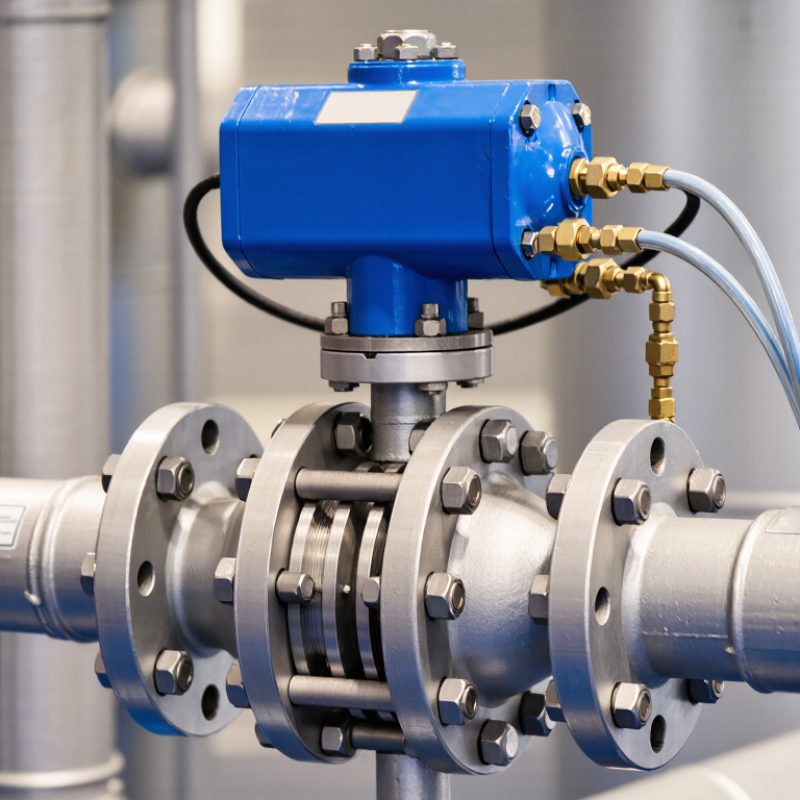
| Air supply | Specify instrument-air pressure, quality, and availability at the actuator. | Clean, dry instrument air available at 5.5 bar(g) during normal operation. | Verify actuator output torque at the minimum available air pressure, including losses from accessories. | Minimum and maximum supply pressure, air quality requirements, tubing size, and supply reliability. |
| Fail position and safety | Define the required valve position on loss of air, electrical power, or control signal. | Fail-closed requirement for an isolation line. | Select the appropriate spring-return or other fail-safe actuator arrangement and confirm its available torque throughout travel. | Hazard analysis, safe state, stored-energy requirements, closure time, and any manual override requirement. |
| Installation and environment | Record orientation, available space, pipe connection, ambient conditions, and enclosure needs. | Horizontal DN100 line indoors; ambient temperature 5–40 °C; limited actuator clearance. | Check face-to-face dimensions, actuator envelope, access for maintenance, and protection against moisture or dust. | Flange or wafer/lug connection, pipeline alignment, nearby obstructions, vibration, and required enclosure rating. |