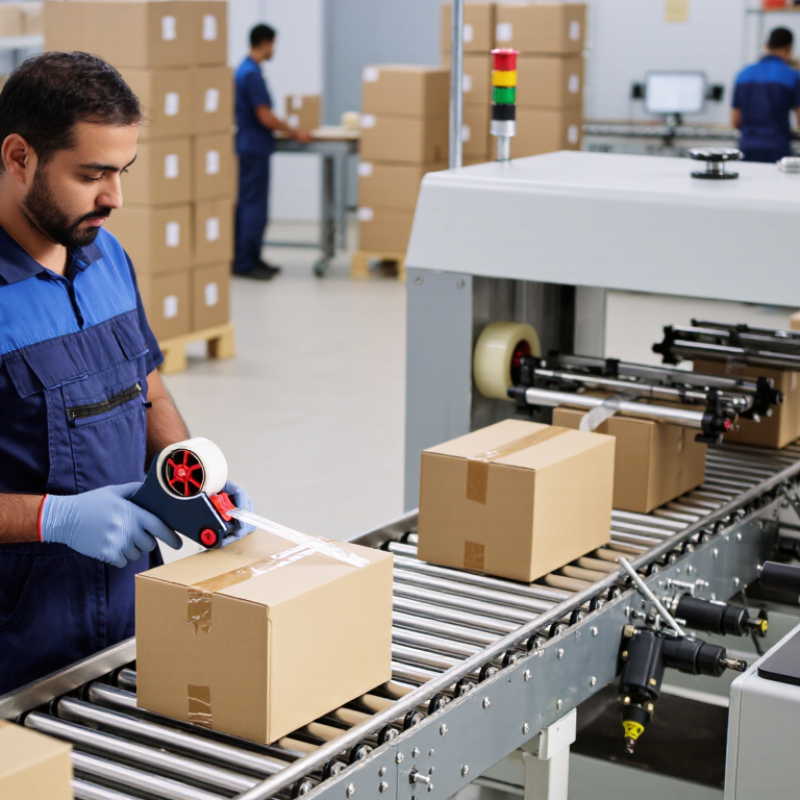
| Handheld Applicator | Manually guided over the product or carton; tape is pressed and cut by hand. | Up to 10–20 packages/minute | Intermittent use; generally suitable for 1–3 hours of active application per shift. | Approximately 25–75 mm | Small batches, maintenance work, packing stations, and variable-size packages. | High; the operator feeds, positions, applies, and cuts the tape. | Low initial cost, portable design, quick changeover, and flexible positioning. | Speed and consistency depend heavily on operator skill; higher fatigue during long runs. |
| Bench-Mounted Applicator | Mounted at a workstation; the operator presents the product to a fixed tape head. | Approximately 15–35 packages/minute | Regular medium-duty use; commonly appropriate for several hours of repeated operation per shift. | Approximately 25–100 mm | Small-to-medium production runs with repeatable package sizes and controlled workstations. | Medium; the operator loads and positions products, while tape placement is guided by the fixture. | Better repeatability, reduced hand movement, faster operation than handheld tools, and easy integration with jigs. | Requires bench space and a defined work position; less flexible for unusually shaped products. |
| Semi-Automatic Applicator | The operator loads the product; sensors or a cycle switch activate tape application and cutting. | Approximately 25–60 packages/minute | Medium-to-heavy duty; suitable for repeated cycles across a normal production shift when properly maintained. | Approximately 25–150 mm | Repetitive packaging, labeling, splicing, and assembly operations with moderate volume. | Low to medium; loading and unloading remain manual, while the tape cycle is automated. | More consistent tape placement, reduced operator fatigue, and improved throughput. | Higher purchase cost, setup requirements, and less flexibility than handheld equipment. |
| Fully Automatic Applicator | Integrated into a conveyor or production line; product detection and tape application are automatic. | Approximately 40–120+ packages/minute | Heavy-duty continuous or near-continuous operation, subject to machine specifications and maintenance intervals. | Approximately 25–200 mm | High-volume production lines, standardized products, and operations requiring consistent cycle timing. | Low; operators mainly monitor material supply, settings, safety, and quality. | Highest throughput, repeatability, reduced manual labor, and easy connection to automated lines. | Highest capital cost, longer installation time, and limited suitability for frequently changing product formats. |