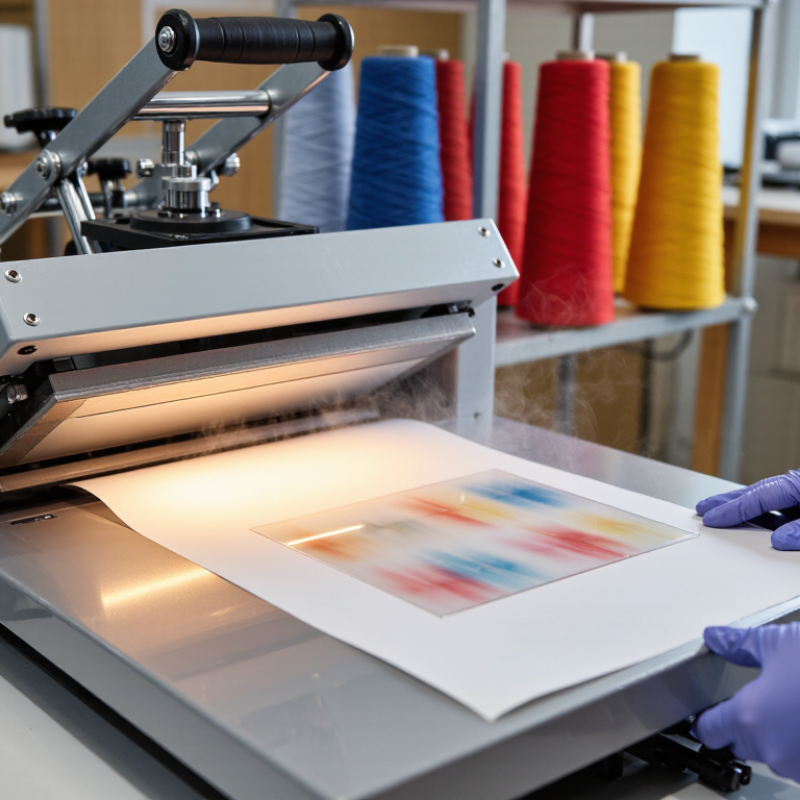
| What “cold” means | In this context, “cold” usually refers to a cold-peel transfer: the printed transfer paper is allowed to cool before it is removed. | The dye transfer itself still requires heat and pressure. It is not a room-temperature sublimation process. |
| How the process works | Sublimation ink is printed in reverse onto transfer paper, then heat and pressure turn the dye into a gas so it can enter a compatible polyester surface. | After pressing, the transfer is left to cool before the paper is peeled away. Follow the ink, paper, substrate, and heat-press instructions. |
| Key benefits | Dye becomes part of the polyester surface rather than forming a thick layer on top, which can produce smooth-feeling prints with fine detail and strong color. | The result depends on suitable materials, correct color management, even pressure, and controlled temperature and time. |
| Material compatibility | Best suited to white or light-colored polyester fabrics and products with a polymer coating designed for sublimation. | Untreated cotton and most natural fibers do not retain sublimation dye in the same way. Standard sublimation also does not print white ink. |
| Limitations | Dark substrates can obscure the dye, and results on fabric depend on polyester content. Heat can also affect sensitive materials or cause unwanted marks. | Test the specific substrate first. Use a protective sheet where appropriate and avoid stretching or shifting the transfer during pressing. |
| Cold-peel considerations | Cooling before peeling can help prevent smearing or transfer disturbance when the specified paper and process call for a cold peel. | Peel instructions vary. Some transfer papers are designed for hot or warm peeling, so “cold peel” is not a universal requirement. |
| Typical applications | Polyester sportswear, flags, banners, soft signage, and coated hard goods such as suitable mugs, panels, and photo products. | Hard goods need a compatible sublimation coating and a press or fixture suited to their shape. |
| Process control | Temperature, pressing time, and pressure vary by substrate and consumables; no single setting is suitable for every job. | Use the specifications for the materials being used, verify press temperature, and run a test before production. |