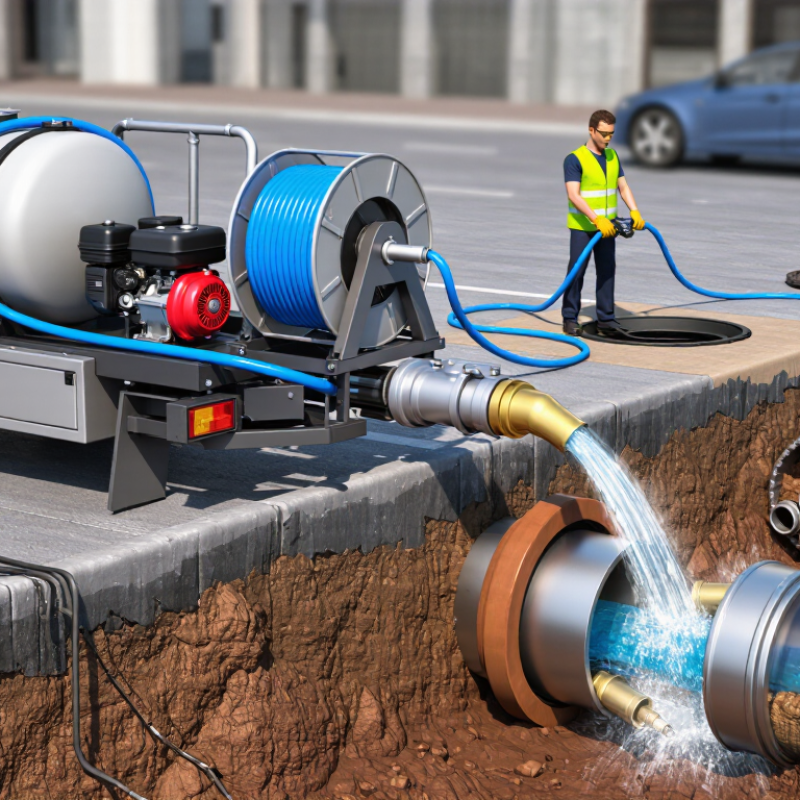
A custom sewer jetter combines a power source, high-pressure pump, water supply, hose system, and purpose-selected nozzle. The engine or electric motor drives the pump, which pressurizes water from a tank or connected supply. A pressure gauge and control valve let the operator monitor and adjust flow. The hose reel stores the high-pressure hose, while the chassis supports the equipment and helps position it near an access point.
The nozzle shapes the water stream. Rear-facing jets help pull the hose through a pipe, while forward jets can break through localized obstructions. As water exits, it loosens debris and carries it back toward the access point. Pressure, flow rate, hose diameter, and nozzle design must work together; more pressure alone does not guarantee better cleaning. That matters.
EPA’s 2022 Clean Watersheds Needs Survey estimated about $630 billion in wastewater and stormwater infrastructure needs over 20 years, underscoring the scale of systems requiring upkeep.
Custom configurations may add a larger tank, longer hose, filtration, or remote controls. These choices depend on pipe size, access, and the expected work. A compact setup may fit a narrow service vehicle, but its tank can run dry quickly. Operators should check hose condition, fittings, gauges, and nozzle wear before use. A parts list can look complete on paper; real site conditions still expose gaps.