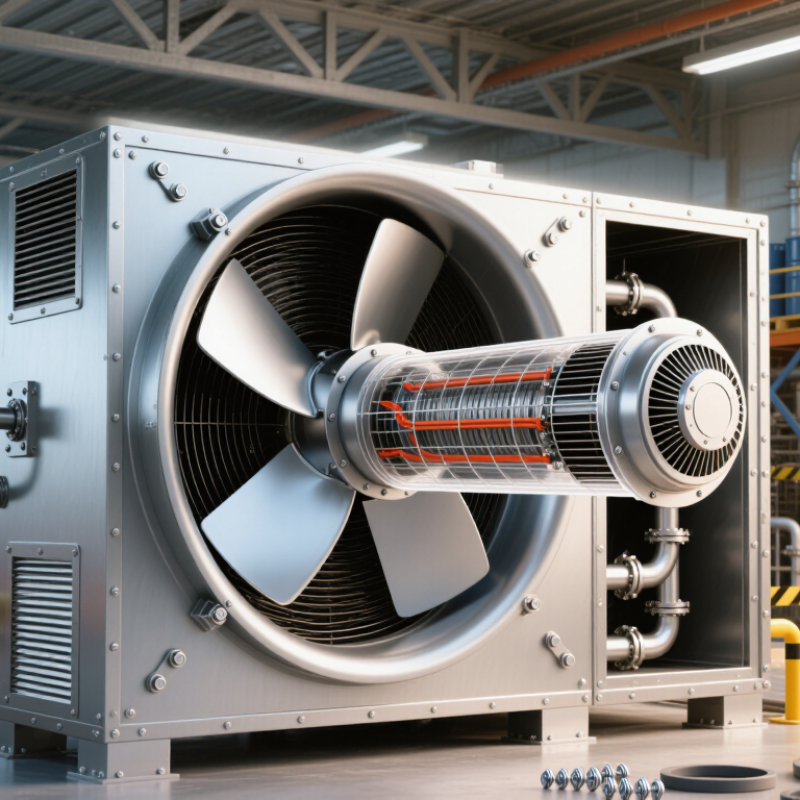
| Oil and Gas | Refineries, tank farms, loading areas, drilling sites, and compressor stations | Flammable hydrocarbon vapors and gases | Helps remove hazardous vapors while reducing the risk of ignition from the fan motor, wiring, or rotating parts | Fixed axial or centrifugal ventilation fans; portable units may be used for temporary work | Hazardous-area classification, gas group, temperature class, airflow, static pressure, corrosion resistance, and grounding |
| Chemical Manufacturing | Process rooms, solvent storage rooms, blending areas, and chemical transfer points | Flammable solvents, reactive vapors, and combustible chemical atmospheres | Provides controlled ventilation in areas where vapor concentrations may reach an ignitable range | Chemical-resistant centrifugal fans or ducted exhaust systems | Chemical compatibility, exhaust location, material construction, hazardous-location certification, and required air changes |
| Paint and Coating Operations | Spray booths, paint mixing rooms, finishing rooms, and coating storage areas | Solvent vapors, paint mist, and combustible coating residues | Maintains airflow and removes flammable vapors from enclosed coating areas | Dedicated exhaust fan connected to a spray booth or local exhaust system | Non-sparking construction where required, motor placement, booth airflow, filter loading, and compliance with local fire codes |
| Pharmaceutical Manufacturing | Solvent handling rooms, granulation areas, production suites, and storage rooms | Flammable solvents and combustible pharmaceutical dust | Supports ventilation and helps limit the accumulation of ignitable vapors or dust during processing | Cleanable centrifugal exhaust fans or specialized dust-handling systems | Hygienic design, dust-control requirements, solvent compatibility, filtration, pressure balance, and certification |
| Food Processing | Flour mills, sugar handling areas, grain elevators, bakeries, and dust collection rooms | Combustible dust from flour, grain, sugar, starch, or other organic materials | Reduces the possibility that sparks, hot surfaces, or mechanical friction will ignite suspended dust | Dust-collection fans, radial-blade centrifugal fans, and process exhaust systems | Dust classification, particle loading, spark-resistant construction, cleanability, abrasion resistance, and explosion-relief design |
| Coal and Bulk Material Handling | Coal preparation plants, conveyor transfer points, silos, and enclosed handling areas | Coal dust and other combustible particulate matter | Controls airborne dust and supports safe ventilation around material-transfer equipment | Heavy-duty centrifugal fans and dust-extraction systems | Abrasion resistance, dust concentration, spark prevention, airflow capacity, access for inspection, and grounding |
| Mining | Underground mines, mine workshops, processing plants, and enclosed maintenance areas | Methane, coal dust, metal dust, and other combustible materials | Provides ventilation in potentially explosive atmospheres and helps dilute or remove hazardous gases and dust | Main ventilation fans, auxiliary fans, and portable duct fans approved for the applicable mining environment | Mining regulations, methane monitoring, fan duty, emergency operation, power supply, duct compatibility, and maintenance access |
| Wastewater Treatment | Headworks, wet wells, lift stations, sludge areas, and enclosed treatment rooms | Methane, hydrogen sulfide, and other flammable or hazardous gases | Ventilates confined or poorly ventilated spaces where gases can accumulate | Ducted exhaust fans, wall-mounted fans, or portable confined-space ventilation fans | Gas detection, continuous or intermittent ventilation, corrosion resistance, confined-space procedures, and electrical classification |
| Battery Manufacturing and Charging | Battery rooms, charging stations, formation areas, and electrolyte-handling rooms | Hydrogen released during charging and flammable electrolyte vapors | Helps prevent hydrogen accumulation above the lower flammable limit | Continuous exhaust systems, high-level exhaust fans, and mechanically ventilated battery-room systems | Hydrogen characteristics, fan placement, make-up air, ventilation rate, corrosion resistance, and alarm interlocks |
| Aerospace and Aircraft Maintenance | Aircraft hangars, fuel-system maintenance areas, paint facilities, and component cleaning rooms | Jet fuel vapors, solvent vapors, and combustible coating materials | Provides ventilation during fueling, cleaning, painting, and maintenance activities | Portable duct fans, high-volume low-speed systems, and dedicated exhaust units | Mobility, airflow distribution, grounding, fuel-vapor control, noise, and applicable aviation or fire-safety requirements |
| Marine and Shipbuilding | Cargo tanks, engine rooms, fuel-storage areas, ship holds, and enclosed compartments | Fuel vapors, cargo vapors, hydrogen, and gases released during tank cleaning | Supports safe ventilation of enclosed spaces before and during maintenance work | Portable explosion-protected fans, axial fans, and flexible-duct ventilation systems | Marine approvals, saltwater corrosion resistance, portability, bonding and grounding, airflow reach, and gas testing |
| Printing and Packaging | Press rooms, ink-mixing areas, laminating lines, and solvent storage rooms | Ink and adhesive solvents, alcohol vapors, and combustible paper dust | Removes vapors and dust generated during high-speed printing, coating, and laminating processes | Local exhaust fans, ducted process fans, and solvent-vapor extraction systems | Solvent compatibility, capture velocity, dust accumulation, motor protection, filtration, and electrical-area classification |