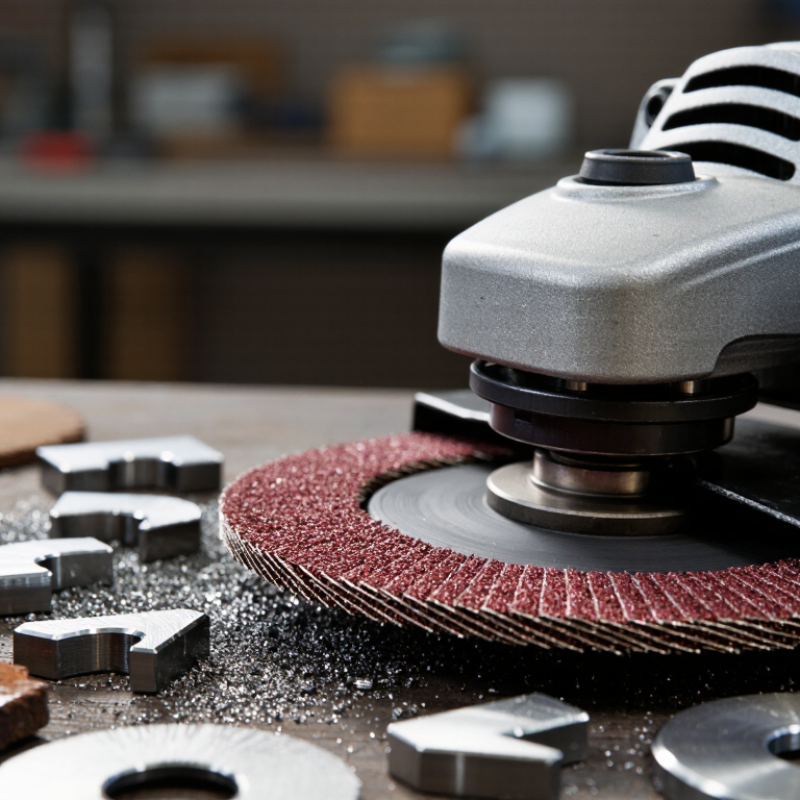
A fiber disc is a layered abrasive tool, not simply sandpaper cut into a circle. Its backing is usually made from cellulose fibers compressed with resin and cured under heat and pressure. This creates a dense, stiff base that can hold abrasive grains during grinding. The exact formulation and thickness vary by intended use.
During manufacture, a resin make coat is applied to the backing, and abrasive grains are distributed across it. A second resin coat helps secure the grains, followed by curing to harden the bond. The finished sheet is cut into discs, with a center hole sized for mounting on a compatible backing pad. That matters. Poor alignment can cause vibration and uneven wear. Grain type, size, and spacing affect how aggressively the disc removes material and how smoothly it finishes a surface. Not always. A coarser grain may remove stock quickly, but it can leave deeper scratches that require another pass.
The layered construction helps explain why fiber discs are commonly used with angle grinders for tasks such as removing weld marks, scale, or old coatings. In practice, pressure and angle change the result. Heavy pressure can generate heat and wear the abrasive unevenly, so a light, steady touch is often more controllable. Disc selection should match the material, grinder, and backing pad. The process sounds straightforward, but matching those parts takes attention.