| Application and duty | State whether the generator is for standby, prime, or continuous operation, and describe expected annual running hours and load profile. | Confirm that the quoted rating matches the intended duty. Standby ratings are generally intended for emergency use, not continuous operation. | Datasheet showing the rating definitions, operating limits, and applicable duty classification. |
| Power requirement | Specify required output in kW or kVA, power factor, starting loads, and whether future load growth is expected. | Ask the factory to explain its sizing assumptions. Motor starting current and other transient loads can require additional capacity beyond steady-state demand. | Load calculation, rated output data, and confirmation of any derating assumptions. |
| Voltage and frequency | Provide the required phase, voltage, frequency, and connection arrangement for the installation. | Check that the alternator and control system can be configured for the destination site's electrical supply. Common systems include 50 Hz and 60 Hz, but requirements vary by location. | Electrical datasheet listing voltage, phase, frequency, current, power factor, and wiring configuration. |
| Fuel and runtime | Identify the fuel type, available fuel quality, required tank capacity, and desired runtime at a stated load. | Compare fuel consumption only when the load percentage and measurement basis are the same. Confirm whether the tank is integral or supplied separately. | Fuel-consumption figures at specified load points and tank capacity or runtime calculations. |
| Operating environment | Provide ambient temperature range, altitude, humidity, installation location, and any exposure to dust, salt, or weather. | Request written confirmation of output derating and cooling requirements for the actual site conditions. Outdoor installations may need a weather-protective enclosure. | Environmental operating limits, derating guidance, enclosure description, and cooling-system details. |
| Noise and enclosure | Set a noise limit, measurement distance, and operating condition, and specify whether the set will be installed indoors or outdoors. | Compare noise figures only when the measurement method, distance, and load are stated. Check that the enclosure allows adequate ventilation and maintenance access. | Noise test data with measurement conditions and enclosure drawings or specifications. |
| Emissions and compliance | Identify the regulations and certification requirements that apply in the destination country and at the installation site. | Verify the exact engine configuration and generator model against applicable requirements; compliance can depend on the market, application, and installation. | Relevant certificates, test reports, declarations, and model-specific compliance documentation. |
| Controls and protection | List required monitoring, alarms, shutdown protections, remote communication, and automatic transfer or paralleling functions. | Confirm which functions are standard and which are optional. Check compatibility with the site's transfer switch or power-management system. | Controller feature list, wiring diagrams, communication details, and protection settings. |
| Testing and quality checks | Define factory acceptance tests and the records needed before shipment. | Agree in advance on test scope, acceptance criteria, witnessing arrangements, and how non-conformities will be resolved. | Test procedure and completed report covering agreed electrical and operational checks. |
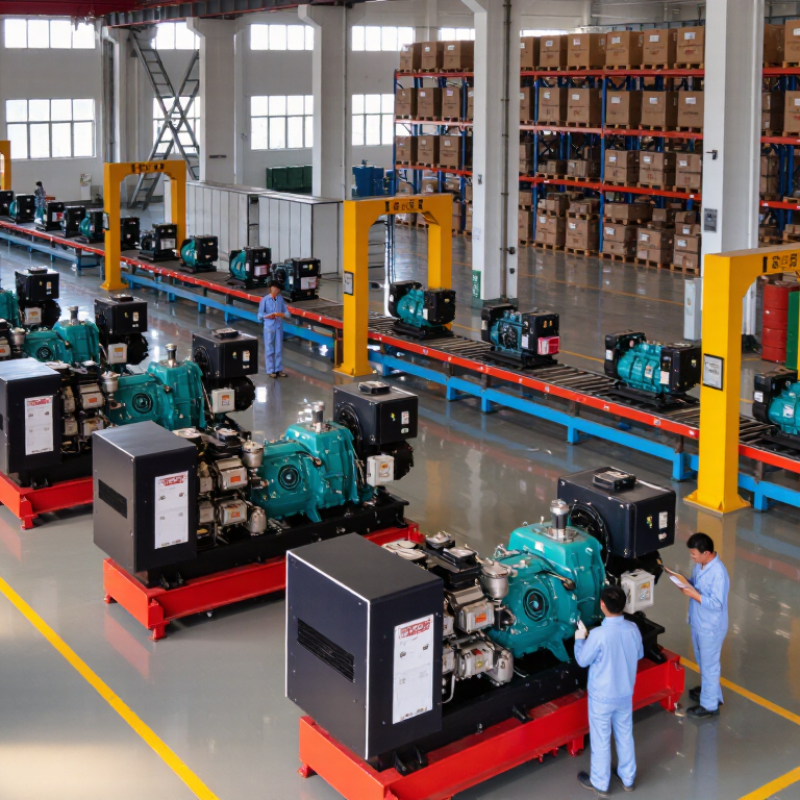
| Factory capability | Confirm whether the supplier manufactures the complete generator set, assembles it, or sources major components from other parties. | Assess production controls, inspection procedures, traceability, and experience with comparable output and configurations. | Facility information, production workflow, quality procedures, and relevant non-branded project references. |
| Documentation and export readiness | Specify required manuals, drawings, packing details, spare-parts lists, and shipping documents. | Make document language, format, delivery timing, and destination-country requirements part of the purchase specification. | Sample manuals, outline drawings, packing specifications, and a proposed document schedule. |
| Warranty and after-sales support | Define warranty duration, coverage start date, service response expectations, and responsibility for parts and labor. | Check how technical support and replacement parts will be provided in the destination market, including expected lead times. | Written warranty terms, service process, parts list, and support contact arrangements. |
| Commercial and delivery terms | Set the required quantity, delivery destination, target schedule, packaging needs, and preferred payment and shipping terms. | Compare quotations on the same technical scope and delivery basis. Clarify exclusions, lead time assumptions, and procedures for specification changes. | Itemized quotation, production schedule, scope of supply, and written list of exclusions. |