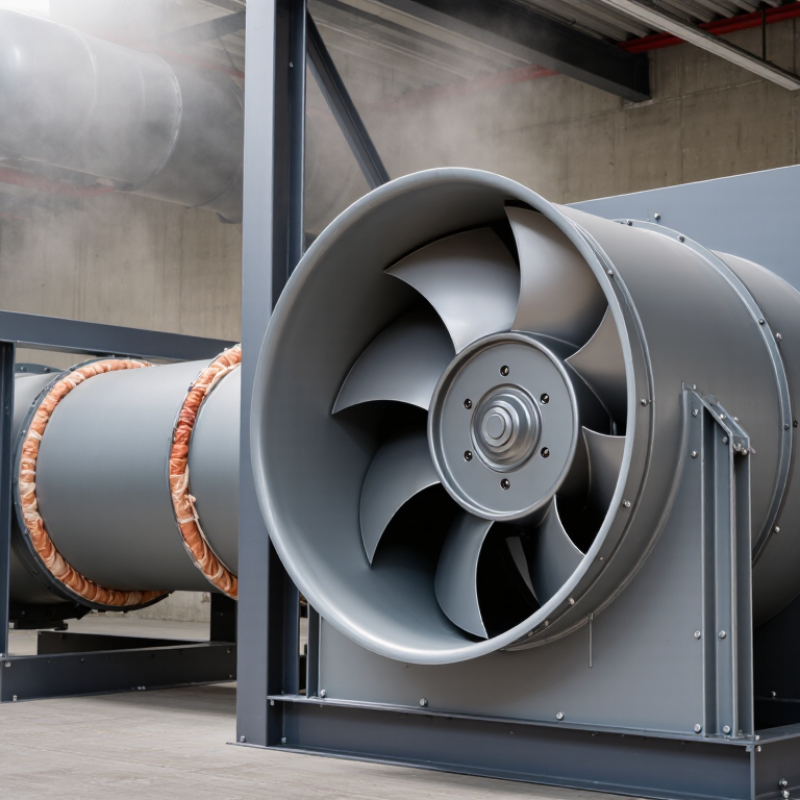
A fire-resistant fan is designed to move smoke and hot air during a fire emergency. Unlike a standard ventilation fan, it uses heat-tolerant materials, protected motors, and certified construction. Its approved operating time may be 30, 60, or 120 minutes, depending on the tested design. Always check the project specification.
These fans commonly serve underground car parks, escape routes, kitchens, tunnels, warehouses, and industrial buildings. In a car park, they can help control smoke movement and support firefighter access. In commercial kitchens, they remove hot, greasy air through suitable extraction systems. Installation must match the building’s fire strategy, airflow calculations, emergency controls, and local regulations. A fan placed correctly can still perform poorly if dampers, ducts, or power supplies are unsuitable.
Maintenance should include visual checks, test runs, bearing inspection, belt tension, impeller cleaning, and electrical connection checks. Grease and dust can collect quickly, especially near cooking areas. Keep access clear. Technicians should test emergency switches, backup power, control panels, and linked dampers at scheduled intervals. Records matter. Documenting noise, vibration, temperature, and airflow can reveal problems early.
A checklist is useful, but it is not perfect. Small vibration changes may be dismissed during routine visits. That mistake can become expensive. Qualified personnel should follow the manufacturer’s instructions, certification limits, and applicable fire-safety codes. Never replace a rated component with an ordinary equivalent.