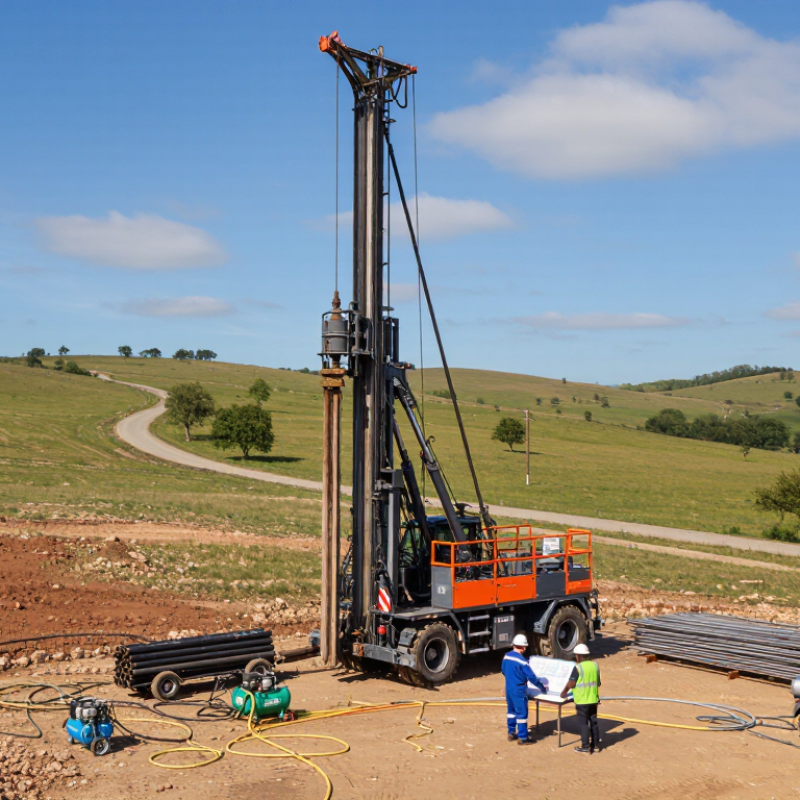
| Truck-mounted mud rotary | Water wells in unconsolidated formations and mixed ground where drilling fluid is appropriate. | Consider the truck, rig, mud pump, fluid handling, fuel, drilling consumables, transport, and maintenance. Mud and cuttings management can add operating and site-restoration costs. | Efficient to move between accessible sites, but requires suitable road access, working space, and ground bearing capacity. | Confirm availability of pump and hydraulic-system service, replacement parts, operator training, and help with mud-system setup. | Reliability depends on regular maintenance of the carrier, rotary drive, mud pump, hoses, and fluid system. Abrasive drilling fluid and poor maintenance can accelerate wear. |
| Crawler-mounted rotary | Projects on uneven or soft ground where tracked mobility is useful; available drilling methods depend on the installed equipment. | Include the crawler undercarriage, transport between sites, ground preparation, fuel, wear parts, and method-specific equipment. Moving the rig may require a separate low-loader. | Tracks can improve movement on some rough or soft terrain, but do not eliminate the need to assess ground stability, slope, and access restrictions. | Check local access to undercarriage, hydraulic, engine, and rotary-drive service, plus the availability of qualified technicians. | Track chains, rollers, and hydraulic components are wear items. Service intervals, operating conditions, and parts lead times affect uptime. |
| Trailer-mounted or modular portable rig | Shallow or moderate-depth work, restricted-access locations, and sites where a full-size carrier cannot be used; verify capacity against the well design. | Purchase and transport costs may be lower than for larger self-propelled equipment, but setup labor, a suitable towing vehicle, support equipment, and reduced production rate can raise cost per completed well. | Can be transported in smaller sections or by trailer. Assembly, anchoring, leveling, and access for rods and support equipment need careful planning. | Confirm that training, setup instructions, compatible rods and tools, and repair support are available where the rig will operate. | Simple systems can be maintainable, but reliability depends on correct assembly, secure connections, suitable lifting practices, and protection of components during transport. |
| Truck-mounted, DTH-capable rotary | Consolidated rock formations where down-the-hole hammer drilling may be suitable; air supply and water management requirements must be assessed. | Account for the rig, compressor, hammer, bits, air-line equipment, fuel, and hammer and bit wear. Compressor capacity and drilling conditions strongly affect operating cost. | Requires room for the rig, compressor, air lines, and safe handling of rods and tools. Dust and noise controls may be needed. | Check local support for the compressor, hammer, and rotary system, including access to compatible bits, seals, and other consumables. | Compressor and hammer maintenance is essential. Dust control, correct air supply, lubrication, and timely replacement of worn tooling help prevent avoidable failures. |
| Multipurpose rotary (mud and air options) | Contractors working across changing formations who need flexibility to select a suitable method for each site. | Usually involves more equipment and configuration choices. Compare the cost of both drilling systems, changeover time, spare parts, training, and the utilization expected for each method. | May need additional space for fluid or air equipment and more setup time than a single-method configuration. | Ask whether technicians can support both systems and whether method-specific parts, operating guidance, and training are available locally. | More systems can mean more maintenance tasks and spare-parts requirements. Reliability improves when inspections and service records cover every installed system. |