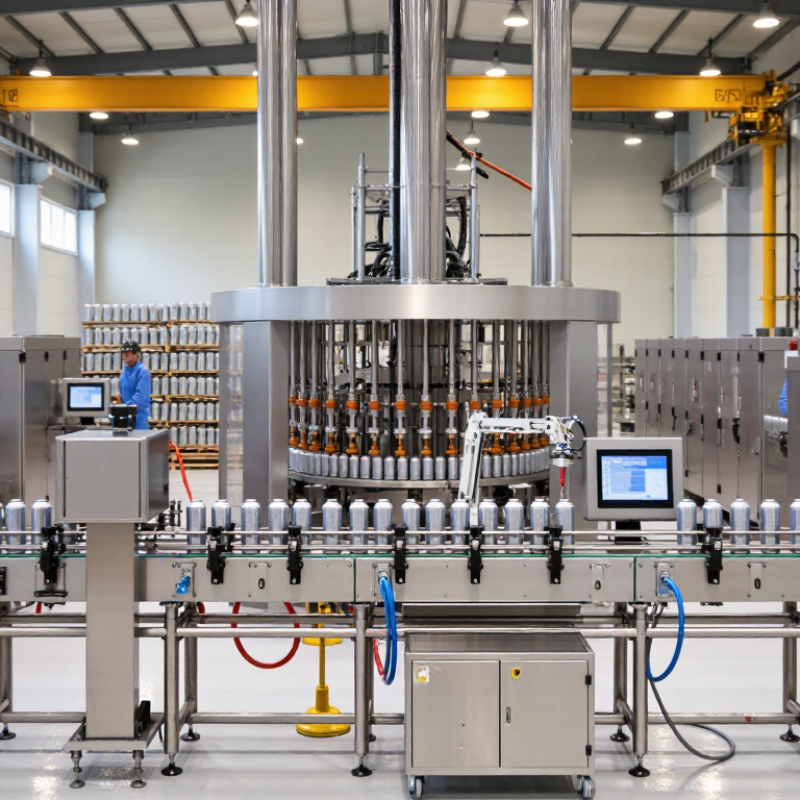
| Product Compatibility | Process the intended aerosol can, valve, actuator, propellant, and formulation without material incompatibility. | Stainless-steel product-contact parts; seals selected for the formulation and propellant; adjustable tooling for the specified can and valve sizes. | Review material certificates, chemical-compatibility data, safety data sheets, and a documented product-trial protocol before final acceptance. |
| Liquid Filling Accuracy | Control the mass or volume of liquid product filled into each container. | Mean fill accuracy within ±1.0% of the nominal fill quantity under stable operating conditions. | Use calibrated scales or gravimetric checks. Confirm accuracy across the minimum, nominal, and maximum fill quantities and at the planned production speed. |
| Propellant Dosing | Dose liquefied or compressed propellant consistently and safely. | Closed, pressure-rated dosing circuit with recipe-based quantity control and automatic shut-off for abnormal pressure or flow. | Check dose repeatability, pressure stability, grounding, ventilation, emergency isolation, and compliance with applicable pressure-equipment and hazardous-area requirements. |
| Can and Valve Feeding | Maintain correct container orientation and prevent damaged or missing components from entering the filling sequence. | Presence detection for can, valve, actuator, and other required components; automatic reject for missing, inverted, or damaged parts. | Run challenge tests using intentionally missing, misaligned, and incorrect components. Record detection and reject performance. |
| Valve Crimping | Secure the valve to the can with consistent crimp diameter, crimp depth, and sealing performance. | Crimp parameters controlled to the valve and can manufacturer’s specifications; typical dimensional tolerance is established during tooling validation rather than assumed universally. | Measure crimp diameter and depth with calibrated gauges, inspect the curl and seal area, and perform leak testing on samples from each validated setup. |
| Leak Testing | Detect leaks from the container body, valve cup, crimped joint, and actuator area. | 100% in-line leak detection where required by the risk assessment, with automatic rejection and traceable test results. | Validate the test using known good samples and calibrated leak standards. Test pressure, dwell time, sensitivity, and reject response must be documented. |
| 50°C Safety Test | Evaluate filled aerosol containers under elevated-temperature conditions relevant to aerosol safety requirements. | Temperature-controlled water-bath or approved equivalent capable of maintaining 50°C uniformly throughout the test zone. | Use calibrated temperature sensors and documented exposure time. Follow the applicable regulatory standard for the destination market and product classification; this test does not replace a complete safety assessment. |
| Fill-Weight Inspection | Confirm that each production batch remains within the declared net-content limits. | Checkweigher or sampling scale with resolution suitable for the declared fill quantity and automatic rejection of out-of-tolerance units. | Calibrate with traceable test weights. Establish sampling frequency, control limits, tare compensation, and procedures for investigating trends. |
| Line Throughput | Match the line speed to the required output while preserving filling, crimping, inspection, and safety-test performance. | A practical pilot range of approximately 30–120 containers per minute for a compact or mid-speed line, subject to product and format validation. | Confirm sustained output during a representative production run, including planned inspection, reject handling, container changes, and normal minor stops. |
| Changeover Capability | Switch between approved can diameters, valve formats, and fill quantities with repeatable settings. | Tool-less or quick-release format parts where practical, recipe storage, visual setup marks, and documented changeover instructions. | Measure changeover time from the last acceptable unit of one format to the first acceptable unit of the next format, including line clearance and quality checks. |
| Automation and Data | Control operating parameters and retain evidence of quality decisions. | PLC/HMI control, password-protected recipes, alarm history, batch identification, reject counting, and exportable production records. | Test user permissions, recipe version control, data retention, alarm handling, backup procedures, and electronic-record requirements applicable to the site. |
| Safety and Utilities | Protect operators from flammable propellants, stored pressure, moving machinery, and abnormal operating conditions. | Guarding, emergency stops, pressure relief, ventilation, grounding and bonding, interlocks, and appropriately rated electrical equipment for the classified area. | Complete a site-specific risk assessment covering hazardous-area classification, ventilation capacity, compressed air, electrical supply, fire protection, and emergency procedures. |
| Quality Documentation | Provide objective evidence that the line meets the agreed performance requirements. | Factory and site acceptance tests covering ±1% filling accuracy, crimp dimensions, leak detection, reject logic, alarms, and 50°C test equipment performance. | Require calibration certificates, material documentation, operating manuals, maintenance schedules, spare-parts lists, validation reports, and operator training records. |