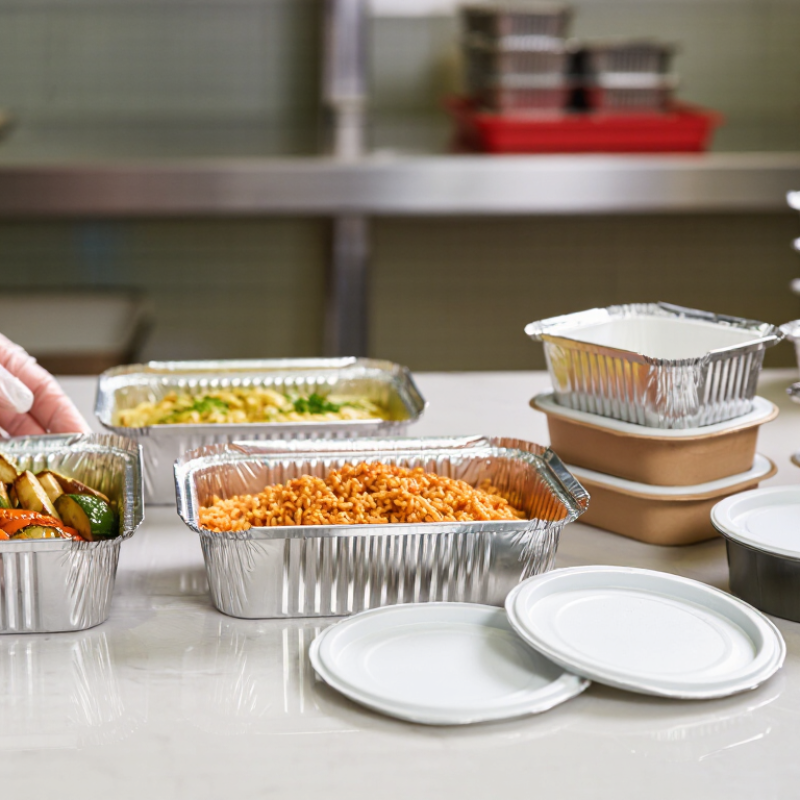
When choosing aluminium takeaway containers, ask which alloy is used and whether its composition meets EN 602:2007. This European standard covers wrought aluminium and aluminium alloys intended for food contact. It sets chemical composition requirements, including limits for certain elements and impurities. Request the alloy designation and supporting technical documents, not just a general claim that the container is “food safe.”
That matters. A compliant alloy is an important starting point, but it does not automatically establish that every finished container is suitable for every meal. Forming, surface treatments, coatings, and the food itself can affect performance.
A container holding tomato sauce or salty food may face different conditions from one holding dry pastries. Check that the supplier’s food-contact information covers the intended use, including contact time and temperature. EN 602:2007 addresses alloy composition; other requirements may apply to the finished article.
Keep records. Match documentation to the actual container specification and batch where possible. If the alloy or coating changes, review the evidence again. It is easy to focus on thickness and price, then overlook the material declaration. That is a practical mistake, though paperwork alone is not proof of real-world performance. Ask clear questions, and investigate any vague answers before ordering.