| Expanded Polystyrene (EPS) | Approximately 0.032–0.040 | 2.50–3.10 | Low water absorption, but exposed edges and joints should be protected. | Combustible; must be covered with a suitable fire-protective system. | External wall insulation, cavity walls, roofs, and floors. | Check compatibility with adhesives, renders, solvents, and mechanical fixings. | Inspect render, joints, flashings, and areas vulnerable to impact or pests. |
| Extruded Polystyrene (XPS) | Approximately 0.029–0.036 | 2.80–3.45 | Very low water absorption and good resistance to freeze–thaw exposure. | Combustible; requires protection according to the wall or roof assembly. | Basements, foundation walls, inverted roofs, floors, and high-load areas. | Verify vapor control, drainage, adhesive suitability, and compressive strength. | Check drainage layers, exposed surfaces, joints, and protection against UV degradation. |
| Polyisocyanurate (PIR) | Approximately 0.022–0.028 | 3.55–4.55 | Generally low water absorption; joints and facings must remain intact. | Combustible core; fire behavior depends on the complete tested assembly. | Pitched roofs, flat roofs, walls, floors, and projects with limited build-up depth. | Protect facings from damage, seal joints, and use compatible low-expansion foam or adhesive. | Inspect membrane continuity, taped joints, penetrations, and signs of condensation. |
| Phenolic Foam | Approximately 0.018–0.023 | 4.35–5.55 | Low water absorption when facings and joints are properly protected. | Often offers strong fire performance, but classification must be confirmed for the full system. | Thin external walls, pitched roofs, floors, and space-limited renovations. | Use only approved adhesives, fixings, membranes, and compatible finishing systems. | Monitor facings, seals, thermal bridges, and moisture at cut edges and penetrations. |
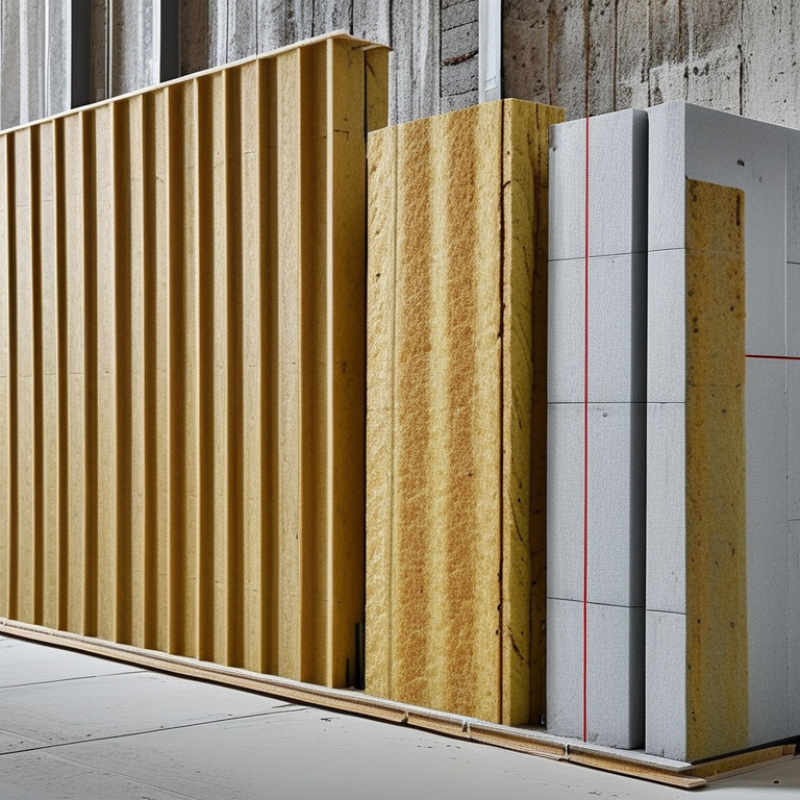
| Mineral Wool Board | Approximately 0.034–0.041 | 2.45–2.95 | Vapor-permeable; must be protected from persistent wetting and compression. | Generally non-combustible, subject to product thickness and system classification. | External wall systems, rainscreen walls, roofs, partitions, and acoustic upgrades. | Coordinate vapor control, wind barriers, cavity ventilation, and mechanical support. | Check cladding, membranes, cavity ventilation, settlement, and moisture exposure. |
| Wood Fiber Board | Approximately 0.038–0.050 | 2.00–2.60 | Hygroscopic and vapor-open; requires careful weather protection and drying design. | Combustible; fire resistance depends on density, thickness, coverings, and assembly design. | Breathable wall systems, roofs, retrofit projects, and acoustic applications. | Assess moisture movement, render compatibility, ventilation, and structural support. | Inspect for leaks, biological growth, pest activity, render cracking, and prolonged dampness. |
| High-Density Cellular Glass | Approximately 0.036–0.050 | 2.00–2.80 | Non-absorbent, vapor-tight, and resistant to water and many chemicals. | Non-combustible and dimensionally stable at elevated temperatures. | Foundations, below-grade walls, industrial areas, flat roofs, and high-moisture locations. | Plan for rigid installation, full-bed bonding, substrate flatness, and vapor-tight detailing. | Usually low maintenance; inspect waterproofing, joints, coatings, and mechanical damage. |