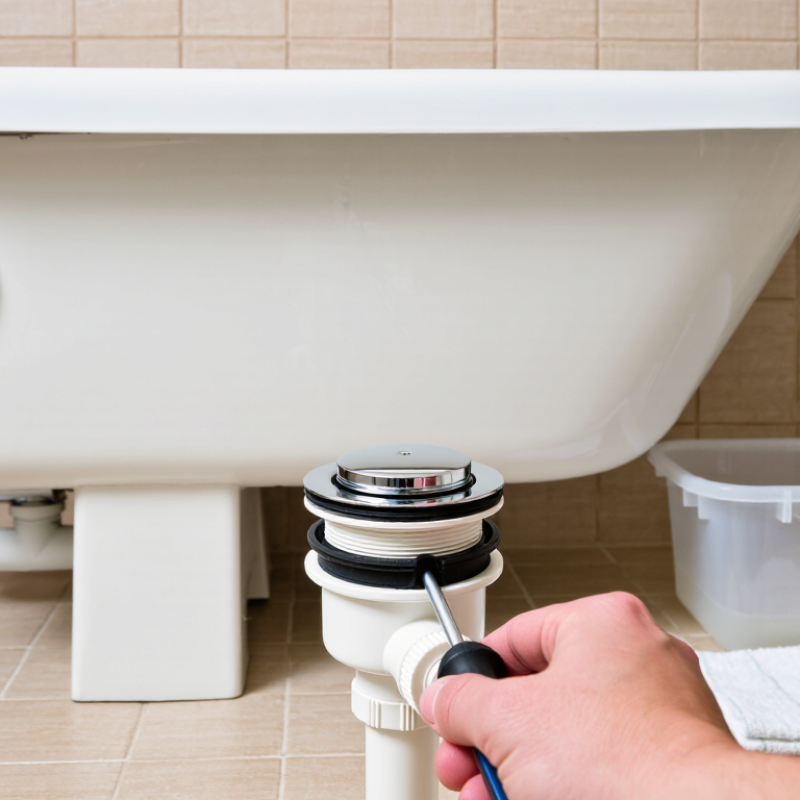
Remove the Existing Push Button and Inspect the Fitting
Place a cloth over the drain to catch small parts. Turn the push button counterclockwise by hand; many caps unscrew from the stopper body. If it resists, avoid levering against the tub surface. A plastic tool can help, but stop if the cap begins to deform. Some fittings use a small retaining screw, so check the button’s edge before applying force. Take a quick photo of each part as it comes off. It is easy to forget the order later.
With the button removed, inspect the spindle, threads, stopper, and drain opening under a bright light. Look for mineral scale, worn threads, cracks, and a flattened or brittle seal. Clean deposits with a soft brush and mild cleaner; don’t scrape the finish with metal.
EPA WaterSense estimates household leaks waste nearly 10,000 gallons of water each year, and notes that 10% of homes have leaks exceeding 90 gallons daily. That figure covers household leaks broadly, not bath buttons specifically, but it explains why a small seal deserves attention.
If the fitting is corroded or the threads are damaged, replacing only the button may not solve the problem. Check carefully. A clean-looking top can hide a tired gasket below.