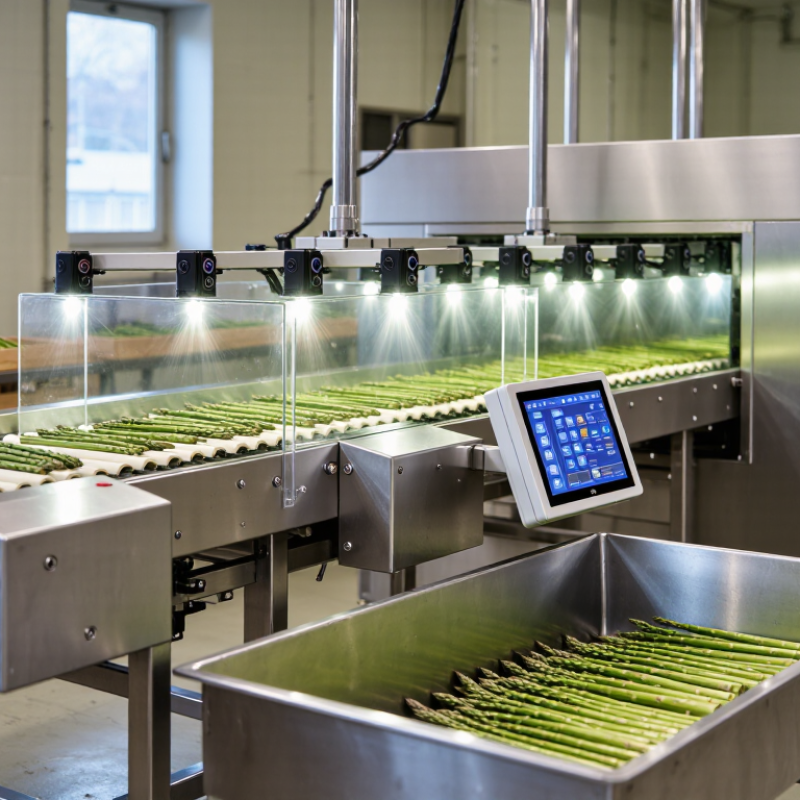
When comparing top asparagus optical sorter manufacturers, evaluate measurable performance rather than polished demonstrations. Ask how their systems detect color, diameter, bruising, tips, and foreign material. High-resolution cameras should work under stable lighting. The software must separate natural variation from real defects. Request results from your own asparagus samples. Test it wet. A dry sample can hide problems. Record miss rates, false rejects, and usable throughput across several runs.
Mechanical design matters as much as image quality. Look for gentle belts, stable spacing, and adjustable drop points. Asparagus can bend, overlap, and bruise easily. A strong sorter should maintain accuracy at the target line speed. Inspect washdown access, stainless construction, drainage, and tool-free cleaning areas. Ask whether calibration can be completed by trained plant staff. Small errors matter. One awkward sensor position may create repeated downtime during cleaning. Also check reject handling. A harsh air blast may damage saleable spears or scatter debris.
Reliable manufacturers provide more than equipment. They should explain installation limits, expected yields, maintenance intervals, and operator training. Ask for documented service response times and spare-parts availability in your region. Independent references from comparable processing lines are valuable. A live factory trial is better than a generic brochure. Still, no trial predicts every season. Crop maturity, moisture, and field damage can change results. That uncertainty deserves honest discussion. Choose a supplier that clearly shares test conditions and admits where performance may fall short.