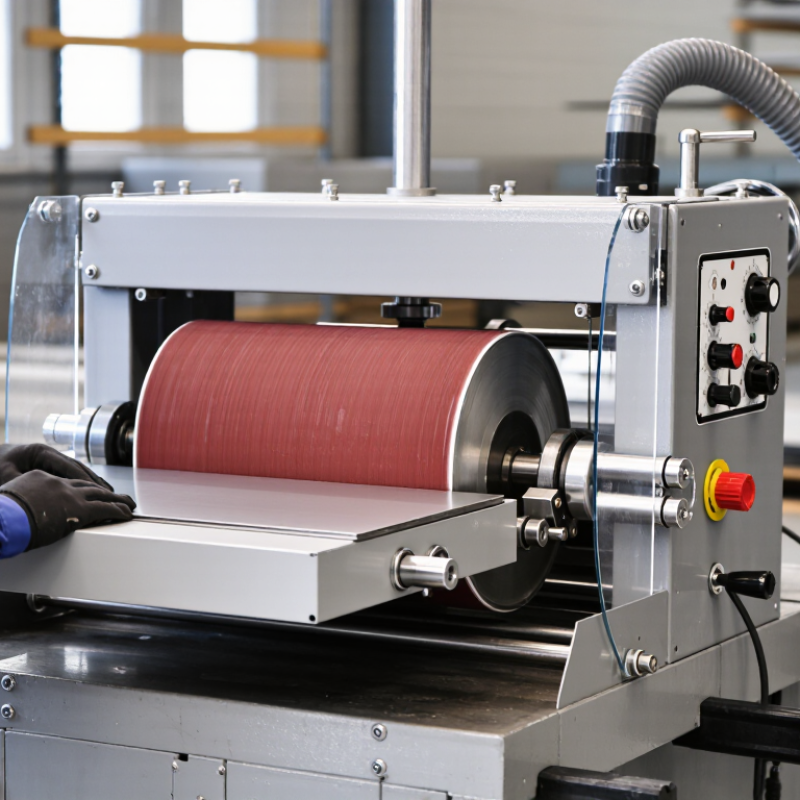
| Machine type | Belt, wide-belt, disc, or centerless sanding machine | An abrasive belt or disc rotates while the workpiece is supported, guided, or fed through the machine. | Deburring, stock removal, blending, and surface finishing of metal parts. |
| Common workpiece metals | Carbon steel, stainless steel, aluminum, and cast iron | The abrasive cuts microscopic chips from the surface; the required abrasive type and pressure depend on the metal. | Consistent edges and improved surface uniformity when the parameters match the material. |
| Abrasive grit selection | Coarse: P24–P60; medium: P80–P120; fine: P150–P320 | Lower grit numbers have larger abrasive particles for faster cutting; higher grit numbers produce finer scratches. | Coarse grits remove welds and scale; fine grits prepare surfaces for polishing or coating. |
| Abrasive material | Aluminum oxide, zirconia alumina, ceramic abrasive, or silicon carbide | Abrasive grains fracture or wear during cutting, exposing new cutting points and controlling cutting performance. | Aluminum oxide suits general steel work; zirconia and ceramic support heavier stock removal; silicon carbide is often used for nonferrous metals and fine finishing. |
| Belt speed | Approximately 15–35 m/s for many metal sanding operations | The motor drives the abrasive belt at a controlled linear speed across the workpiece surface. | Higher speeds can increase cutting action, but excessive speed may cause heat, discoloration, or premature abrasive wear. |
| Contact pressure | Light pressure for finishing; moderate to firm pressure for stock removal | Pressure pushes the abrasive grains into the surface and determines how deeply they cut. | Proper pressure balances cutting rate, surface quality, heat generation, and abrasive life. |
| Feed rate | Varies by material, grit, machine width, and desired finish; commonly adjusted from slow to several metres per minute | The workpiece moves across the abrasive surface at a controlled rate. | Slower feed generally increases contact time and material removal; faster feed reduces heat and produces lighter cutting. |
| Material removal | Light stock removal to several millimetres, depending on machine capacity and workpiece geometry | Multiple abrasive grains shear, fracture, and wear the surface instead of using a single cutting edge. | Removal of weld spatter, burrs, mill scale, oxidation, paint, and uneven surface material. |
| Surface roughness | Often approximately Ra 0.8–6.3 µm, depending on grit, pressure, speed, and material | Each abrasive grain leaves a small scratch; finer grits and finishing passes create smaller, more uniform scratches. | A more uniform surface suitable for painting, plating, welding preparation, or decorative finishing. |
| Heat control | Air cooling, intermittent passes, reduced pressure, or wet grinding where suitable | Cooling removes heat generated by friction and limits thermal damage to the workpiece and abrasive. | Reduced risk of burn marks, warping, temper discoloration, and loss of material properties. |
| Dust and particle control | Local exhaust ventilation with suitable filtration | An extraction system captures airborne metal particles and abrasive dust near the sanding zone. | Cleaner work areas, better visibility, reduced inhalation exposure, and lower contamination risk. |
| Typical process sequence | Inspect → secure → coarse sand → intermediate sand → fine finish → clean and inspect | Operators progressively reduce abrasive grit and adjust pressure and speed as the surface improves. | Controlled material removal with fewer deep scratches and a predictable final finish. |