| 1. Confirm linear density | Denier or decitex consistency | Test representative packages from the lot and compare measured linear density with the order specification. | Results should meet the agreed nominal value and tolerance. ISO 2060 provides a recognized method for determining yarn linear density. | Request test results by lot and clarify the sampling plan and permitted variation before approving the order. |
| 2. Review tensile properties | Tenacity and elongation at break | Check whether yarn strength and stretch are suitable for the intended draw-texturing or downstream process. | Use the buyer’s application-specific limits; POY values vary with polymer, denier, process settings, and intended use. ISO 2062 covers single-end tensile testing of yarns. | Compare supplier results with a tested sample and require consistent test conditions, including gauge length and test speed. |
| 3. Inspect evenness and appearance | Denier variation, filament defects, and surface uniformity | Look for unevenness, broken filaments, fuzz, contamination, and visible variation along the yarn. | Set an agreed evenness limit and defect-acceptance procedure. There is no single universal limit suitable for every POY specification. | Examine multiple packages and request an evenness report using a stated test method and instrument setting. |
| 4. Check spin-finish consistency | Finish level and distribution | Assess whether the finish is uniform and appropriate for package handling and the next processing stage; watch for dry, oily, or sticky spots. | Agree on a finish target and test method with the supplier. The required level depends on the yarn application and process conditions. | Include finish-level limits in the specification and test a sample under the intended downstream process conditions. |
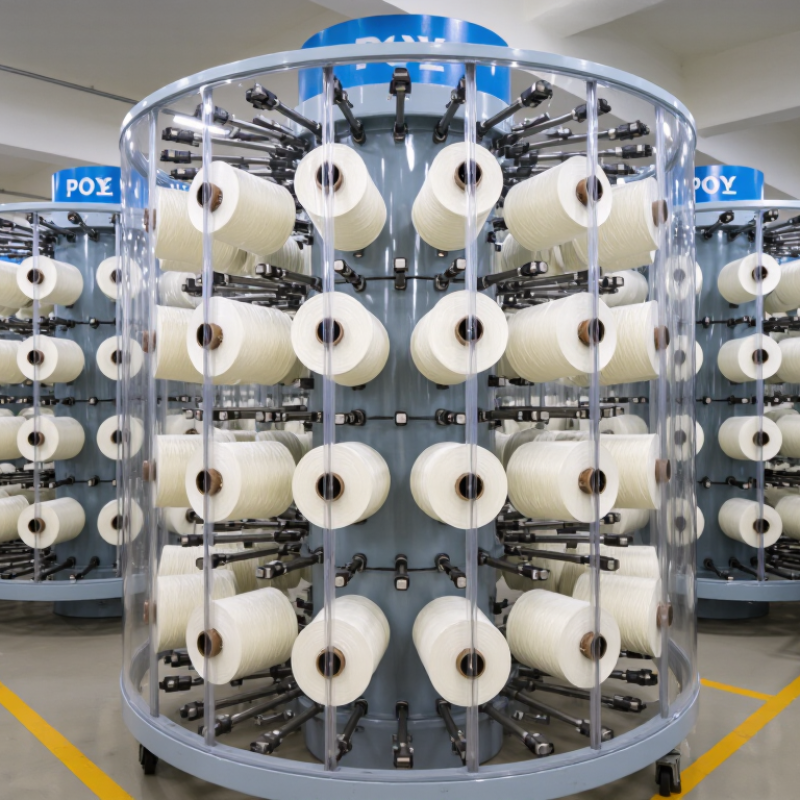
| 5. Evaluate winding quality | Package build, firmness, and unwinding behavior | Check package shape, edge formation, surface stability, and whether yarn unwinds without snagging or excessive tension fluctuations. | Packages should be uniform and free from sloughing, ribboning, soft spots, and collapsed edges; define acceptable package dimensions and weight in the order. | Unwind a trial package at a representative speed and inspect the package core and outer layers for damage or unstable build. |
| 6. Verify interlacing or entanglement | Interlace-node level and consistency, if specified | For interlaced POY, confirm that nodes are present and distributed consistently according to the product specification. | Node count and test procedure should be mutually agreed; requirements vary by end use and are not universal across POY products. | Request the test method and lot results, then confirm the yarn performs reliably in the buyer’s downstream process. |
| 7. Approve traceability and a pre-shipment sample | Lot consistency and documentation | Check that package labels, production lots, test records, and retained samples can be linked clearly. | Documentation should identify the product specification, lot or batch, test date, measured results, and applicable acceptance limits. | Approve a representative sample before shipment and define how nonconforming packages or lots will be handled. |