Key Material Requirements for Food & Beverage Contact Applications
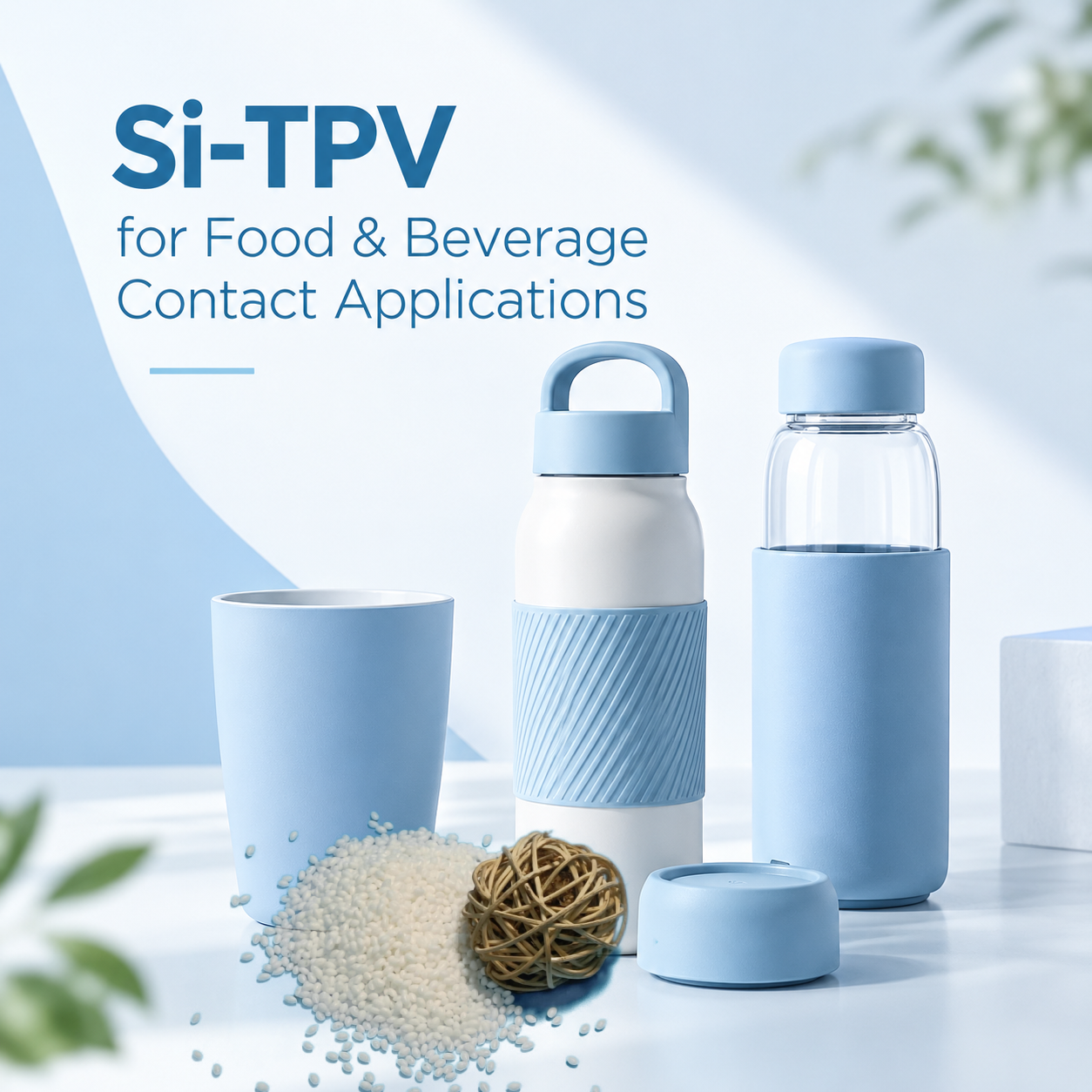
Different drinkware components serve different functions. The cup itself, the base of a bottle, and a removable bottle sleeve may therefore require different combinations of material properties.
1. Contact Safety and Antibacterial Performance
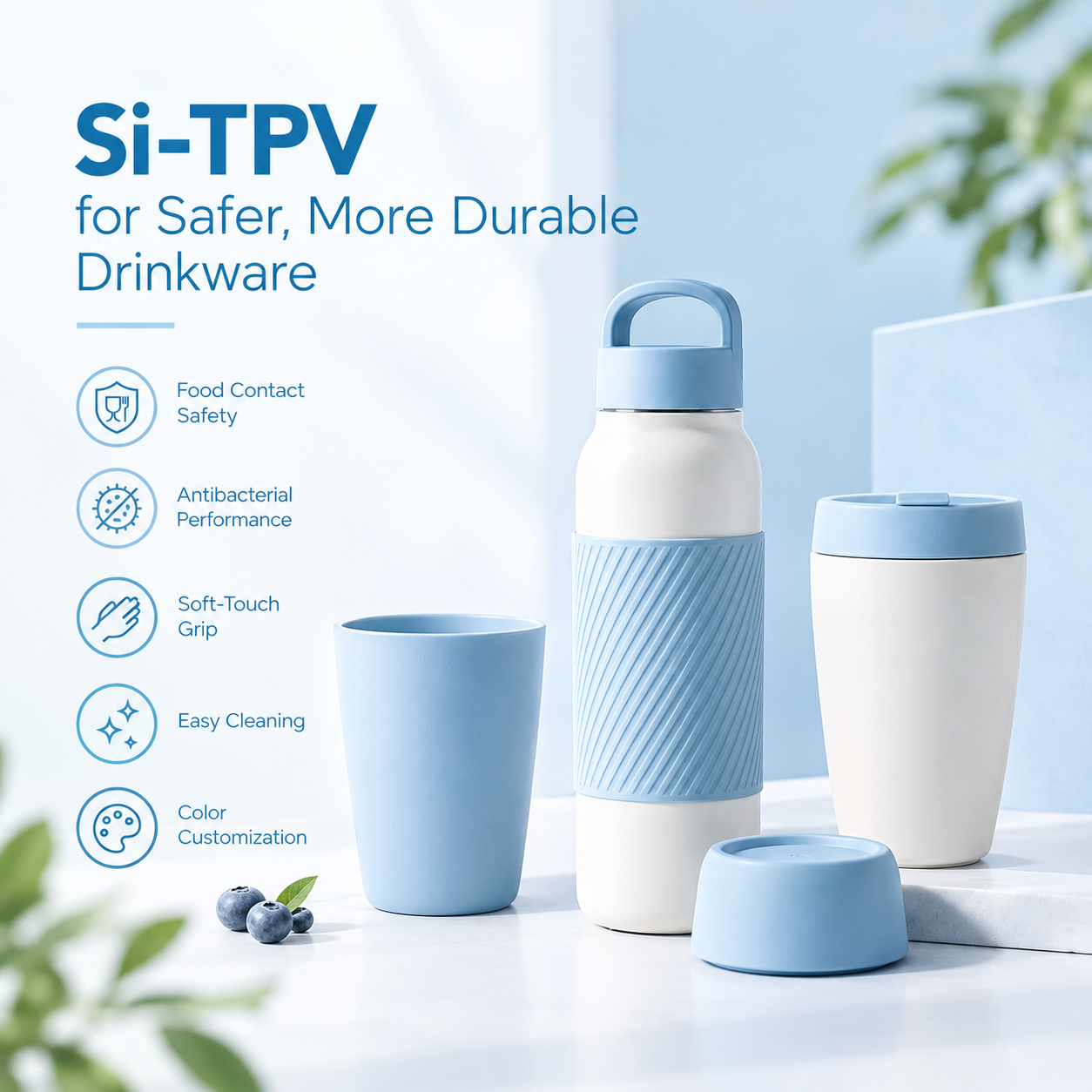
For products intended to contact food or drinking water, material safety is a fundamental consideration. Manufacturers need to evaluate whether the selected material complies with the applicable food-contact requirements for its intended use, including relevant migration limits and testing conditions.
Antibacterial performance is another consideration, particularly for reusable products that are handled frequently. However, antibacterial properties and food-contact compliance are separate requirements. An antibacterial claim does not, by itself, establish that a material is suitable for direct food or drinking-water contact.
For Si-TPV applications, the specific grade, formulation, additives, intended contact conditions, and supporting compliance documentation should be assessed before making food-contact or antibacterial claims.
2. Soft-Touch Grip and Comfortable Handling
The tactile experience of a drinking vessel can influence how comfortable it feels during daily use. Hard or slippery surfaces may not provide the desired grip, particularly when users frequently pick up and put down their bottles.
Soft-touch elastomer materials can help manufacturers develop surfaces with a more comfortable feel. For suitable Si-TPV grades and product designs, the material may provide a soft, smooth tactile experience for selected bottle sleeves, gripping areas, and other components.
Where slip resistance is important, the final surface texture and grip performance should also be evaluated under relevant dry and wet conditions.
3. Scratch, Stain, and Yellowing Resistance
Reusable drinkware is exposed to repeated handling, friction, cleaning, and contact with everyday contaminants. Over time, these conditions can affect the appearance and perceived quality of the finished product.
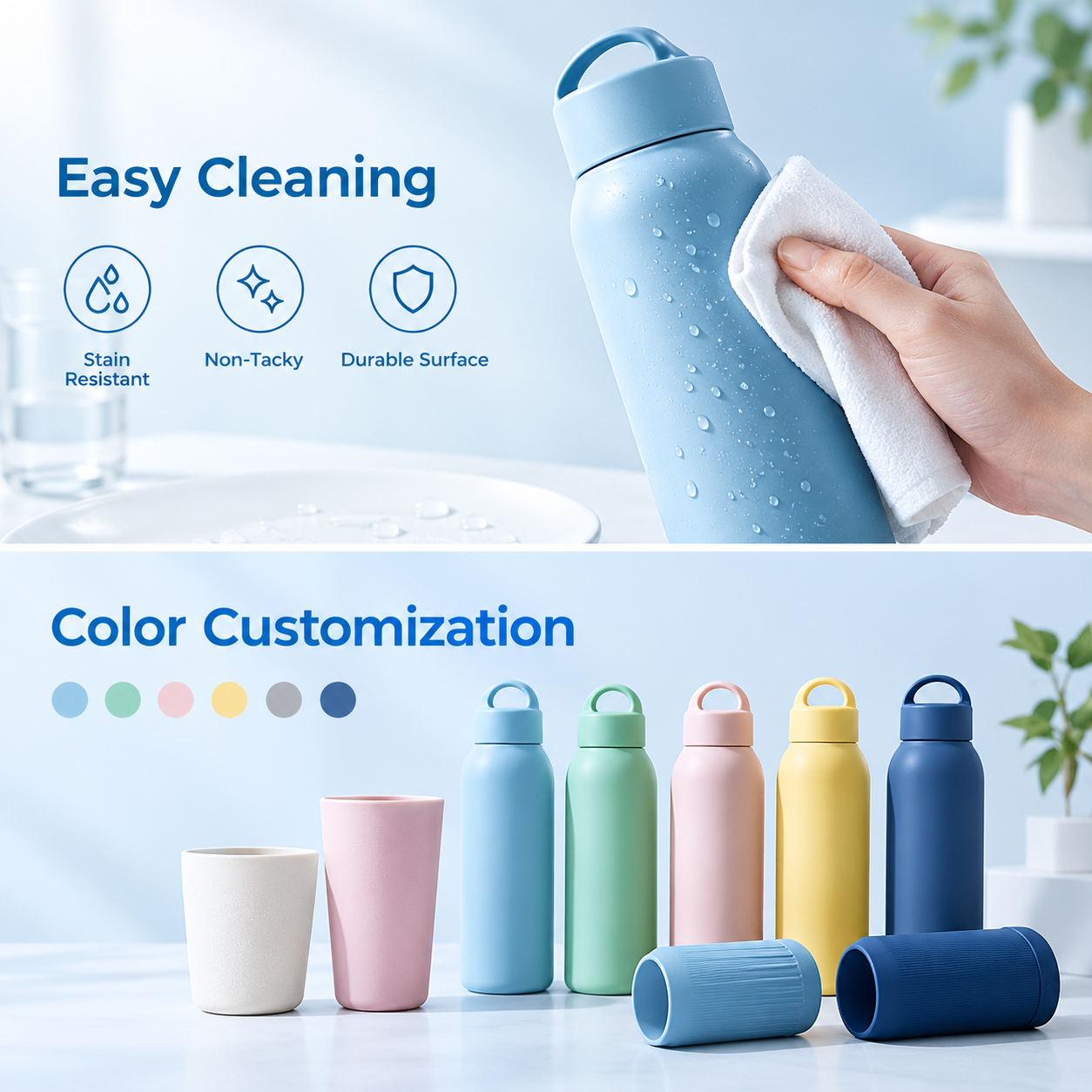
Materials selected for these applications should be evaluated for scratch resistance, stain resistance, and resistance to yellowing where appearance retention is important. For suitable Si-TPV formulations, these properties may help manufacturers develop drinkware components designed to maintain their surface appearance during regular use.
Actual performance depends on the selected grade, color, surface finish, processing conditions, and exposure environment.