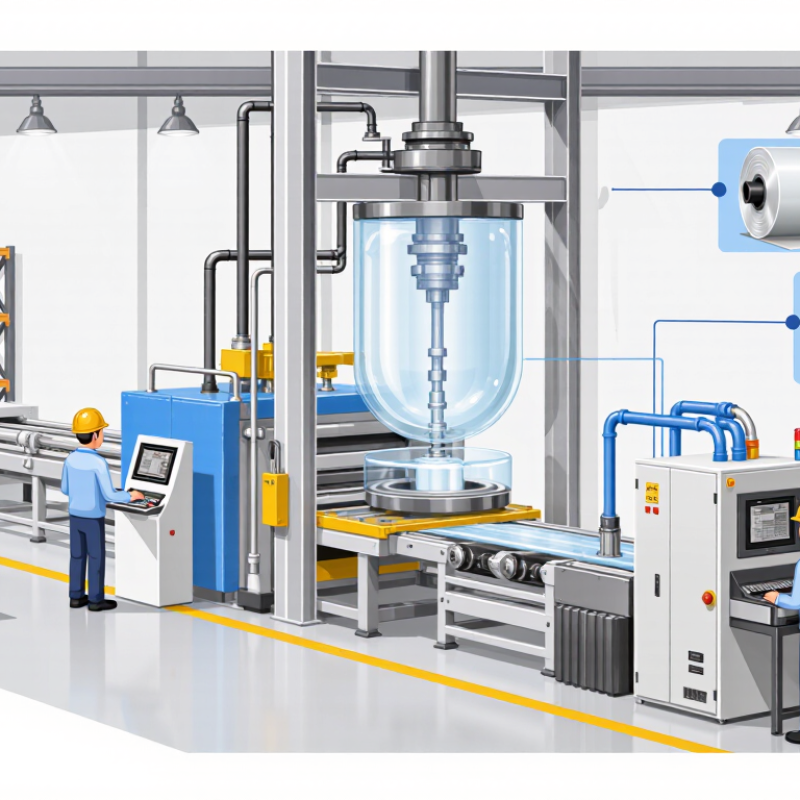
A machine’s kg/h rating is useful only when it matches your intended film gauge, width, and resin. Ask suppliers for output data under those conditions, not just a maximum figure from a thicker film or a narrower die. Numbers need context. A line rated for high output may struggle to hold an even bubble when running thin film at full speed.
Cooling is part of the output calculation. Check the cooling ring design, airflow adjustment, and how steadily the bubble holds its shape. During a trial, watch the frost line and measure thickness across the web, including near both edges. A rising output rate means little if the film develops gauge variation or frequent bubble instability. That matters.
Compare machines using the same resin, target gauge, and layflat width. Request a sustained run, then verify actual output by weighing production over a timed period. Ask how the stated kg/h figure was measured and whether it reflects continuous operation. It can be tempting to compare headline ratings alone; I would not. Results can also shift with resin behavior and operating conditions, so record those details alongside the numbers. A simple trial log may reveal more than a polished specification sheet.