| 1. Confirm axle diameter first | Axle diameter and the front wheel’s bearing inner diameter (ID). | Check the motorcycle’s service information or measure the axle with a suitable caliper. The bearing ID must match the axle size specified for the application. | A wheel with the wrong axle or bearing ID will not install correctly. Do not assume that wheels with the same rim diameter share axle dimensions. |
| 2. Compare hub width and spacer arrangement | Hub width between the fork-side mounting faces, plus the position and length of any wheel spacers. | Compare the wheel and spacer stack with the original assembly. Measure from the same reference faces and follow the service manual’s assembly method. | Incorrect width or spacer placement can affect fork alignment, bearing loading, wheel centering, and brake-disc position. |
| 3. Match bearing dimensions and type | Bearing ID, outside diameter (OD), width, and specified bearing type. | Use the wheel or motorcycle parts documentation to confirm all bearing dimensions. Replace bearings with the specified type; matching only the ID is not enough. | The ID fits the axle, while the OD and width must suit the hub. An incorrect bearing may not seat properly or may fail under load. |
| 4. Check brake-disc offset and mounting | Rotor mounting pattern, bolt arrangement, rotor position, and offset from the wheel or hub centerline. | Compare the original and replacement wheel using the same reference points. Confirm the rotor sits in the correct plane within the caliper and that the specified rotor hardware is compatible. | Incorrect offset can misalign the rotor with the caliper. A matching bolt pattern alone does not confirm correct brake fitment. |
| 5. Verify rim diameter and width | Rim diameter, rim width, and compatibility with the tire size approved for the motorcycle. | Check the wheel markings and the motorcycle or tire maker’s fitment information. Confirm that the selected tire is approved for that rim width and wheel diameter. | Incorrect rim or tire sizing can change handling and clearance. Nominal tire size alone does not establish wheel compatibility. |
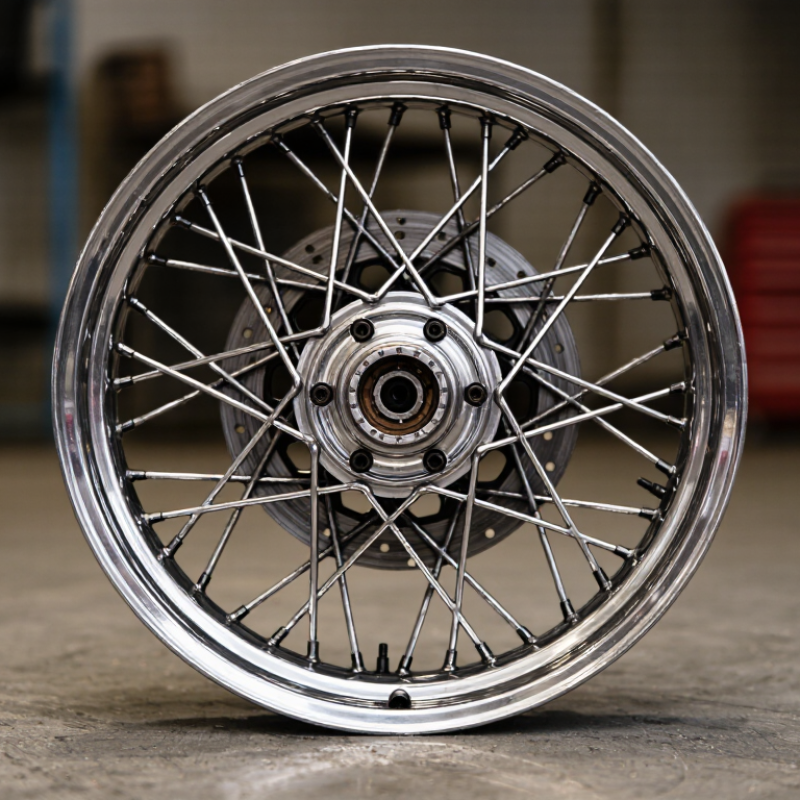
| 6. Check spoke and hub construction | Spoke count, lacing pattern, spoke condition, hub design, and suitability for the intended riding conditions. | Inspect for bent, cracked, loose, or corroded spokes and damage around the spoke holes. Confirm that the wheel is assembled for the motorcycle’s required front-wheel configuration. | Spokes distribute loads between the rim and hub. Damage, incorrect assembly, or unsuitable construction can compromise wheel strength and safety. |
| 7. Confirm clearance and final fitment | Clearance at the fork legs, brake caliper, fender, tire, and any speed-sensor components. | Use the correct axle, spacers, rotor, and tire for a trial installation. After assembly, verify free wheel rotation and follow the specified torque and inspection procedures. | A wheel that bolts on may still interfere with surrounding parts. Correct clearance and installation are essential before riding. |