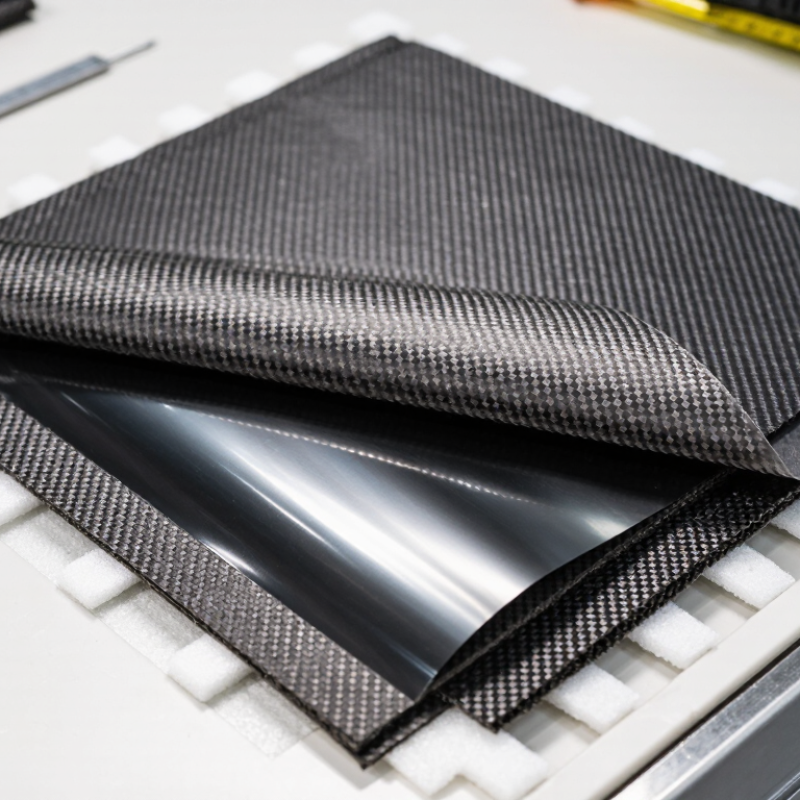
| 1. Confirm the sheet construction | Ask whether the sheet is solid laminate, a carbon-fiber face sheet over a core, or another construction. Check fiber type, resin type, and manufacturing process. | A written construction description; for laminates, the ply count and layup sequence (for example, 0°/90°) where available. | Sheets with similar appearances can have different stiffness, strength, weight, and through-thickness behavior. |
| 2. Match thickness and dimensions to the design | Verify nominal thickness, length, width, flatness, and stated tolerances. Do not assume a quoted size is an exact finished size. | A dimensioned drawing or datasheet with units and tolerances; request measured values if a close fit is required. | Dimensional variation can affect fit, assembly, and the final part's performance. |
| 3. Check the mechanical data | Review tensile, flexural, and, when relevant, compressive properties. Check the test direction, specimen construction, conditioning, and test method. | Test reports tied to the actual material system. ASTM D3039 is commonly used for tensile testing of polymer-matrix composites; ASTM D7264 and ISO 14125 cover flexural testing of fiber-reinforced plastic composites. | Composite properties depend on layup and test direction, so values are meaningful only with their test conditions and method. |
| 4. Inspect surface and edge quality | Look for visible cracks, delamination, blisters, resin-rich or dry areas, scratches, and damaged edges. Clarify the finish on both sides. | Inspection criteria, clear product photos, and an agreed process for reporting defects on delivery. | Surface defects may affect appearance, bonding, machining, or structural use. |
| 5. Match the resin to the service environment | Check the operating temperature range and resistance to moisture, chemicals, UV exposure, and heat, as applicable to the intended use. | Resin identification and relevant test data or written service limits; ask whether a protective coating is needed. | Environmental exposure can affect the resin and the performance of the composite, even when the carbon fibers remain intact. |
| 6. Verify traceability and quality documents | Ask for a lot or batch identifier and documentation that links the supplied sheets to the stated specifications. | A certificate of conformity, batch inspection record, or test report, as appropriate. Check document scope, dates, and material identification. | Traceable records help confirm what was supplied and support incoming inspection or later investigation. |
| 7. Check certification claims and request a sample | Confirm whether a claimed certification applies to the product, the production facility, or the quality-management system. Evaluate a sample before a large order. | A current certificate with its scope and issuing body; note that ISO 9001 certifies a quality-management system, not the performance of an individual sheet. | Clear scope prevents confusion about what a certificate verifies, while a sample lets you assess fit, finish, and suitability. |