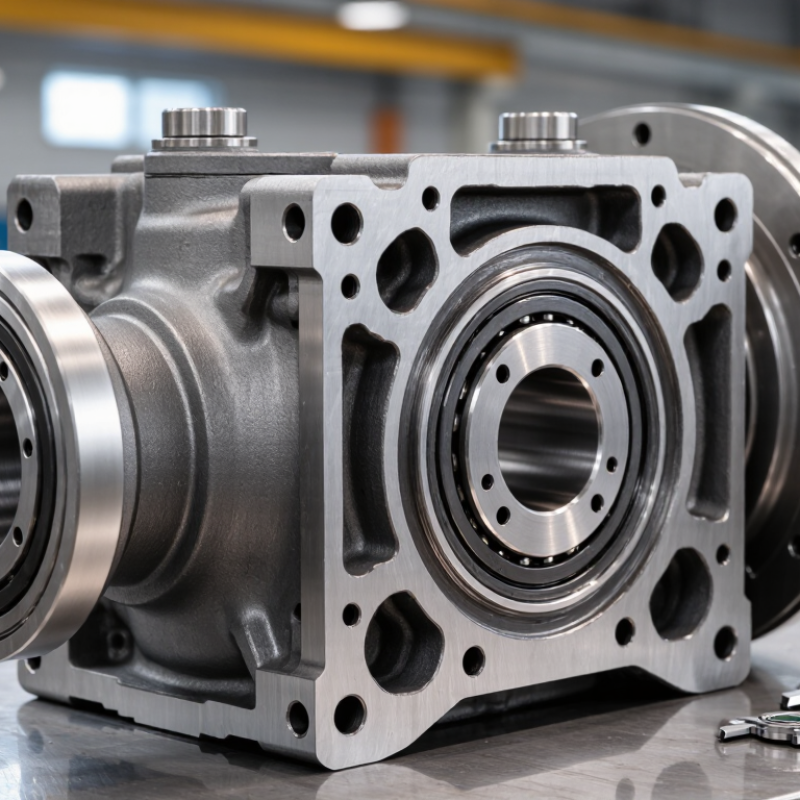
Understand the Role and Load Requirements of a Wheel Carrier Casting
A wheel carrier casting connects the wheel assembly to the suspension and steering system. It transfers vertical, braking, cornering, and impact loads. This role demands more than a high strength rating. The casting must manage repeated forces without cracking, excessive deflection, or premature wear.
Begin with real operating data, not only the vehicle’s static weight. Include uneven roads, emergency braking, cornering, and temporary overloads. Calculate both peak loads and fatigue cycles. A component can survive one severe impact yet fail after thousands of smaller events. That detail is easy to overlook.
I have found that load paths deserve close inspection. Forces should move smoothly through ribs, mounting bosses, and bearing seats. Sharp transitions may create stress concentrations. Generous fillets often improve durability. However, thicker sections can increase shrinkage defects and cooling problems. It is a trade-off, not a shortcut.
Review the alloy’s yield strength, fatigue performance, impact resistance, and corrosion behavior. Confirm that the material suits the expected temperature and environment. Ask for casting process records, dimensional reports, and traceable inspection results. Non-destructive testing can reveal hidden porosity or cracks. Machined surfaces also need controlled datums and tolerances.
Do not ignore installation conditions. Incorrect bearing fits or fastener torque can change the load distribution. Verify interfaces with practical assembly checks. A design that looks excellent on paper may still need revision after testing. Prototype testing, road simulation, and periodic inspection provide stronger evidence than assumptions.