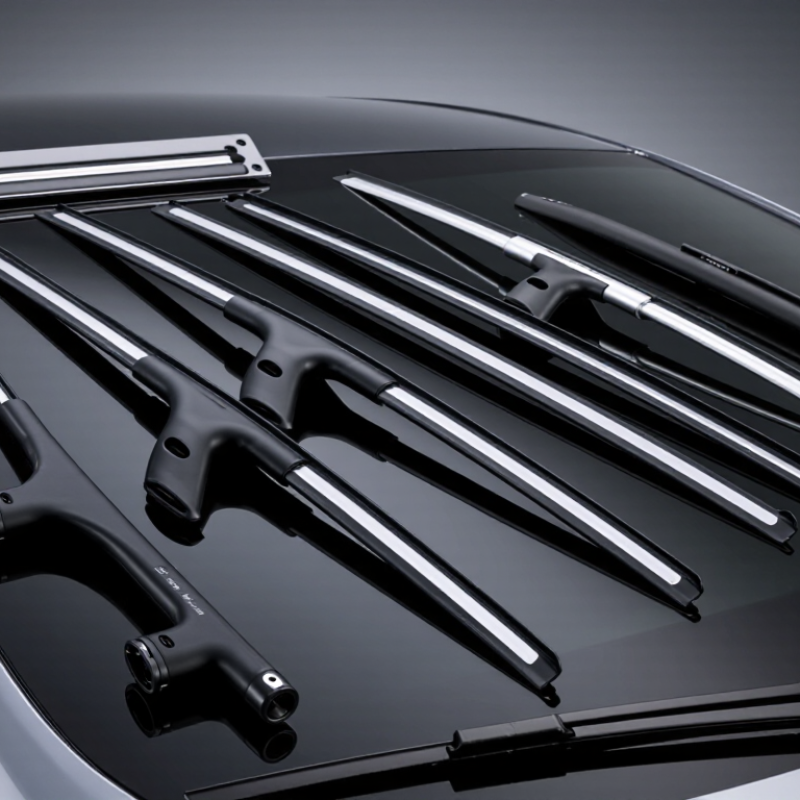
| 01 | Conventional frame blades | Articulated metal frame with a replaceable rubber wiping element; designs vary by connector and vehicle fitment. | Buyers seeking broad replacement coverage and familiar, serviceable product designs. | Vehicle application coverage, connector types, refill availability, corrosion protection, and fitment data quality. |
| 02 | Beam-style blades | Frameless, curved spring-steel structure designed to distribute pressure along the wiping edge. | Programs focused on contemporary vehicle applications or a low-profile appearance. | Beam curvature, pressure distribution, adapter compatibility, and performance on the intended windshield shapes. |
| 03 | Hybrid blades | Combines a supporting frame or linkage with an outer aerodynamic cover; exact construction differs by design. | Buyers looking for a blend of frame support and a covered exterior profile. | Construction details, cover durability, attachment system, and application-specific fitment. |
| 04 | Rear-window blades | Short blades and vehicle-specific connectors designed for rear-wiper applications. | Aftermarket distributors and vehicle programs that need rear-wiper coverage alongside front blades. | Rear-arm compatibility, length and connector listings, and the accuracy of vehicle-specific catalogs. |
| 05 | Refill and replacement-element products | Replacement wiping elements are commonly made from rubber compounds; compatibility depends on blade design. | Buyers prioritizing refill availability, service parts, or reduced replacement of complete assemblies. | Compatible blade models, element dimensions, material options, installation guidance, and supply continuity. |
| 06 | Silicone-element product lines | Uses silicone-based wiping elements rather than conventional rubber compounds; formulations and performance vary. | Buyers evaluating alternative wiping-element materials for selected markets or product tiers. | Material specifications, independent test evidence, temperature range, cleaning performance, and warranty terms. |
| 07 | Natural- or synthetic-rubber product lines | Wiping elements may use natural rubber, synthetic rubber, or formulated blends, depending on the product. | Buyers comparing established material options across price points and operating conditions. | Compound description, product test methods, aging and ozone-resistance data, and batch consistency controls. |
| 08 | Vehicle-specific fitment programs | Product range organized around vehicle applications, blade lengths, arm interfaces, and connector adapters. | Importers, distributors, and retailers needing catalog coverage for defined vehicle populations. | Catalog update process, regional vehicle coverage, fitment validation, packaging labels, and cross-reference accuracy. |
| 09 | Private-label and contract manufacturing | Products can be supplied with buyer-specific branding or packaging where the supplier offers these services. | Retailers and distributors building their own product lines or sourcing to a defined specification. | Minimum order quantities, tooling charges, packaging approvals, lead times, intellectual-property terms, and quality agreements. |
| 10 | Original-equipment supply capability | Some manufacturers develop or produce components and assemblies for vehicle programs; capability is supplier- and program-specific. | Buyers assessing suppliers for formal vehicle-maker programs or demanding quality systems. | Customer and program references where disclosable, audited quality certifications, traceability, change control, and validation records. |