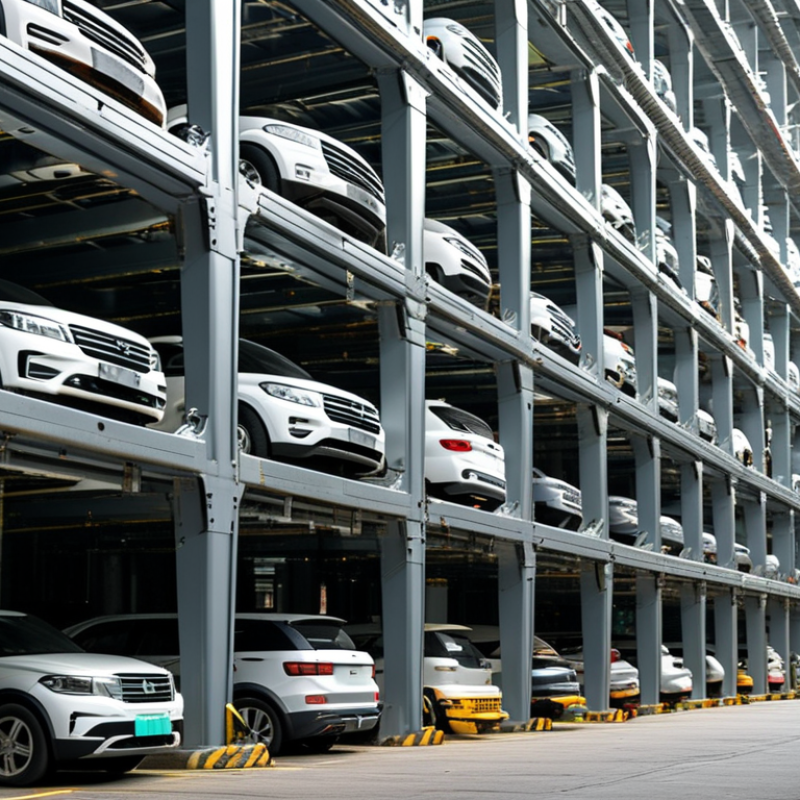
| 1 | Puzzle Parking System | 6–50 vehicles per module | Motor-driven platforms move vertically and horizontally. The control system creates an empty position and shifts platforms to deliver the selected vehicle to the access level. | Passenger cars; commonly designed for vehicles up to approximately 2,000–2,500 kg, subject to project specifications. | Residential buildings, offices, hotels, and small urban parking facilities. | High space efficiency Modular layout Suitable for retrofits | Retrieval time can increase when several platforms must be repositioned; regular maintenance is required for chains, motors, and sensors. |
| 2 | Automated Tower Parking System | 30–120 vehicles per tower | Vehicles are placed on pallets or lifting platforms. A vertical lift moves vehicles between levels, while transfer mechanisms position them in storage spaces. | Passenger cars and SUVs; vehicle height, width, length, and weight must remain within the tower’s approved envelope. | Dense city centers, commercial developments, transport hubs, and high-rise sites. | Small land footprint High vertical utilization Controlled access | Higher construction and installation costs; building height, fire protection, and local planning requirements may affect feasibility. |
| 3 | Shuttle-Based Parking System | 50–1,000+ vehicles | Computer-controlled shuttles transport pallets or vehicles along parking aisles. Vertical lifts connect multiple floors, and transfer units move vehicles into storage positions. | Passenger cars, SUVs, and selected light commercial vehicles, depending on the platform and system design. | Large public garages, airports, hospitals, shopping centers, and mixed-use complexes. | High throughput Scalable architecture Efficient large-site operation | Requires careful software integration and maintenance planning; initial investment is generally higher than simple lift systems. |
| 4 | AGV Parking System | 50–2,000+ vehicles | Automated guided vehicles collect cars from an entry station and transport them to assigned spaces. Navigation may use magnetic markers, QR codes, laser guidance, or other positioning technologies. | Vehicles must comply with the AGV deck size, axle-load, ground-clearance, and weight specifications. | Large underground garages, airports, premium commercial sites, and high-density urban projects. | Flexible layout No driver circulation inside storage area High automation potential | Sensitive to floor conditions, traffic-management software, battery charging, and system availability requirements. |
| 5 | Rotary Parking System | 6–20 vehicles per unit | A continuous chain or belt rotates a series of vehicle platforms vertically, similar to a Ferris wheel, until the requested platform reaches the ground-level access position. | Usually passenger cars; compact layouts commonly support vehicles up to about 2,000 kg, depending on design. | Small plots, dealerships, residential sites, and roadside commercial properties. | Very small footprint Simple operating concept Fast installation | Limited capacity per unit; vehicle retrieval may require platform rotation and the system generally needs a clear vertical zone. |
| 6 | Pallet-Based Automated Parking System | 20–500 vehicles | The driver leaves the vehicle on a standardized pallet. Conveyors, lifts, shuttles, or transfer cars move the pallet through the parking structure and return it to the pickup area. | Passenger vehicles within the specified pallet dimensions; typical systems support loads of approximately 2,000–3,000 kg. | Basements, multi-level garages, hospitals, hotels, and public parking facilities. | Accurate positioning Reduced internal driving Suitable for irregular layouts | Pallets require inspection and maintenance; extra pallet handling can affect retrieval time and operating cost. |
| 7 | Robotic Parking System | 30–1,000+ vehicles | Robotic transfer equipment receives a vehicle at an entry bay, identifies its dimensions, and automatically transports it to an allocated parking position without customer access to the storage area. | Passenger cars and SUVs within the defined length, width, height, wheelbase, and weight limits. | Premium residential buildings, hotels, office towers, and automated public garages. | High convenience Improved security Reduced exhaust emissions indoors | System performance depends on reliable sensors, software, backup power, and professional service support. |
| 8 | Vertical Lift Parking System | 10–70 vehicles per lift unit | A mechanical lift moves platforms or vehicles between parking levels. Horizontal transfer equipment may be added to place vehicles into side-by-side storage spaces. | Passenger cars and SUVs; rated load commonly falls in the range of approximately 2,000–3,500 kg per platform. | Residential developments, offices, hotels, and narrow urban lots. | Good vertical utilization Adaptable to narrow sites Straightforward controls | A single lift can become a throughput bottleneck; pit depth, overhead clearance, and structural capacity must be checked. |
| 9 | Horizontal Sliding Parking System | 10–100 vehicles per installation | Platforms slide laterally on rails or guided tracks. One or more empty spaces are used to allow vehicles to move between the access position and the storage position. | Passenger cars; platform dimensions and rated loads are selected according to the vehicle fleet and site requirements. | Existing garages, low-ceiling basements, residential car parks, and office buildings. | Low installation height Uses existing floor area efficiently Relatively simple structure | A vacant space may be needed for movement; capacity and flexibility are affected by column spacing and floor geometry. |
| 10 | Stacker Parking System | 2–6 vehicles per unit | Hydraulic or electromechanical lifting equipment raises one platform above another, allowing vehicles to be stored vertically in a compact bay. | Passenger cars and light SUVs; typical platform ratings are approximately 2,000–3,500 kg, depending on the configuration. | Private residences, dealerships, workshops, small commercial sites, and parking expansions. | Cost-effective Compact installation Suitable for small capacity | The lower vehicle may need to be removed before accessing the upper vehicle in dependent configurations; safety clearance and floor strength are essential. |