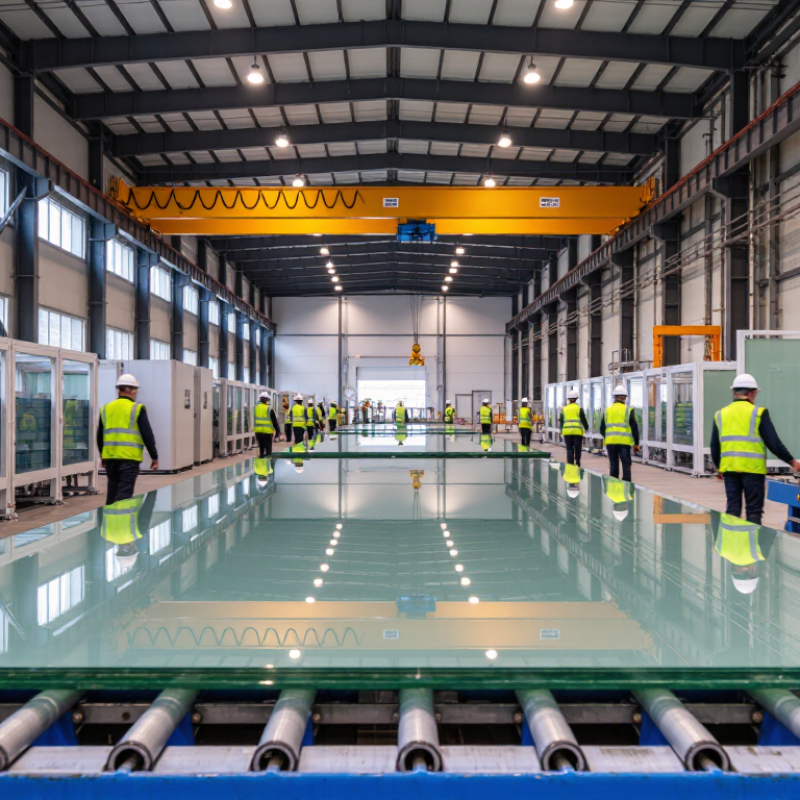
| 1 | Verified float glass production | Confirm that the company operates float glass production lines, rather than only processing or trading glass. | Factory records, production-line details, site inspection, and applicable business or environmental documentation. | Distinguishes primary glass manufacturers from downstream processors and resellers. |
| 2 | Production capacity and utilization | Compare stated annual capacity with actual production and operating status. Check whether figures refer to one line, one site, or the whole group. | Audited annual reports, official disclosures, production records, and clearly dated capacity statements. | Capacity alone does not show how much glass is currently available or consistently produced. |
| 3 | Product range and thickness coverage | Check the available clear, tinted, patterned, or other float glass products, along with documented thickness and size options. | Current technical data sheets, product catalogues, and sample specifications. | A well-documented range helps buyers match products to construction, automotive, or further-processing requirements. |
| 4 | Product quality control | Review controls for thickness, dimensions, optical quality, surface defects, and consistency between batches. | Inspection procedures, test reports, calibration records, and batch-level quality documentation. | Consistent quality can reduce breakage, rework, and losses during cutting or processing. |
| 5 | Standards and certifications | Verify which product and management-system standards apply to the specific products and production site. | Valid certificates and test reports with the issuing body, scope, site, product, and validity period identified. | Certificates are useful only when their scope matches the product and facility being evaluated. |
| 6 | Environmental and regulatory compliance | Assess permits, emissions controls, energy management, and compliance with applicable local requirements. | Environmental permits, monitoring results, inspection records, and publicly available regulatory notices. | Float glass production is energy-intensive, making environmental management and regulatory compliance important operational considerations. |
| 7 | Delivery and export capability | Evaluate order lead times, shipment planning, export documentation, and experience with the destination market. | Redacted shipping records, export documents, delivery performance data, and written logistics procedures. | Reliable delivery and documentation help reduce delays, customs issues, and supply interruptions. |
| 8 | Packaging and transport protection | Review how glass is separated, secured, labelled, and protected against moisture and impact during storage and transit. | Packaging specifications, loading procedures, photographs, and records of transport-related claims. | Appropriate handling reduces the risk of damage to fragile glass products in transit. |
| 9 | Technical support and traceability | Check access to technical staff, product documentation, complaint handling, and batch or production traceability. | Technical support process, sample documentation, traceability examples, and written corrective-action procedures. | Traceability and responsive support make quality issues easier to investigate and resolve. |
| 10 | Commercial reliability and financial stability | Review contract clarity, payment terms, warranty provisions, business continuity, and financial condition. | Company filings where available, credit checks, references, contract terms, and verified business details. | Commercial checks help buyers assess continuity of supply and the enforceability of agreed terms. |