What Are the Top 10 Types of Wooden Doors?
Wooden Doors do more than close an opening. Their construction affects privacy, sound, durability, maintenance, and the way a room feels. Grand View Research’s Wood Doors Market Size, Share & Trends Analysis Report estimated the global market at about $44.1 billion in 2022, with projected growth through 2030. Market estimates provide context, not a buying rule. They cannot tell you whether a door will suit a damp bathroom, a busy hallway, or a quiet bedroom.
Architect Juhani Pallasmaa described the door handle as “the handshake of the building.” It is a small detail, but it captures how a door shapes a first impression. This guide compares ten common types, including solid-wood, engineered-wood, panel, flush, louvered, French, sliding, pocket, barn, and carved doors. Some categories overlap; a sliding door, for example, may also be made from panels. That distinction can be easy to miss. Look beyond appearance to the core, joinery, finish, and installation, then consider how the door will be used each day. A heavy carved door may look striking, yet feel awkward in a narrow room. A flush door may be practical, but offer little visual warmth. There is no perfect choice for every home. The useful question is which trade-offs fit your space, budget, and routine.
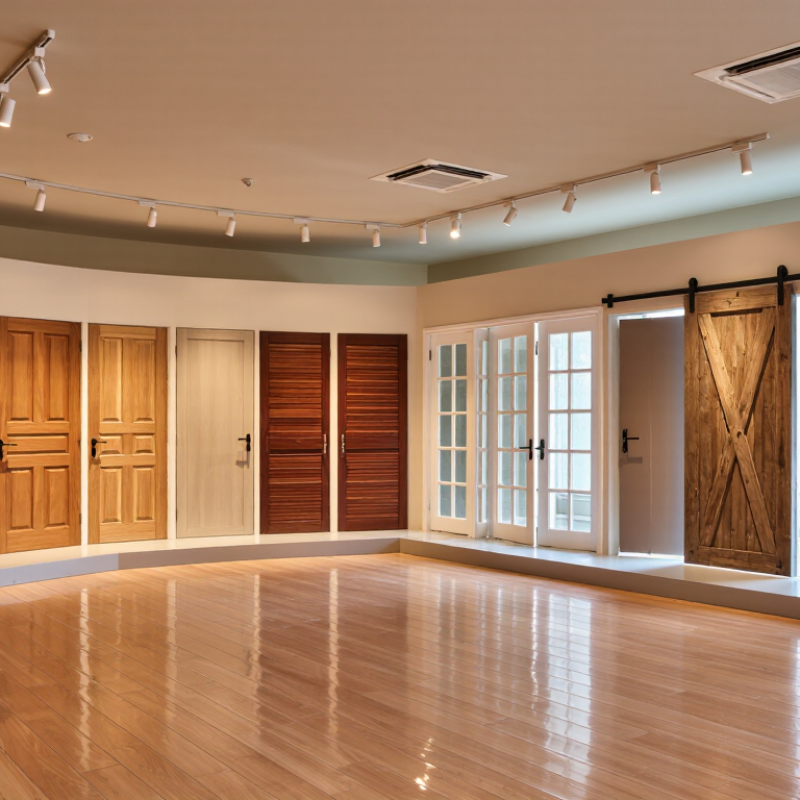
How Wood Doors Are Classified: Core, Construction, Operation, and Finish
What Are the Top 10 Types of Wooden Doors?
Wood doors can be classified by core, construction, operation, and finish. These categories overlap, so “top 10” is not a single technical ranking. Core options include solid wood, solid-core, and hollow-core. Construction may be stile-and-rail, flush, engineered, or veneered. Details matter. The USDA Forest Products Laboratory’s 2021 Wood Handbook places wood’s average fiber saturation point near 30% moisture content. Below that level, changing moisture can cause wood to shrink or swell. That matters for a door near a damp bathroom or a sunny entryway.
Operation describes how the door moves: hinged, sliding, folding, or pivoting. A hinged panel needs swing clearance; a sliding panel needs a clear track. Finishes include paint, clear coating, stain, or veneer, and each affects the visible grain and maintenance routine. A solid-core flush door can be painted, while a stile-and-rail door often leaves its frame-and-panel structure visible. Engineered wood can help limit movement, but its performance still depends on construction and site conditions. The labels are not always tidy. A “wood door” may have a wood veneer over a different core, so inspect the edge and product specification before comparing it with solid wood. The WDMA’s architectural wood-door standards provide technical guidance on construction and performance; check the applicable specification when matching doors for sound control, durability, or repeated use.
10 Common Wooden Door Types: How They’re Classified
Examples across core, construction, operation, and finish
The first three groups show ten common door types: solid-wood, solid-core, hollow-core, flush, stile-and-rail, panel, louvered, hinged, sliding, and folding. Finishes are a separate classification dimension; common options include painted, stained, clear-finished, and veneer-faced. Counts show examples, not sales or popularity, and the dimensions can overlap.
Fire-Rated Wood Doors: NFPA 252 Tests and Common 20-, 45-, 60-, and 90-Minute Ratings
Fire-rated wooden doors are tested as complete assemblies, not as slabs alone. NFPA 252 exposes a door assembly to controlled furnace heat and evaluates its performance; the test procedure also includes a hose-stream test. The frame, hinges, latch, glazing, and seals can all affect the result. Details matter.
Common ratings include 20, 45, 60, and 90 minutes. These figures indicate the duration an assembly met specified test criteria, not a guarantee that every installed door will resist fire for that exact time. A 90-minute rating does not simply mean a thicker wood panel. The tested construction and compatible components matter. Required ratings depend on the building’s design and applicable codes, so confirm the specification with a qualified professional.
Tips: Check the label on the door edge and verify that the frame and hardware match its listing. Avoid trimming, drilling, or replacing components without approval. Even a small gap or an unsuitable closer can undermine performance. I sometimes see appearance take priority over the label; that choice deserves a second look.
