| 1 | Alternating fabric bands | Provide the blind’s adjustable light-filtering and privacy effect. | The fabric has alternating sheer and opaque horizontal sections. As the fabric moves, the bands can be positioned in line with one another or offset. | When the sheer sections align, more light can pass through. When opaque sections overlap the sheer sections, visibility and incoming light are reduced. |
| 2 | Front and rear fabric layers | Allow the sheer and opaque bands to overlap in different positions. | The fabric forms a loop or layered run across the front and back of the blind. Operating the blind shifts the relative position of the two layers. | The amount of light control depends on the fabric, band dimensions, alignment, and gaps around the installed blind. |
| 3 | Headrail | Houses and supports the operating components at the top of the blind. | The headrail holds the rotating tube and, depending on the design, the clutch or other drive components. | Headrail shape and dimensions vary by product; compatibility should be checked when replacing parts. |
| 4 | Roller tube | Supports the fabric and winds or unwinds it during operation. | Turning the tube moves the fabric loop. This changes the blind’s height and the alignment of its sheer and opaque bands. | A level installation helps the fabric travel evenly and reduces the risk of tracking to one side. |
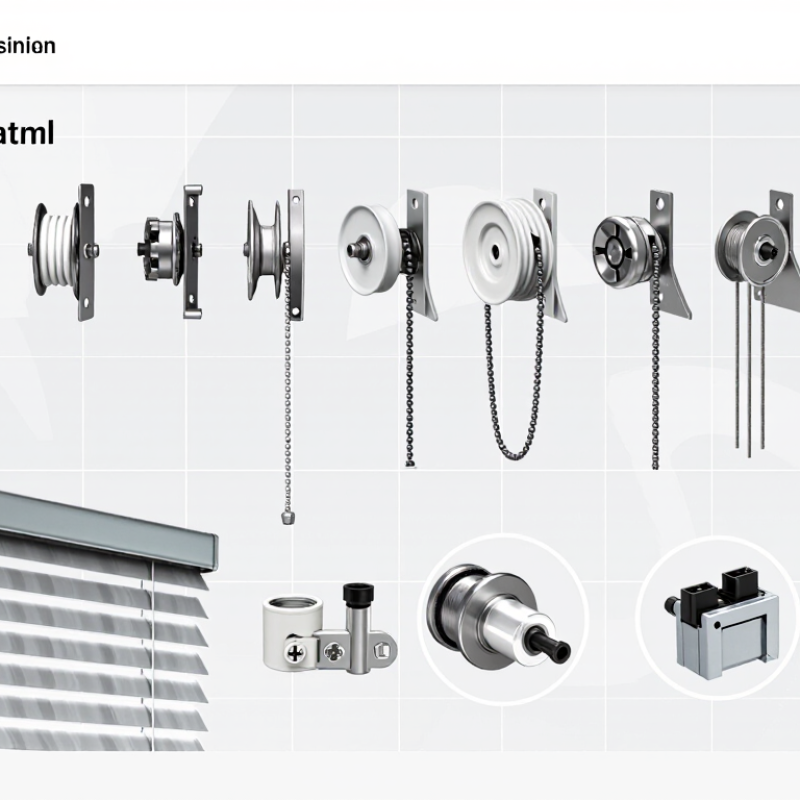
| 5 | Clutch | Transfers input from the control to the roller tube and helps hold the blind at a selected position. | In a common chain-operated design, the chain turns a wheel in the clutch, which rotates the tube. | Clutch design and load capacity are product-specific; use a replacement matched to the blind. |
| 6 | Bead chain or operating chain | Provides manual control on many zebra blinds. | Pulling one side of the continuous loop turns the clutch in one direction; pulling the other side turns it in the opposite direction. | Keep chain loops secured with an appropriate tensioning device and follow applicable child-safety requirements. |
| 7 | Spring or motor drive | Offers an alternative to a manual chain on compatible designs. | Spring-assisted versions use stored mechanical force; motorized versions use an electric motor to turn the roller tube. | These options are not present on every zebra blind. Power, controls, and operating methods depend on the specific system. |
| 8 | Bottom rail | Helps keep the hanging fabric aligned and provides a finished lower edge. | The rail adds weight and moves with the fabric as the blind is raised or lowered. | Keep the rail clear of obstructions to support smooth travel. |
| 9 | Mounting brackets | Attach the headrail to a wall, window frame, or ceiling, depending on the installation. | Brackets support the blind and locate the ends of the headrail or roller assembly. | Use suitable fixings for the mounting surface and follow the product’s installation instructions. |
| 10 | Operating sequence | Controls both the blind’s drop and the position of its fabric bands. | Operating the chain, spring control, or motor turns the tube. The fabric moves until the desired height and band alignment are reached. | A zebra blind adjusts light and privacy by changing band alignment; it is not necessarily a room-darkening or blackout system. |