| Manual or Bench-Top Filler | An operator positions each can and starts the filling cycle. Product filling, valve crimping, and propellant charging may be handled at separate stations or with compact equipment. | Approximately 100–600 cans per hour, depending on the product, can size, operator workflow, and number of stations. | Laboratory work, product trials, pilot runs, and very small production batches. | Low initial equipment cost and flexible changeovers; labor-intensive and generally unsuitable for high-volume production. Confirm that the setup includes compatible crimping and propellant-charging equipment. |
| Semi-Automatic Indexing Filler | Cans are loaded and transferred by an operator or simple conveyor. The machine automates selected steps, such as liquid dosing, valve placement, crimping, or propellant filling. | Approximately 300–1,500 cans per hour, with output affected by the number of filling heads and manual handling time. | Small and medium batches, contract packers, and manufacturers moving beyond bench-top production. | Offers a balance between investment and output. Operators may remain a production bottleneck, and separate or optional stations may be needed to complete the full filling process. |
| Automatic Linear Filler | A conveyor moves cans through synchronized stations for product filling, valve placement, crimping, and propellant charging. The line typically indexes cans from station to station. | Approximately 1,500–6,000 cans per hour, depending on line configuration, filling heads, product properties, and container format. | Regular medium-to-high-volume production with repeatable products and established packaging specifications. | Provides consistent, coordinated production and can be configured with inspection and coding equipment. Floor space, changeover design, and integration between stations should be assessed. |
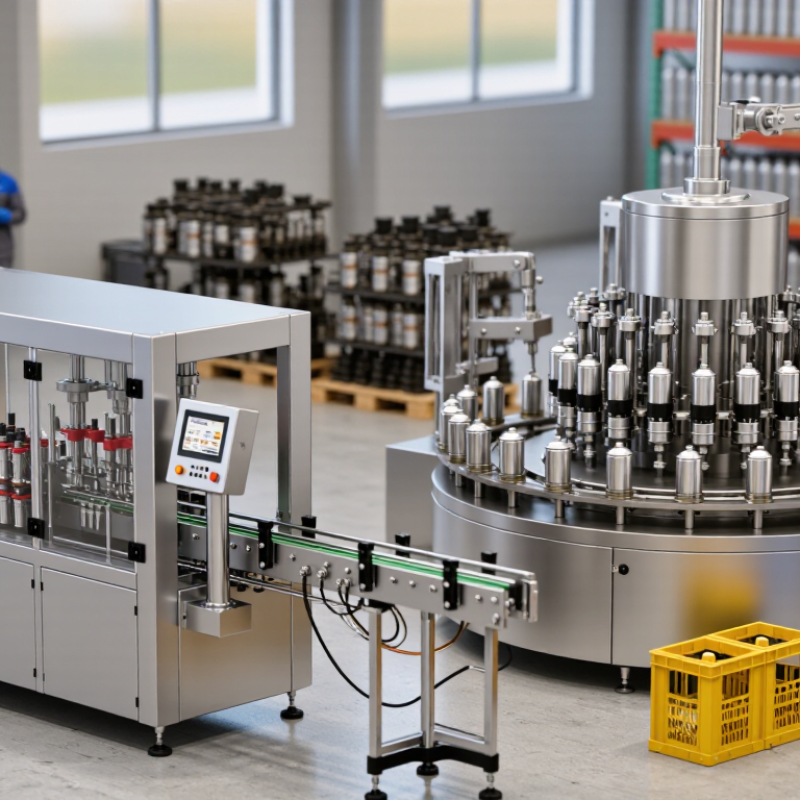
| Automatic Rotary Filler | Cans travel around a rotating turret or series of rotary stations. Multiple heads perform operations in parallel, allowing a continuous or near-continuous production flow. | Approximately 6,000–18,000 cans per hour; higher-output configurations may be available, subject to the product and complete line design. | High-volume manufacturing with sustained demand and a relatively stable range of can and valve formats. | High throughput depends on coordinated feeding, filling, crimping, and gassing. Tooling and changeovers can be more involved than on lower-speed equipment. |
| Cold-Fill System | Product and liquefied propellant are chilled before filling. The cooled mixture is dispensed into the can, which is then sealed under controlled conditions. | Capacity varies widely by equipment layout; compact systems may serve lower-volume production, while automated lines can operate at several thousand cans per hour. | Products and propellants compatible with low-temperature processing, subject to formulation and process validation. | Requires refrigeration and careful temperature control. Product compatibility, moisture management, workplace safety, and local requirements for flammable or pressurized materials are important. |
| Pressure-Fill System | Product is filled into the can, the valve is placed and crimped, and propellant is charged through the valve under pressure. | Capacity depends on the number of filling and gassing heads; integrated automated lines commonly range from a few thousand to over 10,000 cans per hour. | A broad range of conventional aerosol products, where the formulation and packaging are suitable for pressure filling. | Enables propellant charging after the valve is sealed. Accurate crimping, pressure control, leak testing, and compatible valve-and-can specifications are essential. |
| Bag-on-Valve (BOV) Filler | Product is filled into a flexible bag attached to the valve assembly. Compressed gas is charged into the space between the bag and the can, keeping the product separate from the propellant. | Capacity depends strongly on bag placement and valve handling; automated systems are commonly designed for hundreds to several thousand cans per hour. | Products requiring separation from the propellant, including selected personal-care, pharmaceutical, food, and specialty formulations. | Requires BOV-compatible cans, valves, and filling equipment. Bag handling and placement can affect line speed, and product-specific testing is necessary. |