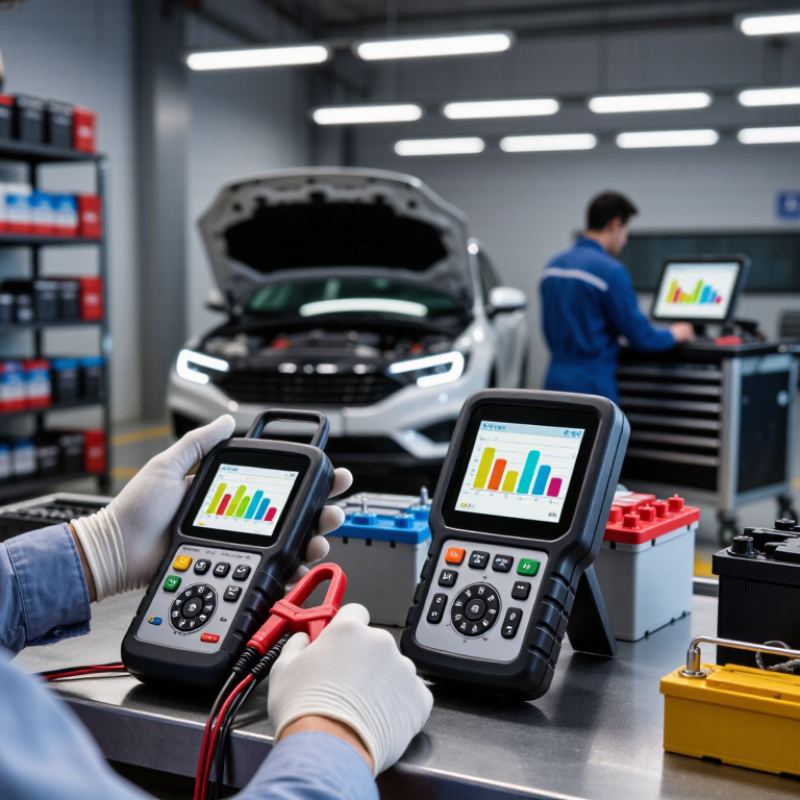
China’s automotive battery tester manufacturers serve repair shops, battery plants, and vehicle service networks. Many offer handheld conductance testers, while others build load-testing benches for production lines. Typical instruments check battery voltage, starting capacity, and charging-system performance. Clear operating ranges matter: a workshop handling passenger cars may need different settings from a facility testing commercial vehicles.
Look beyond the product photo. Ask whether the tester supports the battery chemistries and voltage ranges used in your market, and request sample test reports. A useful screen should show readings clearly under bright service-bay lighting. Probe quality matters, too; thin leads can wear quickly when technicians move between vehicles all day. That detail is easy to overlook.
Some manufacturers provide OEM configurations, software adjustments, or private-label packaging, but customization can add time and make spare parts less interchangeable.
Compare calibration procedures, warranty terms, and access to replacement clamps before placing a large order. Ask how the factory verifies repeatability across units, not just how quickly it assembles them.
Not every supplier shares this information readily. That is a limitation worth noting, and a reason to test a sample under real workshop conditions before committing.