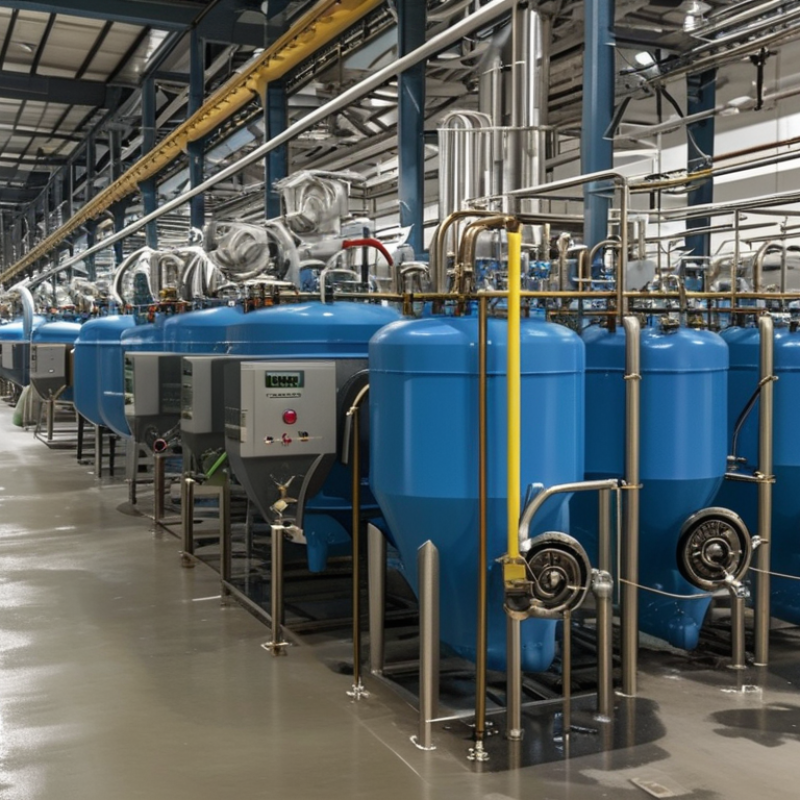
| Biofilter Technology Comparison |
| Biological Treatment Mechanism | Fixed-bed biological filtration | Microorganisms grow on a stationary filter medium and oxidize biodegradable pollutants. | Suitable for secondary treatment, polishing, ammonia reduction, and odor-control applications. | Filter vessels should provide uniform flow distribution, drainage, backwashing, and access for media inspection. | Process-flow review and hydraulic testing |
| Filter Media | Granular activated carbon, anthracite, sand, ceramic media, or engineered plastic media | Media selection depends on porosity, density, surface area, abrasion resistance, and target pollutants. | Carbon supports adsorption and biofilm growth; mineral and ceramic media provide filtration and biological attachment. | Media should be tested for particle-size distribution, apparent density, mechanical strength, and leachable substances. | Supplier test report and incoming inspection |
| Hydraulic Loading Rate | Design parameter for water flow through the filter bed | Common preliminary design ranges are approximately 2–15 m³/m²·h, depending on media and treatment objective. | Lower rates generally provide longer contact time; the final value must be confirmed by pilot testing and head-loss calculations. | Distributor nozzles, underdrains, and internal supports should be designed for even flow and low dead zones. | Hydraulic calculation and distribution test |
| Empty Bed Contact Time | EBCT for biological contact and adsorption | Typical preliminary ranges are approximately 5–30 minutes, depending on influent quality and treatment target. | Longer EBCT can improve biodegradable-organic removal and nitrification but increases vessel volume and cost. | Vessel dimensions, operating volume, and flow capacity should be traceable to the approved design calculation. | Flow-rate and volume verification |
| Dissolved Oxygen Requirement | Aerobic biofiltration | For nitrification, dissolved oxygen is commonly controlled at approximately 2 mg/L or higher in the filter influent or bed. | Stable oxygen transfer supports ammonia oxidation and reduces the risk of anaerobic conditions and odor formation. | Aeration equipment, diffusers, blowers, and control instruments should be sized for the peak oxygen demand. | Online dissolved-oxygen monitoring and commissioning test |
| Backwashing | Hydraulic, air, or combined air-water backwash | Backwash frequency is site-specific and is commonly triggered by head loss, turbidity breakthrough, or a scheduled interval. | Removes trapped solids and controls excessive biomass accumulation while protecting treated-water quality. | Backwash piping, valves, air scour system, and waste-drain capacity should be tested under operating conditions. | Automatic sequence test and head-loss monitoring |
| Pollutant Removal | Biodegradable organic matter and ammonia | Removal efficiency varies with temperature, loading, dissolved oxygen, pH, alkalinity, and influent biodegradability. | Performance claims should be stated as site-specific guaranteed values rather than universal percentages. | Design documents should identify influent conditions, effluent limits, safety factors, and pilot-test assumptions. | Laboratory analysis and performance acceptance test |
| Process Monitoring | Online and laboratory monitoring | Typical indicators include flow, pressure loss, turbidity, pH, dissolved oxygen, temperature, ammonia, and COD. | Monitoring supports early detection of clogging, oxygen deficiency, toxic shocks, and biological instability. | Instrumentation should have defined ranges, calibration procedures, alarm settings, and data-recording capability. | Calibration certificates and control-system inspection |
| Manufacturing and Compliance Standards |
| Pressure-Vessel Fabrication | Applicable Chinese pressure-vessel requirements where legally classified as pressure equipment | Requirements may include approved design, material traceability, welding procedures, nondestructive examination, and pressure testing. | Relevant for closed pressurized filters, air receivers, and other equipment subject to statutory pressure classification. | The manufacturer should confirm whether the supplied vessel falls under applicable special-equipment regulations before production. | Design review, material records, weld records, and pressure-test report |
| Structural Materials | Carbon steel with protective lining, stainless steel, reinforced plastic, or concrete structures | Material selection depends on chloride concentration, pH, temperature, pressure, ultraviolet exposure, and chemical cleaning conditions. | Correct material selection reduces corrosion, leakage, coating failure, and unplanned maintenance. | Material certificates, coating specifications, laminate thickness, curing records, and visual inspection should be retained. | Material verification and coating or laminate inspection |
| Welding and Fabrication Quality | Documented welding procedures and qualified inspection practices | Quality controls typically include fit-up inspection, weld visual examination, dimensional checks, and applicable nondestructive testing. | Consistent fabrication improves vessel integrity, connection reliability, and service life. | Welding procedure qualifications, welder qualifications, inspection records, and corrective-action records should be available. | Manufacturing-record review and third-party inspection when required |
| Quality Management System | ISO 9001-based quality management system | ISO 9001 focuses on documented processes, customer requirements, risk-based thinking, corrective action, and continual improvement. | Helps control design changes, procurement, production, inspection, nonconformities, and after-sales documentation. | Certification should be current, issued by a competent certification body, and applicable to the relevant manufacturing scope. | Certificate validation and quality-system audit |
| Environmental Management | ISO 14001-based environmental management system | Addresses environmental aspects, legal obligations, operational controls, objectives, and continual improvement. | Useful for evaluating manufacturing-site control of waste, emissions, chemicals, energy, and water use. | Environmental certificates should be checked for scope, validity, site coverage, and certification status. | Certificate review and site audit |
| Electrical and Control Safety | Low-voltage electrical assemblies and industrial control panels | Typical controls include enclosure protection, grounding, short-circuit protection, labeling, emergency stop functions, and insulation testing. | Improves operator safety and reliability of pumps, valves, blowers, sensors, and automated backwash sequences. | Electrical drawings, component lists, control logic, factory acceptance tests, and insulation or continuity records should be provided. | Panel inspection and factory acceptance test |
| Water-Reuse Compliance | Applicable Chinese reclaimed-water and discharge requirements | Limits depend on end use, such as urban miscellaneous use, industrial reuse, landscape irrigation, or discharge to receiving waters. | The biofilter should be selected according to the final effluent limits and the complete treatment train, not as a standalone unit. | Project specifications should identify the applicable current national, sector, local, and discharge standards. | Regulatory review and accredited laboratory testing |
| Factory Acceptance Testing | FAT before shipment | Typical checks include dimensions, nozzle locations, leakage, coating condition, valve operation, control logic, alarms, and documentation. | Detects manufacturing defects before installation and reduces commissioning delays at the treatment site. | Acceptance criteria should be agreed in the purchase specification and linked to drawings and inspection plans. | Signed FAT checklist and inspection dossier |
| Installation and Commissioning | Site acceptance testing and biological start-up | Commissioning normally includes flushing, leak testing, instrument calibration, flow balancing, inoculation or acclimation, and gradual loading. | Biological performance develops over time and should be evaluated after stable operating conditions are achieved. | Supplier documentation should include installation drawings, operating instructions, maintenance schedules, spare-parts lists, and training records. | Site acceptance test and documented performance trial |
| Supplier Selection Priority | Technical compliance, proven application, manufacturing control, and lifecycle support | A balanced assessment should include treatment guarantee, reference applications, production capacity, lead time, inspection procedures, and service response. | The most suitable supplier is the one that meets the project’s verified influent, effluent, hydraulic, environmental, and maintenance requirements. | Use a weighted technical-commercial evaluation rather than relying only on price, catalog claims, or generic removal percentages. | Bid evaluation, reference checks, audit, and contract review |