| Primary polymer | Polypropylene resin, usually supplied as pellets; spunbond grades commonly have a melt flow rate of approximately 25–40 g/10 min, while meltblown grades are generally much higher. | Manufacturers select polymer grade according to fiber fineness, fabric strength, filtration performance, and end use. | Incoming-resin checks normally include melt flow rate, moisture, contamination, color, and lot traceability. |
| Pellet feeding and extrusion | PP is melted in an extruder at temperatures typically around 200–240°C, depending on resin grade and line design. | Automated gravimetric feeders and continuous extrusion systems are widely used for stable output and consistent basis weight. | Operators monitor melt temperature, pressure, throughput, screen condition, and residence-time stability. |
| Fiber-forming method | The two principal PP technologies are spunbond and meltblown. Spunbond produces continuous filaments; meltblown produces very fine short microfibers. | Spunbond is used for bags, hygiene products, agriculture, and medical textiles. Meltblown is used mainly for filtration and absorbent or composite structures. | Fiber diameter, filament uniformity, die cleanliness, and web appearance are inspected during production. |
| Typical fiber fineness | Spunbond fibers are commonly in the approximate range of 1.5–3.5 denier. Meltblown fibers are much finer and are often measured in micrometers rather than denier. | The selected fineness affects softness, tensile strength, filtration efficiency, breathability, and surface uniformity. | Microscopic examination and finished-fabric performance testing are used to verify fiber distribution. |
| Web formation | Extruded fibers are cooled, stretched, and deposited on a moving forming belt to create a web. Airflow and belt speed control web uniformity. | Production lines are configured for single-layer, dual-layer, or multi-layer structures such as spunbond–meltblown–spunbond composites. | Cross-direction basis-weight variation, visible defects, holes, streaks, and fiber clumps are checked. |
| Bonding process | Thermal calendering is common for spunbond fabrics. Bonding conditions are adjusted according to PP melting behavior, fabric weight, and embossing pattern. | Point-bond patterns are frequently used to balance tensile strength, softness, drape, and air permeability. | Bond strength, thermal damage, hole formation, embossing clarity, and fabric hand feel are evaluated. |
| Common basis-weight range | Spunbond PP fabrics are commonly produced from approximately 10–150 g/m². Meltblown layers are often lighter, depending on filtration and composite requirements. | Low weights are used for hygiene and lightweight packaging; medium and heavy weights are used for bags, furniture, construction, and agriculture. | Basis weight is measured by cutting and weighing specimens in accordance with ISO 9073-1 or an equivalent method. |
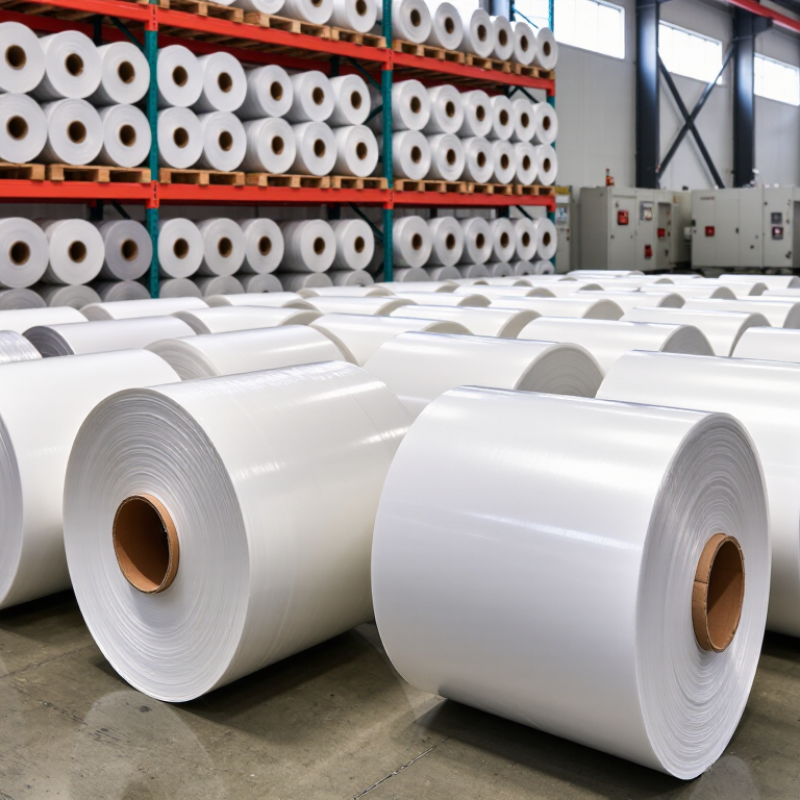
| Fabric width and roll format | Commercial production widths commonly range from approximately 1.6 to 3.2 meters, with custom widths available depending on the production line. | Finished rolls may be supplied in jumbo rolls or slit rolls for converting into bags, medical products, packaging, and technical textiles. | Roll width, roll length, winding tension, telescoping, edge alignment, and splice control are recorded. |
| Color and functional additives | Common options include white, black, colored, UV-stabilized, hydrophilic, hydrophobic, antistatic, and flame-retardant grades. | Additives may be introduced through masterbatch, surface treatment, or a combination of both, depending on the intended application. | Color difference, additive dispersion, surface wettability, UV performance, and regulatory compliance are tested where applicable. |
| Core performance tests | Typical tests include tensile strength, elongation, tear resistance, air permeability, hydrostatic pressure, thickness, basis weight, and dimensional stability. | Testing frequency may be set by the buyer’s specification, production lot, application risk, and applicable national or international standard. | Common reference methods include ISO 9073-1 for mass per unit area, ISO 9073-3 for tensile strength, and ISO 9237 for air permeability. |
| Factory qualification criteria | Relevant criteria include production-line width, annual capacity, process stability, laboratory capability, traceability, export experience, and documented quality procedures. | A qualified supplier should provide technical data sheets, samples, inspection records, material declarations, and a clear method for handling nonconforming rolls. | Buyers should verify actual production samples rather than relying only on catalog specifications or stated capacity. |
| Packing and shipment inspection | Rolls are generally protected with moisture-resistant outer packaging and labeled with product code, lot number, width, basis weight, and production date. | Export shipments are prepared according to container loading limits, roll dimensions, destination regulations, and buyer-specific packaging requirements. | Final inspection should confirm quantity, roll identification, packaging integrity, appearance, and consistency with the approved sample. |